Kase Bizunesh Fantahun, Asebe Hiwot Altaye, Anbesu Etsay Woldu, Asgedom Dejen Kahsay, Seid Abubeker Alebachew, Moloro Abdulkerim Hassen, Hasen Aragaw Asfaw, Hussen Nuru Mohammed, Mehari Molla Getie, Arge Kassaye Getaneh, Shibeshi Abdu Hailu
Department of Public Health, College of Medicine and Health Sciences, Samara University, Samara, Ethiopia.
Department of Public Health, College of Medicine and Health Sciences, Samara University, Semera, Ethiopia.
PLoS One. 2025 Jun 11;20(6):e0326131. doi: 10.1371/journal.pone.0326131. eCollection 2025.
Health service utilization serves as a vital indicator of healthcare access and equity. In Ethiopia, the fee waiver system is a key component of healthcare financing reforms designed to improve access to essential health services for economically disadvantaged populations. However, the evidence regarding health service utilization among fee waiver beneficiaries remains inconsistent. This systematic review and meta-analysis synthesize existing studies to provide comprehensive insight on health service utilization and associated factors among fee waiver beneficiaries in Ethiopia.
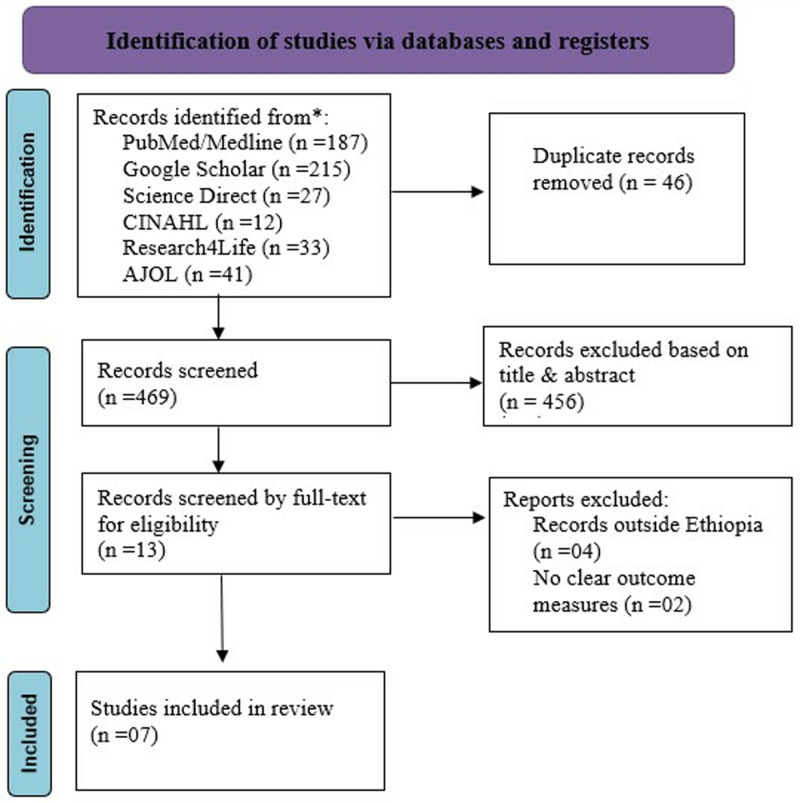
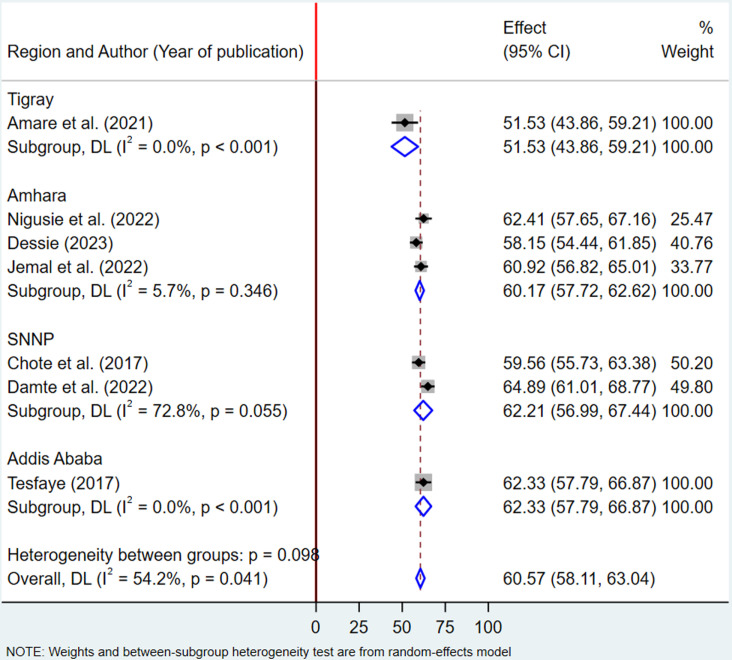
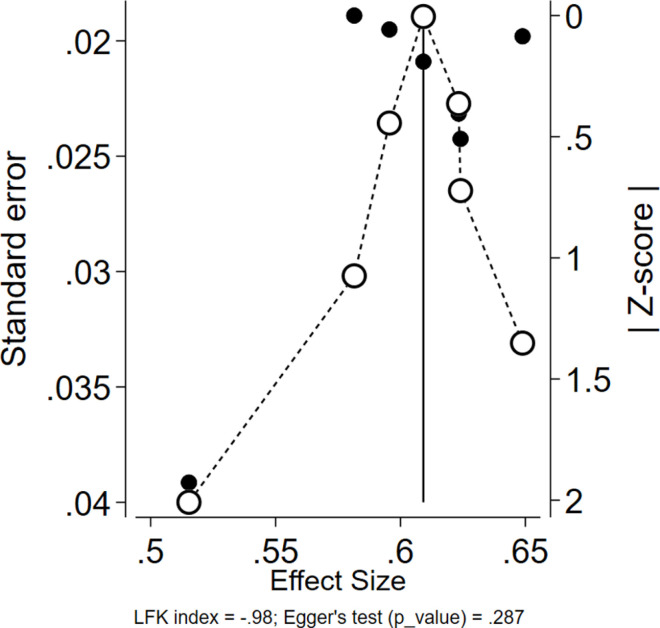
A systematic search of peer-reviewed articles and gray literature was conducted up to February 2024, in databases such as PubMed/MEDLINE, African Journals Online (AJOL), Cumulative Index to Nursing & Allied Health Literature (CINAHL), Science Direct, Research4life, and Google Scholar. A systematic review and meta-analysis were conducted in accordance with the PRISMA guidelines. Data were extracted using Microsoft Excel and analyzed with STATA 17 software. The quality of studies was assessed using Joanna Briggs Institute (JBI) checklists. The pooled prevalence of health service utilization among fee waiver beneficiaries was estimated using random-effects meta-analysis. Subgroup analyses were performed based on study regions. Publication bias was evaluated with a DOI plot, the Luis Furuya Kanamori (LFK) index, and Egger's test, while heterogeneity was assessed using the I² statistic.
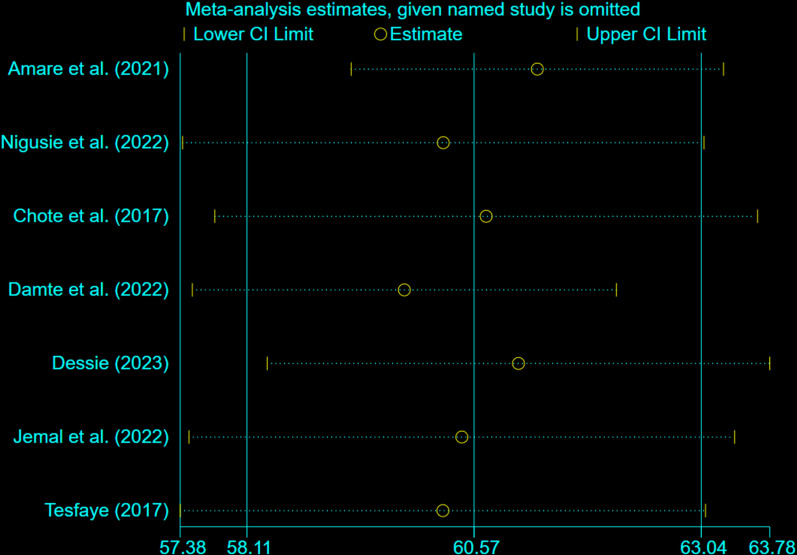
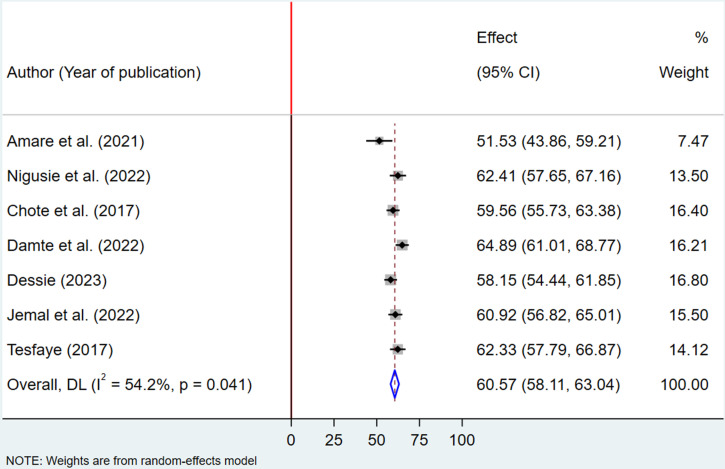
The study analyzed seven primary studies comprising a total of 11,488 participants. All the included studies demonstrated a low risk of bias, and no significant evidence of publication bias was detected among them. The pooled prevalence of health service utilization was found to be 60.57% (95% CI: 58.11-63.04; I² = 54.2%, p = 0.041). A family size of fewer than five was negatively and significantly associated with health service utilization (OR = 0.69, 95% CI: 0.51-0.95; I² = 0.0%, p = 0.47). On the other hand, having chronic diseases was positively and significantly associated with health service utilization among fee waiver beneficiaries (OR = 4.85, 95% CI: 1.34-17.56; I² = 93.5%, p < 0.001). Residence showed no significant association (OR = 1.58; 95% CI: 0.03-71.49), with wide confidence intervals reflecting considerable uncertainty.
The findings suggest that a significant number of beneficiaries accessed health services, indicating that the system is likely contributing to enhanced healthcare access for the target population. However, this also highlights the need for further efforts to ensure broader and more equitable utilization. The analysis reveals that health service utilization is negatively associated with a family size of fewer than five and positively associated with having chronic diseases. To improve the utilization rate among poor populations, policymakers in Ethiopia should implement integrated strategies that address these key factors and target barriers to healthcare access.
卫生服务利用是衡量医疗保健可及性和公平性的重要指标。在埃塞俄比亚,费用减免制度是医疗保健融资改革的关键组成部分,旨在改善经济弱势群体获得基本卫生服务的机会。然而,关于费用减免受益者卫生服务利用情况的证据仍然不一致。本系统评价和荟萃分析综合现有研究,以全面了解埃塞俄比亚费用减免受益者的卫生服务利用情况及相关因素。
截至2024年2月,在PubMed/MEDLINE、非洲期刊在线(AJOL)、护理及相关健康文献累积索引(CINAHL)、科学Direct、Research4life和谷歌学术等数据库中,对同行评审文章和灰色文献进行了系统检索。按照PRISMA指南进行系统评价和荟萃分析。使用Microsoft Excel提取数据,并使用STATA 17软件进行分析。使用乔安娜·布里格斯研究所(JBI)清单评估研究质量。采用随机效应荟萃分析估计费用减免受益者卫生服务利用的合并患病率。根据研究地区进行亚组分析。使用DOI图、路易斯·古谷金盛(LFK)指数和埃格检验评估发表偏倚,同时使用I²统计量评估异质性。
该研究分析了7项主要研究,共纳入11488名参与者。所有纳入研究均显示偏倚风险较低,且未检测到明显的发表偏倚证据。卫生服务利用的合并患病率为60.57%(95%CI:58.11 - 63.04;I² = 54.2%,p = 0.041)。家庭规模小于5人与卫生服务利用呈负相关且具有统计学意义(OR = 0.69,95%CI:0.51 - 0.95;I² = 0.0%,p = 0.47)。另一方面,患有慢性病与费用减免受益者的卫生服务利用呈正相关且具有统计学意义(OR = 4.85,95%CI:1.34 - 17.56;I² = 93.5%,p < 0.001)。居住地未显示出显著关联(OR = 1.58;95%CI:0.03 - 71.49),宽置信区间反映出相当大的不确定性。
研究结果表明,大量受益者获得了卫生服务,这表明该系统可能有助于提高目标人群的医疗保健可及性。然而,这也凸显了需要进一步努力以确保更广泛和更公平的利用。分析表明,卫生服务利用与家庭规模小于5人呈负相关,与患有慢性病呈正相关。为提高贫困人口的利用率,埃塞俄比亚的政策制定者应实施综合战略,解决这些关键因素并消除医疗保健获取方面的障碍。