El Graini Soumya, Diallo Dokal Ibrahima, El Ghaffouli Sara, Nassar Ittimade, Moatassim Billah Nabil, Imrani Kaoutar
Radiology Department - Ibn Sina University Hospital, University Mohamed V, Rabat, Morocco.
Radiology Department - Ibn Sina University Hospital, University Mohamed V, Rabat, Morocco.
Int J Surg Case Rep. 2025 Jul;132:111438. doi: 10.1016/j.ijscr.2025.111438. Epub 2025 May 16.
Spinal meningiomas (SM) are rare intradural extramedullary tumors arising from arachnoid cells of the leptomeninges. They are most commonly found in the thoracic region, with angiomatous subtypes being even rarer and carrying a high hemorrhagic risk. Diagnosis and treatment are guided by clinical presentation and imaging, with surgery being the primary therapeutic approach. Recurrence is uncommon, occurring in 1.3 % to 6.4 % of cases, and decisions between surgery and adjuvant treatments like radiotherapy depend on factors such as tumor location, histological subtype, and the surgeon's expertise. This case aims to explore the radiological features and treatment strategies for SM.
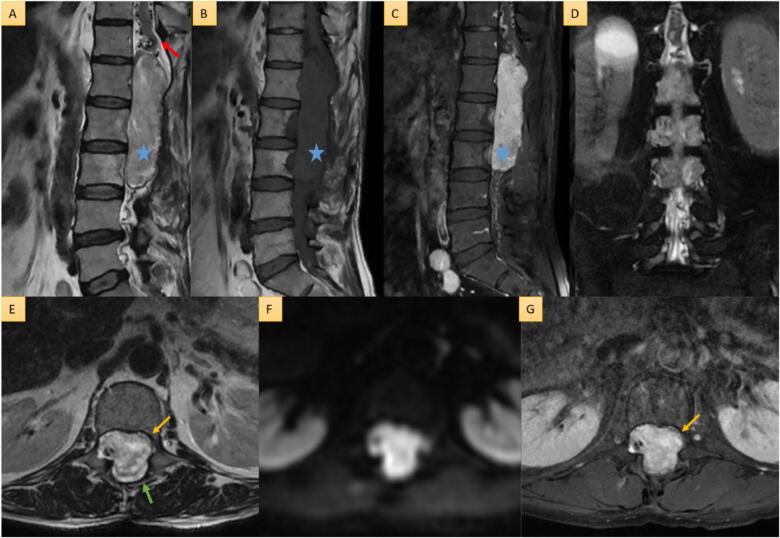
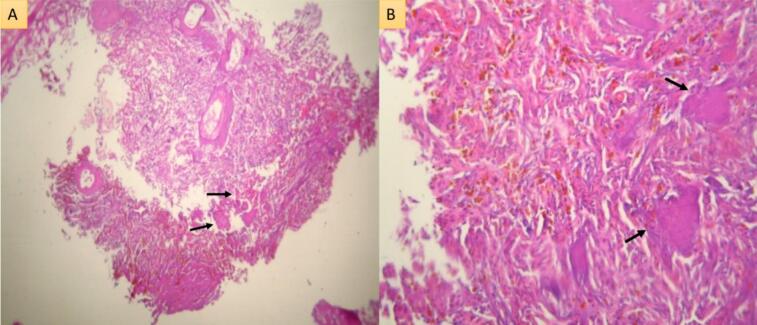
A 58-year-old man with a history of disc herniation surgery presented with lower back pain, bilateral sciatica, cruralgia, and sphincter dysfunction. Spinal MRI revealed an intra-dural, extra-medullary tumor, which was surgically removed and the patient had an uneventful postoperative recovery. Histopathological examination confirmed an angiomatous meningioma (WHO Grade 1).
SM are rare tumors, often causing pain and neurological issues. Imaging is crucial in assessing tumor extent and vascularization, helping in treatment decisions. Although recurrences aren't common, they are usually treated surgically, with adjuvant therapies like radiotherapy being considered for high-grade or inoperable tumors. Further research is needed to refine the understanding and management of spinal meningiomas.
SM are exceptional, mostly benign, slow-growing tumors, with surgical resection remaining the primary treatment and offering low recurrence rates. Adjuvant therapies, including radiotherapy and molecular-targeted treatments, remain largely investigational, with no established clinical application.
脊髓脑膜瘤(SM)是起源于软脑膜蛛网膜细胞的罕见硬脊膜内髓外肿瘤。它们最常见于胸段,血管瘤亚型更为罕见且出血风险高。诊断和治疗以临床表现及影像学检查为指导,手术是主要治疗方法。复发并不常见,发生率为1.3%至6.4%,手术与放疗等辅助治疗之间的决策取决于肿瘤位置、组织学亚型及外科医生的专业水平。本病例旨在探讨脊髓脑膜瘤的影像学特征及治疗策略。
一名有椎间盘突出手术史的58岁男性,出现下背部疼痛、双侧坐骨神经痛、腿痛及括约肌功能障碍。脊柱MRI显示硬脊膜内、髓外肿瘤,手术切除后患者术后恢复顺利。组织病理学检查确诊为血管瘤型脑膜瘤(世界卫生组织1级)。
脊髓脑膜瘤是罕见肿瘤,常引起疼痛和神经问题。影像学检查对评估肿瘤范围和血管形成至关重要,有助于治疗决策。虽然复发不常见,但通常采用手术治疗,对于高级别或无法手术的肿瘤可考虑放疗等辅助治疗。需要进一步研究以深化对脊髓脑膜瘤的认识和管理。
脊髓脑膜瘤是特殊的、大多为良性、生长缓慢的肿瘤,手术切除仍是主要治疗方法且复发率低。包括放疗和分子靶向治疗在内的辅助治疗在很大程度上仍处于研究阶段,尚无既定的临床应用。