Kaper Delaney, Radović Uroš, Bergh Per-Olof, Qvist August, Henricsson Marcus, Borén Jan, Pilon Marc
Department of Chemistry and Molecular Biology, University of Gothenburg, Gothenburg, Sweden.
Department of Molecular and Clinical Medicine/Wallenberg Laboratory, Institute of Medicine, University of Gothenburg, Gothenburg, Sweden.
bioRxiv. 2025 Jun 5:2024.11.08.622646. doi: 10.1101/2024.11.08.622646.
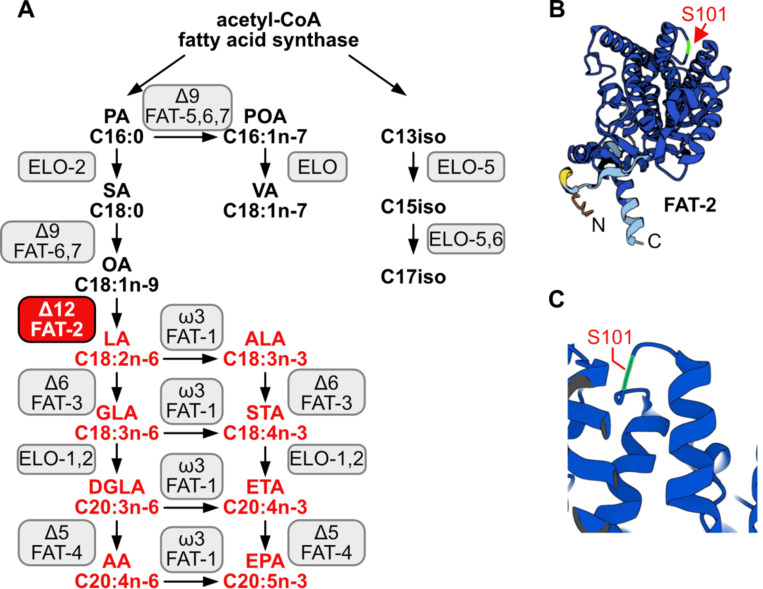
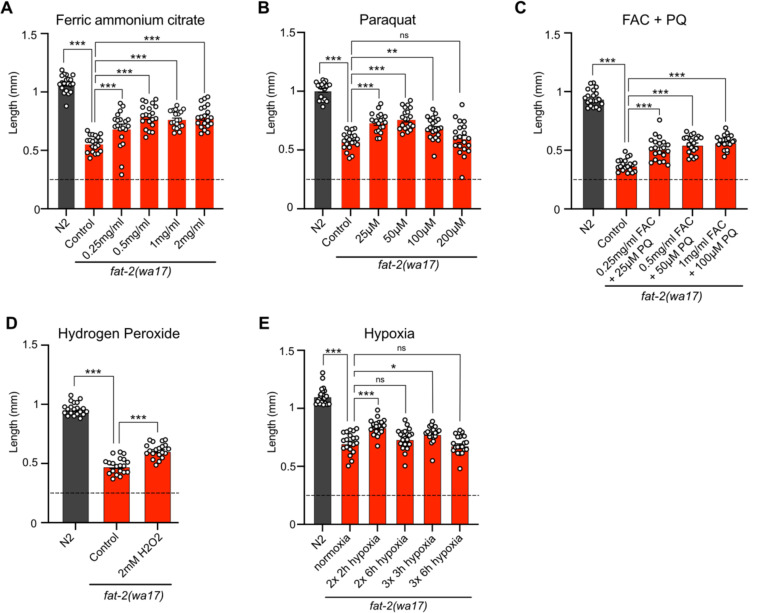
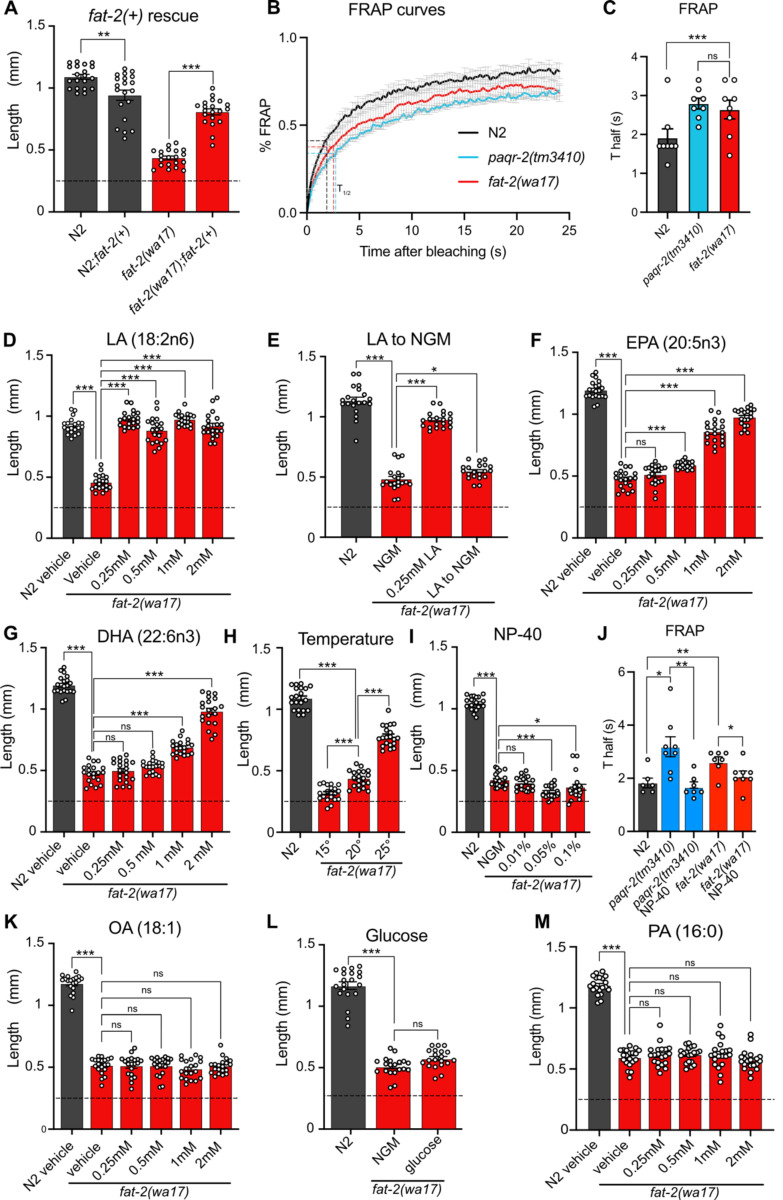
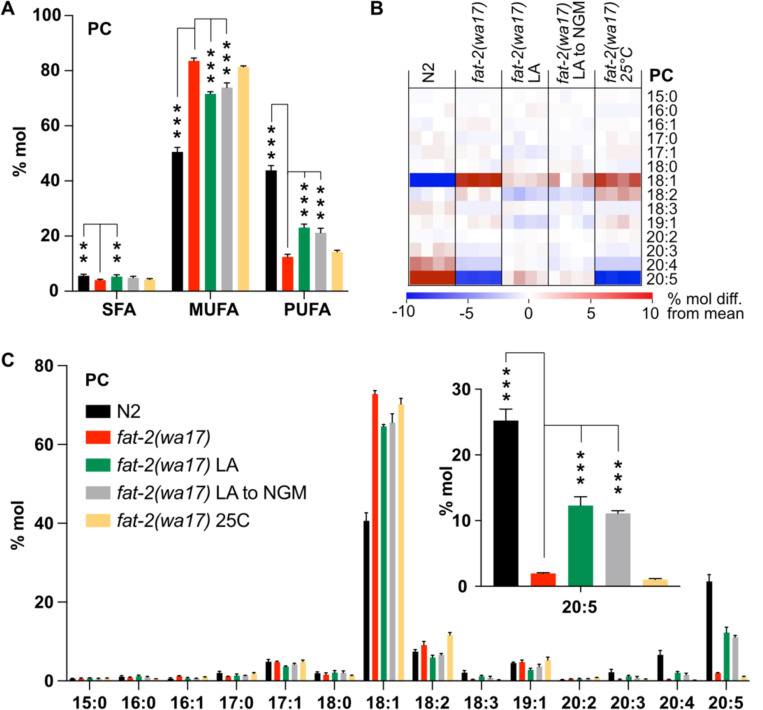
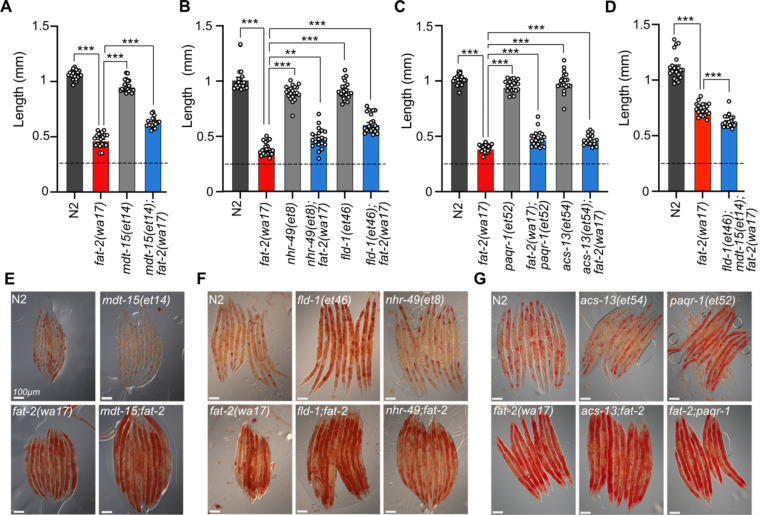
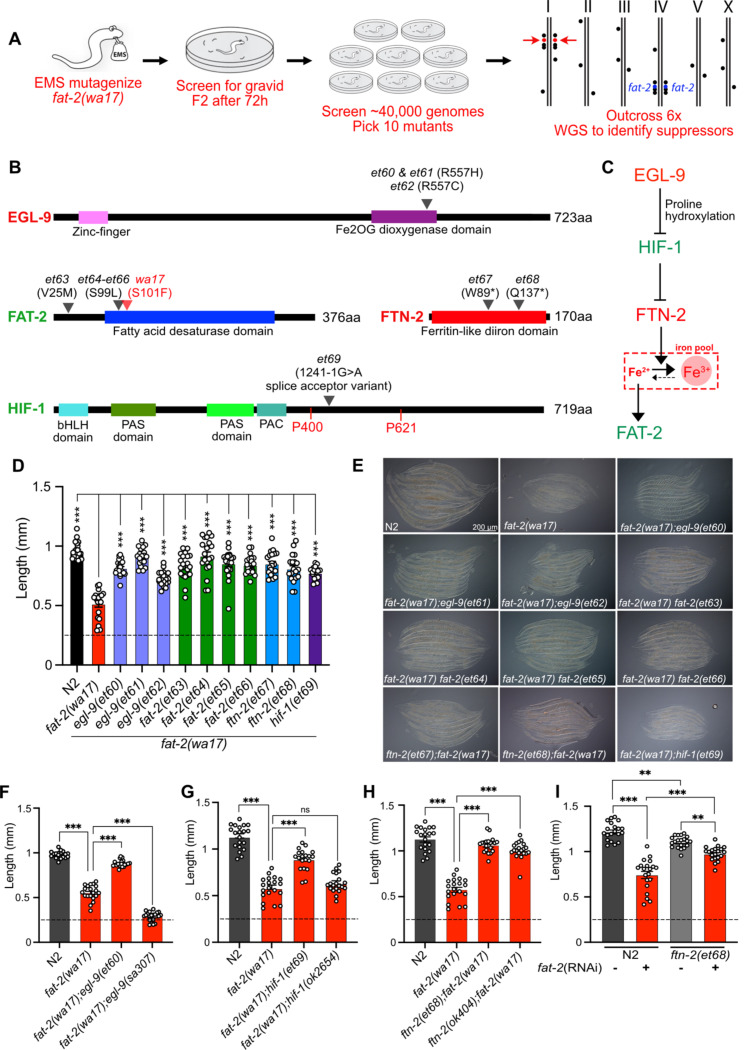
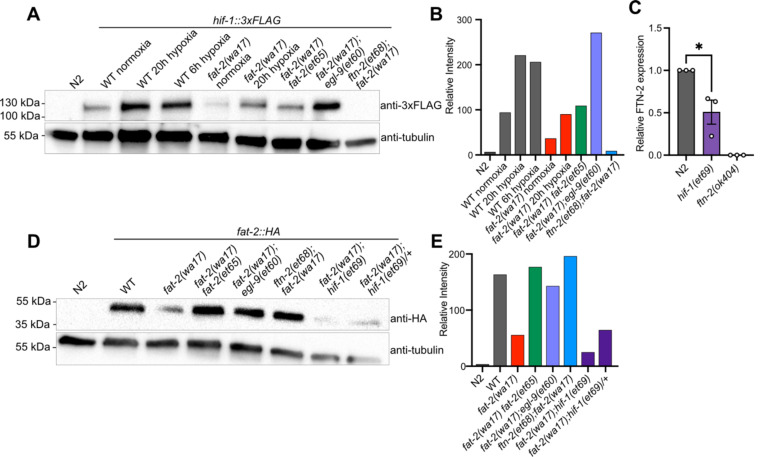
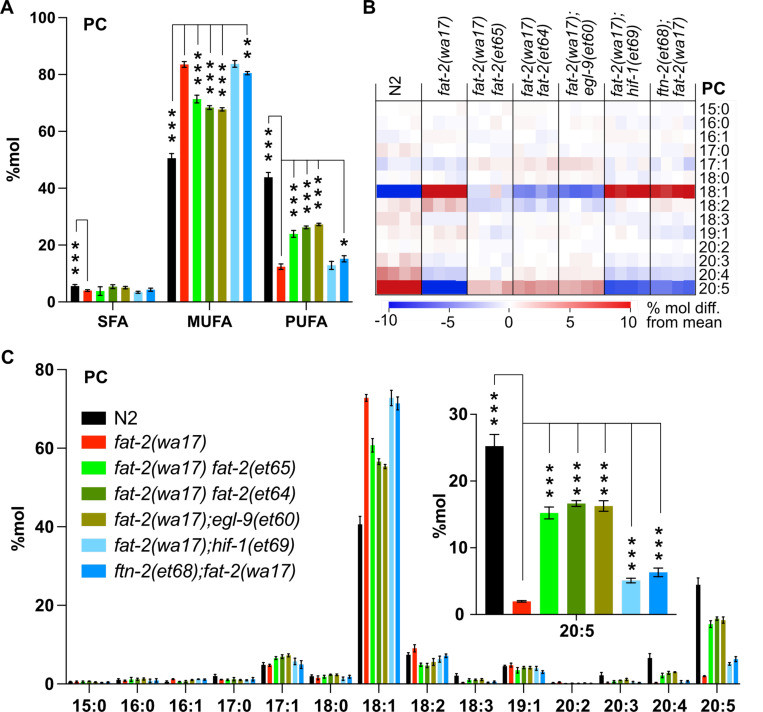
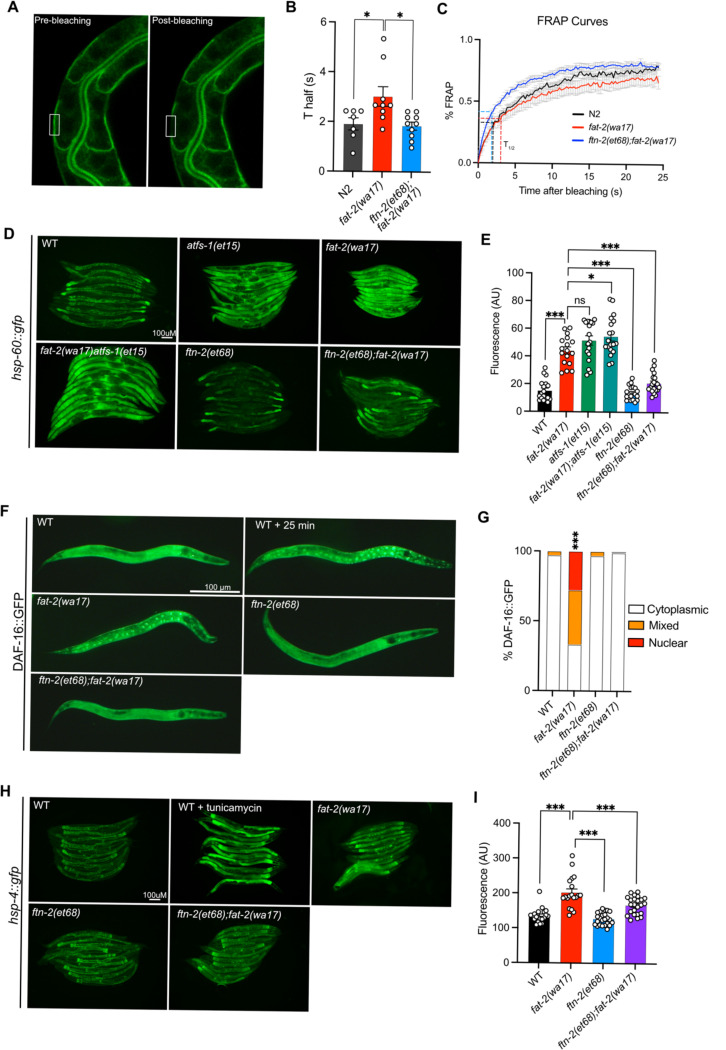
Polyunsaturated fatty acids (PUFAs) are essential for mammalian health and function as membrane fluidizers and precursors for signaling lipids though the primary essential function of PUFAs within organisms has not been established. Unlike mammals who cannot endogenously synthesize PUFAs, can synthesize PUFAs starting with the Δ12 desaturase FAT-2 which introduces a second double bond to monounsaturated fatty acids to generate the PUFA linoleic acid. FAT-2 desaturation is essential for survival since null mutants are non-viable; the near-null allele synthesizes only small amounts of PUFAs and produces extremely sick worms. Using fluorescence recovery after photobleaching (FRAP), we found that the mutant has rigid membranes and can be efficiently rescued by dietarily providing various PUFAs, but not by fluidizing treatments or mutations. With the aim of identifying mechanisms that compensate for PUFA-deficiency, we performed a forward genetics screen to isolate novel suppressors and identified four internal mutations within , and six mutations within the HIF-1 pathway. The suppressors increase PUFA levels in mutant worms and additionally suppress the activation of the , UPR and UPR stress response pathways that are active in worms. We hypothesize that the six HIF-1 pathway mutations, found in , , and all converge on raising Fe levels and in this way boost desaturase activity, including that of the allele. We conclude that PUFAs cannot be genetically replaced and that the only genetic mechanism that can alleviate PUFA-deficiency do so by increasing PUFA levels.
多不饱和脂肪酸(PUFAs)对哺乳动物的健康至关重要,可作为膜流化剂和信号脂质的前体,尽管PUFAs在生物体内的主要基本功能尚未明确。与无法内源性合成PUFAs的哺乳动物不同,[具体生物名称]可以从Δ12去饱和酶FAT-2开始合成PUFAs,该酶将第二个双键引入单不饱和脂肪酸以生成PUFA亚油酸。FAT-2去饱和作用对[具体生物名称]的存活至关重要,因为[具体生物名称]的缺失突变体无法存活;近缺失的[具体生物名称]等位基因仅合成少量PUFAs,并产生极度病态的蠕虫。使用光漂白后荧光恢复(FRAP)技术,我们发现[具体生物名称]突变体具有刚性膜,通过饮食提供各种PUFAs可有效挽救该突变体,但流化处理或突变则无法挽救。为了确定补偿PUFA缺乏的机制,我们进行了正向遗传学筛选以分离新的[具体生物名称]抑制子,并在[具体生物名称]内鉴定出四个内部突变,以及在HIF-1途径内鉴定出六个突变。这些抑制子增加了[具体生物名称]突变体蠕虫中的PUFA水平,并额外抑制了在[具体生物名称]蠕虫中活跃的[具体信号通路名称]、未折叠蛋白反应(UPR)和UPR应激反应途径的激活。我们假设在[具体生物名称]、[具体生物名称]和[具体生物名称]中发现的六个HIF-1途径突变都集中在提高铁水平上,并以此方式提高去饱和酶活性,包括[具体生物名称]等位基因的活性。我们得出结论,PUFAs不能通过基因替代,唯一能缓解PUFA缺乏的遗传机制是通过增加PUFA水平来实现。