Arvanitidis Michail, Mak Hon Hin Ken, Martinez-Valdes Eduardo, Barbero Marco, Falla Deborah
Centre of Precision Rehabilitation for Spinal Pain (CPR Spine), School of Sport, Exercise and Rehabilitation Sciences, College of Life and Environmental Sciences, University of Birmingham, Birmingham - UK.
Rehabilitation Research Laboratory 2rLab, Department of Business Economics, Health and Social Care (DEASS), University of Applied Sciences and Arts of Southern Switzerland (SUPSI), Manno - Switzerland.
Arch Physiother. 2025 Jun 10;15:148-157. doi: 10.33393/aop.2025.3476. eCollection 2025 Jan-Dec.
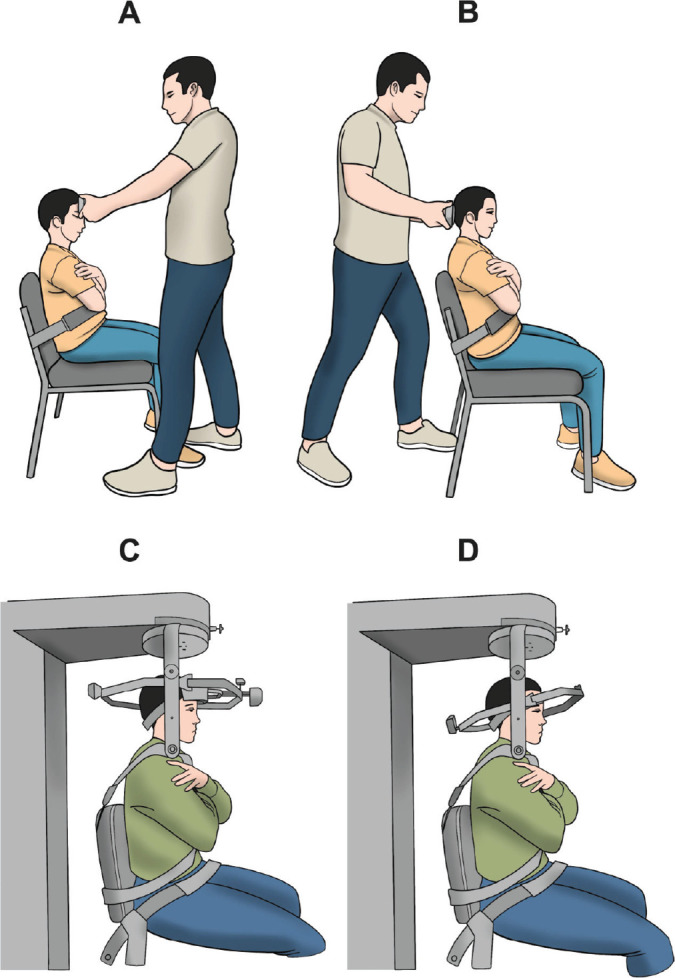
The Neuromuscular Cranio-Cervical Device (NOD) was originally designed to evaluate Cranio-Cervical Flexion Test performance but can also be used as a handheld dynamometer for testing other muscle groups, including neck muscle strength. It offers a potential alternative to the Multi-Cervical Unit (MCU), a fixed dynamometer, more closely aligned with isokinetic dynamometry, the gold standard. However, its validity and reliability need to be established. This study aimed to evaluate concurrent validity compared to the MCU and inter- and intra-rater reliability of the NOD for measuring neck flexion and extension muscle strength.
Twenty participants were assessed for neck flexion/extension strength whilst in a seated position, with the measurements repeated over three sessions. Concurrent validity was assessed by comparing NOD measurements to the MCU using Pearson correlation coefficients, and reliability was determined using Intraclass Correlation Coefficients (ICCs).
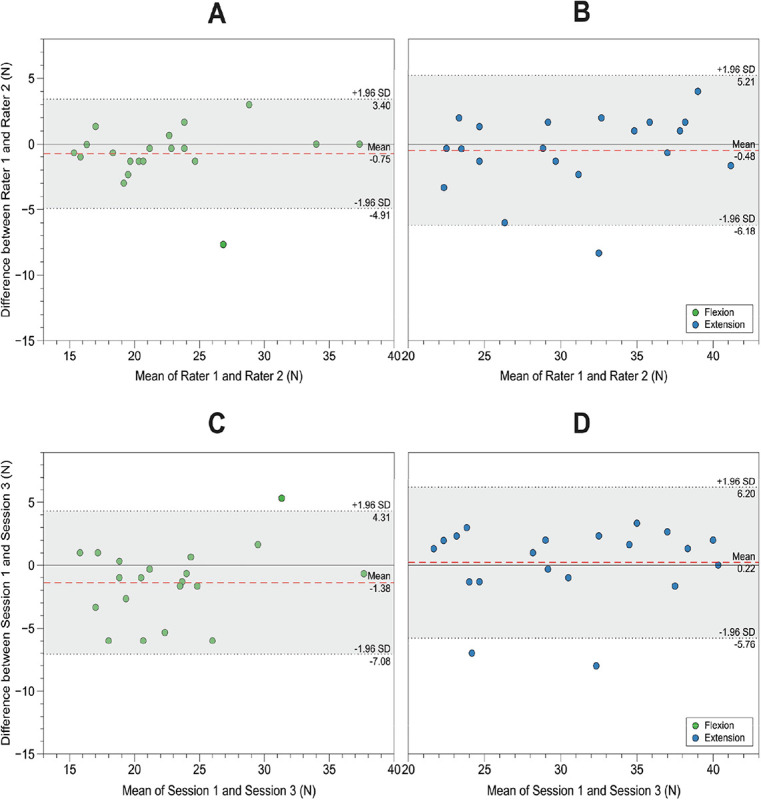
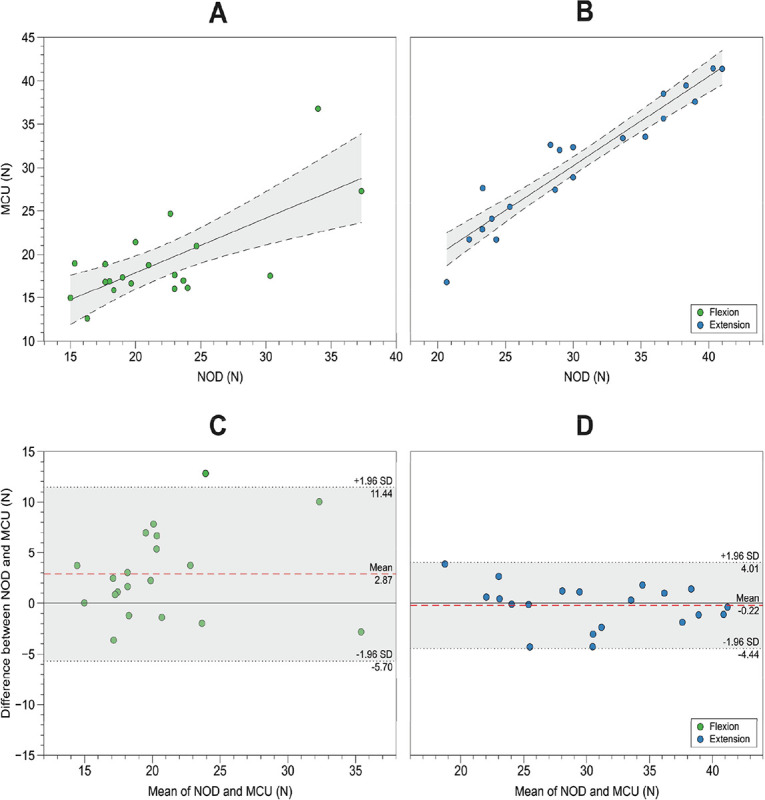
Concurrent validity was strong for extension (r = 0.954) but lower for flexion (r = 0.705), indicating some variability in flexion measurements. Inter-rater reliability was good to excellent for both flexion (ICC = 0.931) and extension (ICC = 0.896). Intra-rater reliability for extension was good to excellent (ICC = 0.893), while flexion ranged from moderate to excellent (ICC = 0.844).
The NOD is a valid tool, particularly for extension measurements, although further refinement of testing is needed to improve the accuracy for flexion strength measurements. It is also reliable for both extension and flexion, showing promise as a practical, affordable, portable tool with real-time feedback for the assessment of neck muscle strength in clinical settings.
神经肌肉颅颈装置(NOD)最初设计用于评估颅颈屈曲试验表现,但也可用作手持测力计来测试其他肌肉群,包括颈部肌肉力量。它为多颈椎装置(MCU)(一种固定测力计,与等速测力计这一黄金标准更紧密相关)提供了一种潜在替代方案。然而,其有效性和可靠性有待确定。本研究旨在评估与MCU相比NOD在测量颈部屈伸肌肉力量方面的同时效度以及评分者间和评分者内的可靠性。
20名参与者在坐姿下接受颈部屈伸力量评估,测量在三个阶段重复进行。通过使用皮尔逊相关系数将NOD测量值与MCU进行比较来评估同时效度,并使用组内相关系数(ICC)确定可靠性。
伸展的同时效度很强(r = 0.954),但屈曲的同时效度较低(r = 0.705),表明屈曲测量存在一些变异性。评分者间可靠性在屈曲(ICC = 0.931)和伸展(ICC = 0.896)方面均为良好至优秀。伸展的评分者内可靠性为良好至优秀(ICC = 0.893),而屈曲的评分者内可靠性从中度到优秀(ICC = 0.844)。
NOD是一种有效的工具,特别是对于伸展测量,尽管需要进一步完善测试以提高屈曲力量测量的准确性。它在伸展和屈曲方面也具有可靠性,有望成为一种实用、经济、便携且能在临床环境中为颈部肌肉力量评估提供实时反馈的工具。