Bushi Ganesh, Gaidhane Abhay M, Vadia Nasir, Menon Soumya V, Chennakesavulu Kattela, Panigrahi Rajashree, Shabil Muhammed, Jena Diptismita, Kumar Harish, Rani Anju, Sah Sanjit, Rohilla Shivam, Singh Mahendra Pratap, Goh Khang Wen
Chitkara Centre for Research and Development Chitkara University Himachal Pradesh India.
School of Pharmaceutical Sciences Lovely Professional University Phagwara India.
Health Sci Rep. 2025 Jun 16;8(6):e70882. doi: 10.1002/hsr2.70882. eCollection 2025 Jun.
COVID-19 vaccination has raised concerns regarding its potential effects on women's reproductive health, particularly menstrual irregularities. This systematic review and meta-analysis aimed to assess the impact of COVID-19 vaccination on menstrual disturbances, bleeding patterns, and cycle duration among women of reproductive age.
A systematic search of PubMed, Embase, and Web of Science was conducted up to April 11, 2025. The study protocol was registered with the PROSPERO (CRD42024500832). Studies reporting menstrual changes postvaccination in women aged 13-50 were included. Data extraction and quality assessment were performed independently by two reviewers. Meta-analyses using random-effects models were conducted in R (version 4.3), with heterogeneity assessed using the ² statistic.
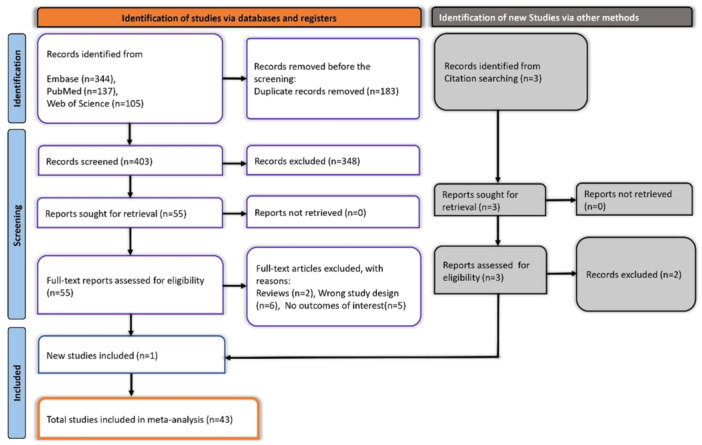
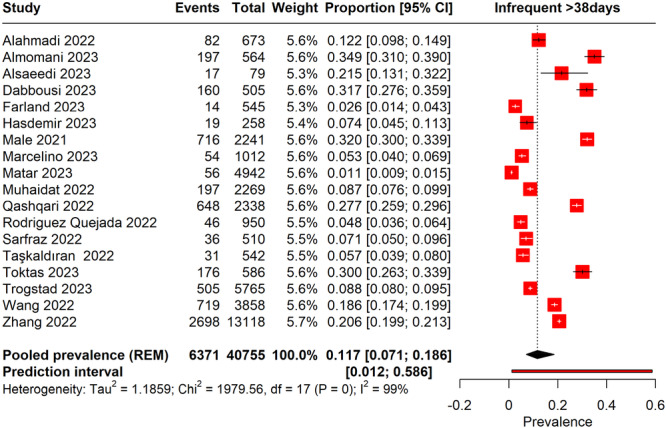
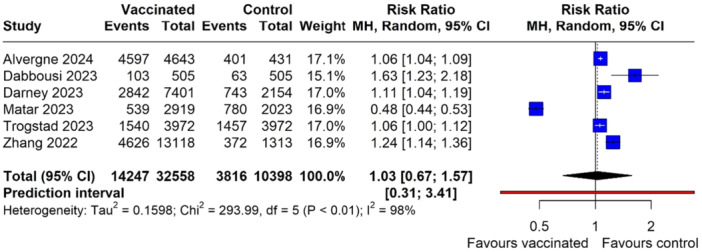
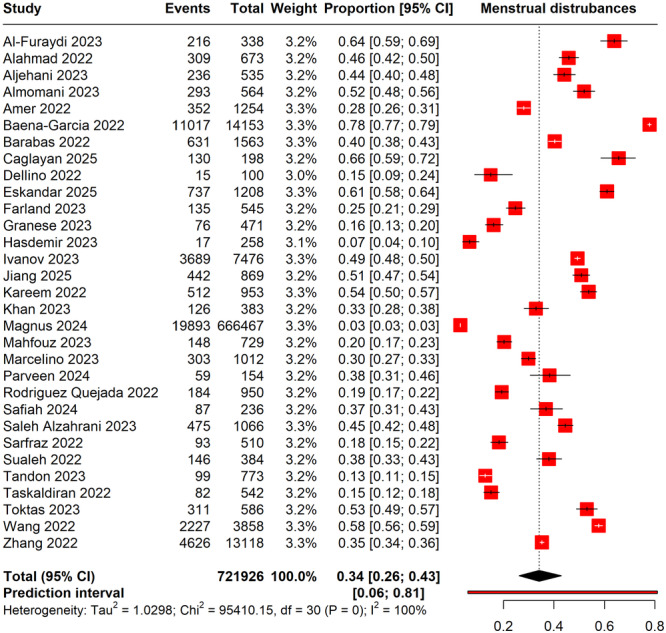
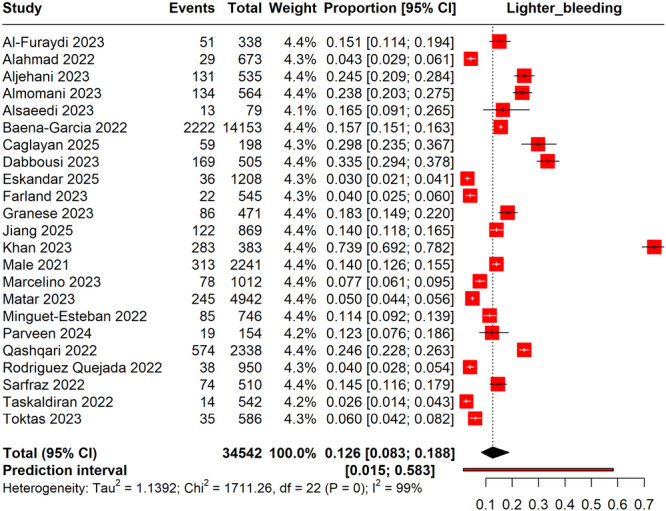
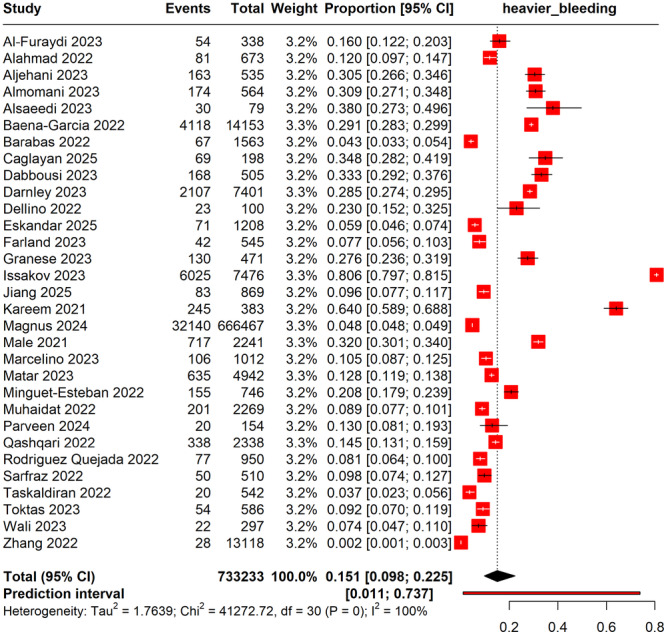
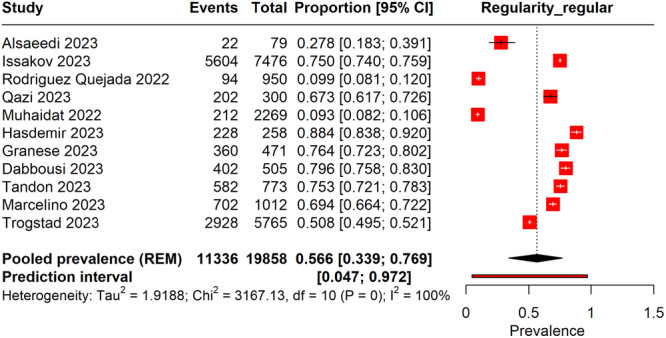
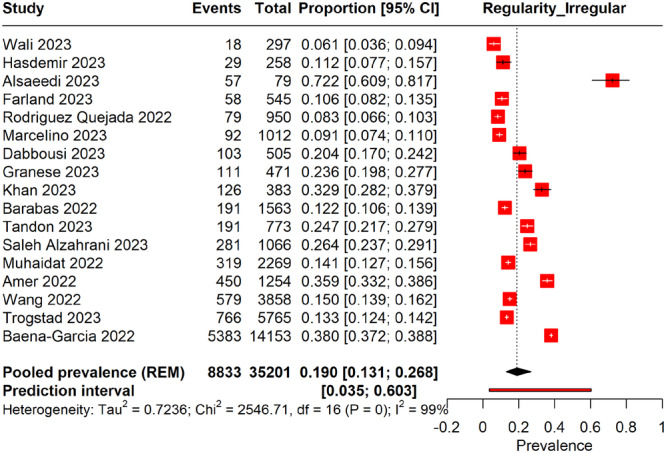
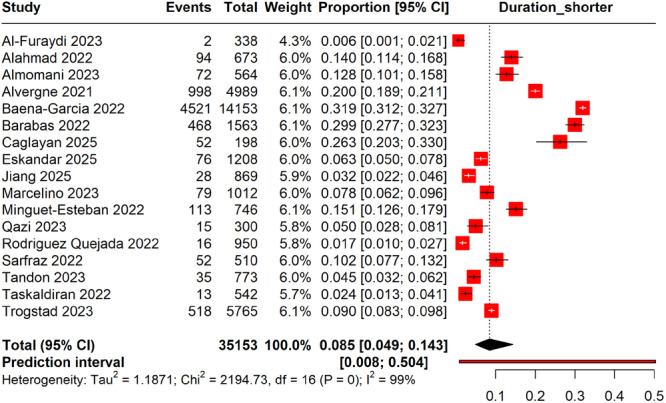
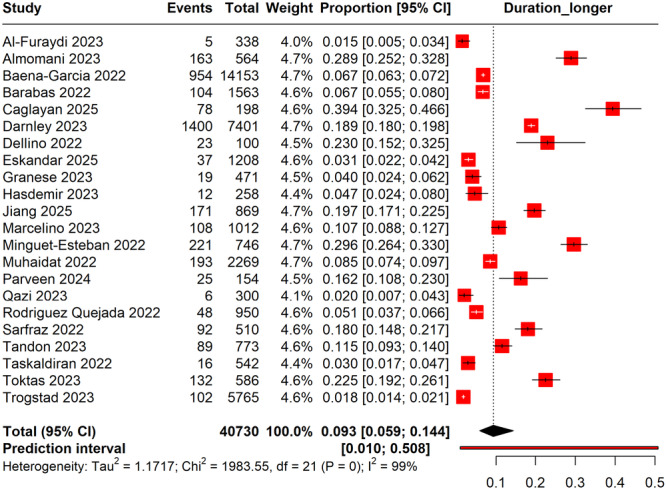
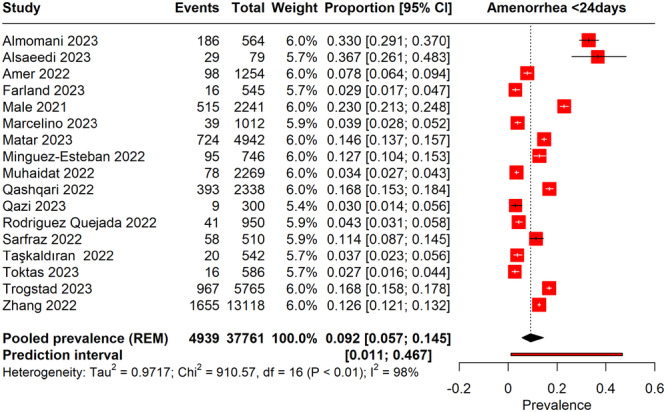
Out of 586 records, 43 studies comprising 747,763 women met the inclusion criteria. The pooled RR for menstrual disturbances in vaccinated versus unvaccinated women was 1.03 (95% CI: 0.67-1.57; = 0.88), indicating no significant association. Excluding one outlier increased the RR to 1.14 (95% CI: 0.97-1.34; = 0.08). The overall pooled prevalence of menstrual disturbances postvaccination was 34% (95% CI: 26%-43%). Among vaccinated women, lighter bleeding was reported in 12.6%, heavier bleeding in 15.1%, irregular menstruation in 19.0%, and regular cycles in 56.6%. Shortened cycles occurred in 8.5%, longer cycles in 9.3%, amenorrhea (≥ 24 days) in 9.2%, and infrequent cycles (> 38 days) in 11.0%. All analyses showed high heterogeneity (I² = 98%-100%). Sensitivity analyses confirmed the robustness of findings, though Egger's test indicated potential publication bias ( = 0.0384).
COVID-19 vaccination was not significantly associated with an increased risk of menstrual disturbances. Although minor changes such as altered bleeding patterns and cycle length were observed in some women, the overall impact on menstrual health was minimal.
新冠病毒疫苗接种引发了人们对其对女性生殖健康潜在影响的担忧,尤其是月经不规律问题。本系统评价和荟萃分析旨在评估新冠病毒疫苗接种对育龄期女性月经紊乱、出血模式和月经周期时长的影响。
截至2025年4月11日,对PubMed、Embase和Web of Science进行了系统检索。研究方案已在国际前瞻性系统评价注册库(PROSPERO,注册号:CRD42024500832)登记。纳入报告13至50岁女性接种疫苗后月经变化的研究。由两名 reviewers 独立进行数据提取和质量评估。在R软件(版本4.3)中使用随机效应模型进行荟萃分析,使用I²统计量评估异质性。
在586条记录中,43项研究(共747,763名女性)符合纳入标准。接种疫苗与未接种疫苗女性月经紊乱的合并相对风险为1.03(95%置信区间:0.67 - 1.57;I² = 0.88),表明无显著关联。排除一项异常值后,相对风险增至1.14(95%置信区间:0.97 - 1.34;I² = 0.08)。接种疫苗后月经紊乱的总体合并患病率为34%(95%置信区间:26% - 43%)。在接种疫苗的女性中,报告月经量减少的占12.6%,月经量增加的占15.1%,月经不规律的占19.0%,月经周期规律的占56.6%。月经周期缩短的占8.5%,延长的占9.3%,闭经(≥24天)的占9.2%,月经周期延长(>38天)的占第十一0%。所有分析均显示高度异质性(I² = 98% - 100%)。敏感性分析证实了研究结果的稳健性,尽管Egger检验表明存在潜在的发表偏倚(P = 0.0384)。
新冠病毒疫苗接种与月经紊乱风险增加无显著关联。尽管在一些女性中观察到了如出血模式和周期长度改变等微小变化,但对月经健康的总体影响极小。