Wang Zihao, Sun Yingzi, Wang Juanjuan, Xu Qiuyue, Wang Liuxing, Zhang Qi, Song Juan, Wang Yuchun, Qi Zhanpeng
College of Pharmacy, Qiqihar Medical University, Qiqihar, Heilongjiang, China.
College of Nursing, Qiqihar Medical University, Qiqihar, Heilongjiang, China.
Front Pharmacol. 2025 Jun 3;16:1566622. doi: 10.3389/fphar.2025.1566622. eCollection 2025.
Currently, there is a paucity of clinically effective medications for the treatment of diabetic cardiomyopathy (DCM), while the strategy of drug repurposing offers a promising avenue for advancing therapeutic development.
The investigation explored the ameliorative effects and uncovered underlying mechanisms of trapidil (TRA), a drug commonly employed in the management of coronary heart disease, on DCM by inhibiting myocardial pyroptosis. Type 1 DCM models were established utilizing C57BL/6 mice and primary neonatal mouse cardiomyocytes (NMCMs), which were subsequently treated with TRA.
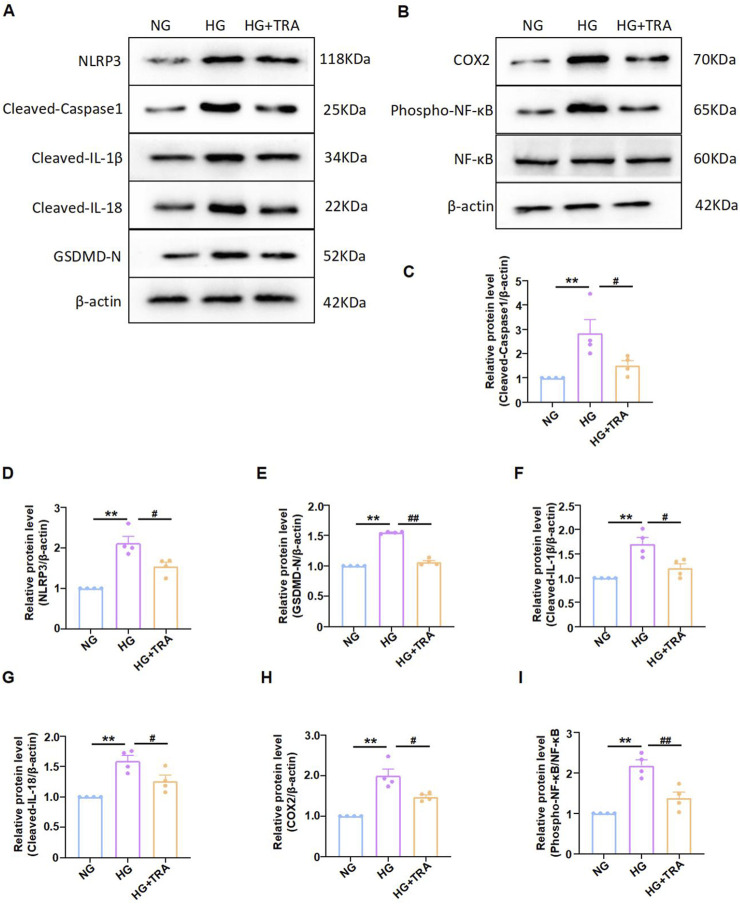
Results demonstrated that in DCM mice, TRA significantly enhanced cardiac function, effectively alleviated pathological changes in myocardial tissue, reversed ultrastructural alterations, and reduced pyroptosome formation in myocardial cells. TRA significantly increased the body weight of the mice in the DCM model group, whereas there was no significant alteration in blood glucose levels following TRA treatment. In the myocardial tissue of DCM mice and high-glucose (HG)-treated NMCMs, TRA was found to correct the aberrant expression of key proteins involved in pyroptosis, including cleaved-caspase1, NLRP3, phospho-NF-κB cyclooxygenase-2, interleukin Cleaved-IL-1β, Cleaved-IL-18, and gasdermin D. Furthermore, TRA effectively curtailed the excessive production of ROS and augmented the mitochondrial membrane potential in NMCMs under the HG environment. Proteomics analysis identified 90 differentially expressed proteins between DCM mice and TRA-treated mice, with glutathione peroxidase 3 (GPX3) emerging as a standout due to its critical role in the cellular antioxidant defense system. Further investigations revealed that the protein and mRNA levels of GPX3, as well as the activated Nrf2 protein levels, were significantly downregulated in the myocardial tissue of DCM mice and HG-treated NMCMs cells. However, these levels were notably upregulated following TRA treatment. Upon knocking down GPX3 mRNA expression using siRNA technology, the anti-pyroptotic effect of TRA in cardiomyocytes was markedly diminished, and the level of activated Nrf2 protein also significantly decreased.
In conclusion, TRA holds potential for improving DCM, with the inhibition of myocardial pyroptosis via the GPX3/Nrf2 pathway playing a pivotal role. HG-induced Downregulation of the GPX3/Nrf2 pathway is a critical mechanism underlying pyroptosis in DCM. This pathway can be targeted for the design of DCM-related therapeutics, utilizing the aforementioned signaling mechanisms.
目前,治疗糖尿病性心肌病(DCM)的临床有效药物匮乏,而药物重新利用策略为推进治疗方法的开发提供了一条有前景的途径。
本研究通过抑制心肌细胞焦亡,探讨了常用于治疗冠心病的药物曲匹地尔(TRA)对DCM的改善作用及潜在机制。利用C57BL/6小鼠和原代新生小鼠心肌细胞(NMCMs)建立1型DCM模型,随后用TRA进行处理。
结果表明,在DCM小鼠中,TRA显著增强心脏功能,有效减轻心肌组织的病理变化,逆转超微结构改变,并减少心肌细胞中焦亡小体的形成。TRA显著增加了DCM模型组小鼠的体重,而TRA处理后血糖水平无显著变化。在DCM小鼠的心肌组织和高糖(HG)处理的NMCMs中,发现TRA可纠正参与焦亡的关键蛋白的异常表达,包括裂解的半胱天冬酶-1、NLRP3、磷酸化核因子κB、环氧化酶-2、白细胞介素裂解的白细胞介素-1β、裂解的白细胞介素-18和gasdermin D。此外,TRA有效减少了HG环境下NMCMs中活性氧的过量产生,并增强了线粒体膜电位。蛋白质组学分析确定了DCM小鼠和TRA处理小鼠之间90种差异表达的蛋白质,其中谷胱甘肽过氧化物酶3(GPX3)因其在细胞抗氧化防御系统中的关键作用而脱颖而出。进一步研究发现,DCM小鼠心肌组织和HG处理的NMCMs细胞中GPX3的蛋白质和mRNA水平以及活化的Nrf2蛋白水平均显著下调。然而,TRA处理后这些水平显著上调。使用siRNA技术敲低GPX3 mRNA表达后,TRA在心肌细胞中的抗焦亡作用明显减弱,活化的Nrf2蛋白水平也显著降低。
总之,TRA具有改善DCM的潜力,通过GPX3/Nrf2途径抑制心肌细胞焦亡起关键作用。HG诱导的GPX3/Nrf2途径下调是DCM中焦亡的关键机制。利用上述信号机制,该途径可作为设计DCM相关治疗药物的靶点。