Institute of Rehabilitation Medicine, West China Hospital, Sichuan University, Chengdu, China.
Key Laboratory of Rehabilitation Medicine, West China Hospital, Sichuan University, Chengdu, China.
Front Immunol. 2022 Aug 12;13:967193. doi: 10.3389/fimmu.2022.967193. eCollection 2022.
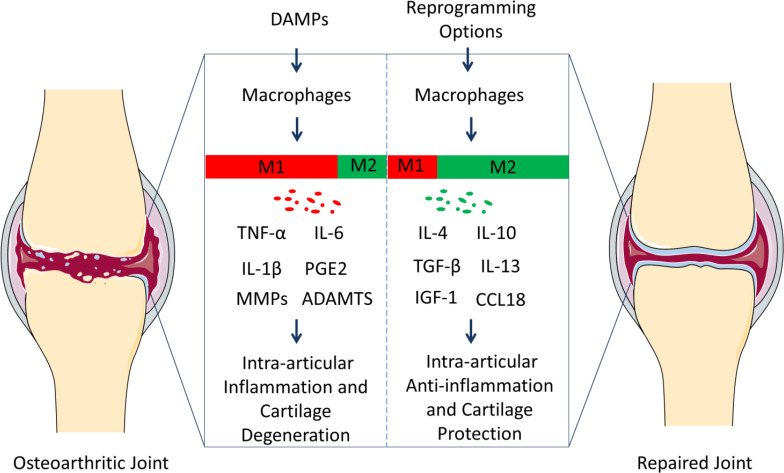
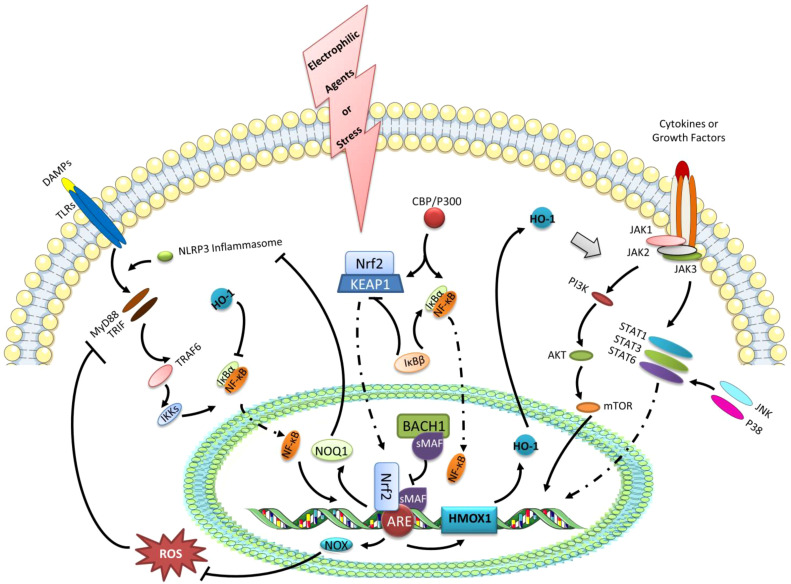
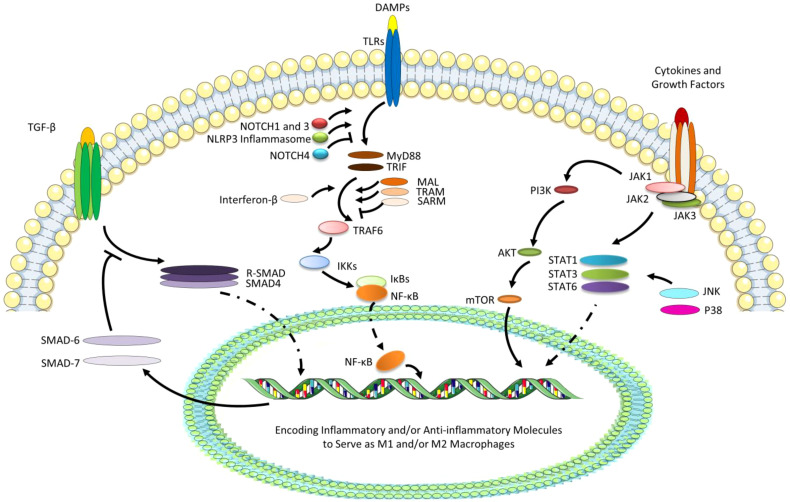
Macrophages are the most abundant immune cells within the synovial joints, and also the main innate immune effector cells triggering the initial inflammatory responses in the pathological process of osteoarthritis (OA). The transition of synovial macrophages between pro-inflammatory and anti-inflammatory phenotypes can play a key role in building the intra-articular microenvironment. The pro-inflammatory cascade induced by TNF-α, IL-1β, and IL-6 is closely related to M1 macrophages, resulting in the production of pro-chondrolytic mediators. However, IL-10, IL1RA, CCL-18, IGF, and TGF are closely related to M2 macrophages, leading to the protection of cartilage and the promoted regeneration. The inhibition of NF-κB signaling pathway is central in OA treatment controlling inflammatory responses in macrophages, while the nuclear factor erythroid 2-related factor 2 (Nrf2) signaling pathway appears not to attract widespread attention in the field. Nrf2 is a transcription factor encoding a large number of antioxidant enzymes. The activation of Nrf2 can have antioxidant and anti-inflammatory effects, which can also have complex crosstalk with NF-κB signaling pathway. The activation of Nrf2 can inhibit the M1 polarization and promote the M2 polarization through potential signaling transductions including TGF-β/SMAD, TLR/NF-κB, and JAK/STAT signaling pathways, with the regulation or cooperation of Notch, NLRP3, PI3K/Akt, and MAPK signaling. And the expression of heme oxygenase-1 (HO-1) and the negative regulation of Nrf2 for NF-κB can be the main mechanisms for promotion. Furthermore, the candidates of OA treatment by activating Nrf2 to promote M2 phenotype macrophages in OA are also reviewed in this work, such as itaconate and fumarate derivatives, curcumin, quercetin, melatonin, mesenchymal stem cells, and low-intensity pulsed ultrasound.
巨噬细胞是滑液关节中最丰富的免疫细胞,也是触发骨关节炎(OA)病理过程中初始炎症反应的主要固有免疫效应细胞。滑膜巨噬细胞从促炎性表型向抗炎性表型的转变在构建关节内微环境中起着关键作用。TNF-α、IL-1β 和 IL-6 诱导的促炎级联反应与 M1 巨噬细胞密切相关,导致产生促软骨溶解介质。然而,IL-10、IL1RA、CCL-18、IGF 和 TGF 与 M2 巨噬细胞密切相关,导致软骨保护和促进再生。抑制 NF-κB 信号通路是 OA 治疗的核心,可控制巨噬细胞中的炎症反应,而核因子红细胞 2 相关因子 2(Nrf2)信号通路在该领域似乎并未引起广泛关注。Nrf2 是一种转录因子,可编码大量抗氧化酶。Nrf2 的激活具有抗氧化和抗炎作用,还可以通过 TGF-β/SMAD、TLR/NF-κB 和 JAK/STAT 等潜在信号转导途径与 NF-κB 信号通路发生复杂的相互作用。Nrf2 的激活可以通过 TGF-β/SMAD、TLR/NF-κB 和 JAK/STAT 等潜在信号转导途径抑制 M1 极化并促进 M2 极化,同时 Notch、NLRP3、PI3K/Akt 和 MAPK 信号通路也进行调节或协作。血红素加氧酶-1(HO-1)的表达和 Nrf2 对 NF-κB 的负调控是促进的主要机制。此外,本文还综述了通过激活 Nrf2 促进 OA 中 M2 表型巨噬细胞的 OA 治疗候选物,如衣康酸盐和富马酸盐衍生物、姜黄素、槲皮素、褪黑素、间充质干细胞和低强度脉冲超声。