Zhao Yayi, Amorrortu Rossybelle P, Hicks J Kevin, Garcia Melany A, Haura Eric B, Yin Jun, Vadaparampil Susan T, Rollison Dana E
Cancer Epidemiology Program, H. Lee Moffitt Cancer Center & Research Institute, Tampa, Florida, USA.
Department of Pathology, H. Lee Moffitt Cancer Center & Research Institute, Tampa, Florida, USA.
Cancer. 2025 Jul 1;131(13):e35944. doi: 10.1002/cncr.35944.
Patients from diverse demographic groups remain underrepresented in cancer clinical trials (CCTs) because of various factors, including disparities in eligibility. In the current study, the authors investigated associations between demographic characteristics and factors associated with CCT eligibility and enrollment using real-world data.
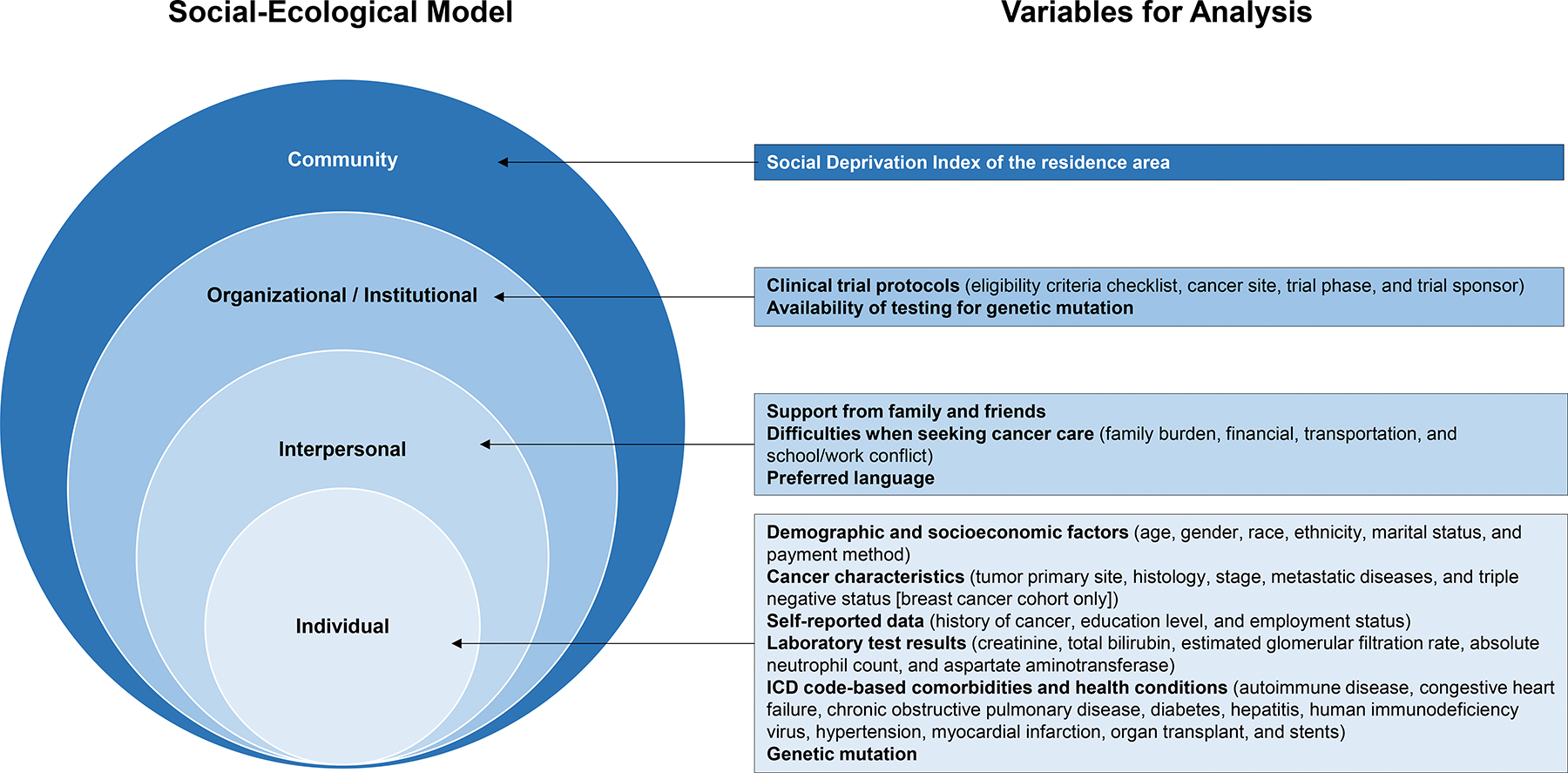
A cross-sectional analysis was conducted among 113,030 adult patients with cancer who were treated at Moffitt Cancer Center between 2011 and 2021. Eligibility criteria from 100 CCTs were manually abstracted and conceptually mapped to variables in the Moffitt Cancer Analytics Platform. Other factors potentially affecting patient eligibility or enrollment in CCTs were identified following the Socioecological Model and were compared across patient groups by age, sex, race, and ethnicity.
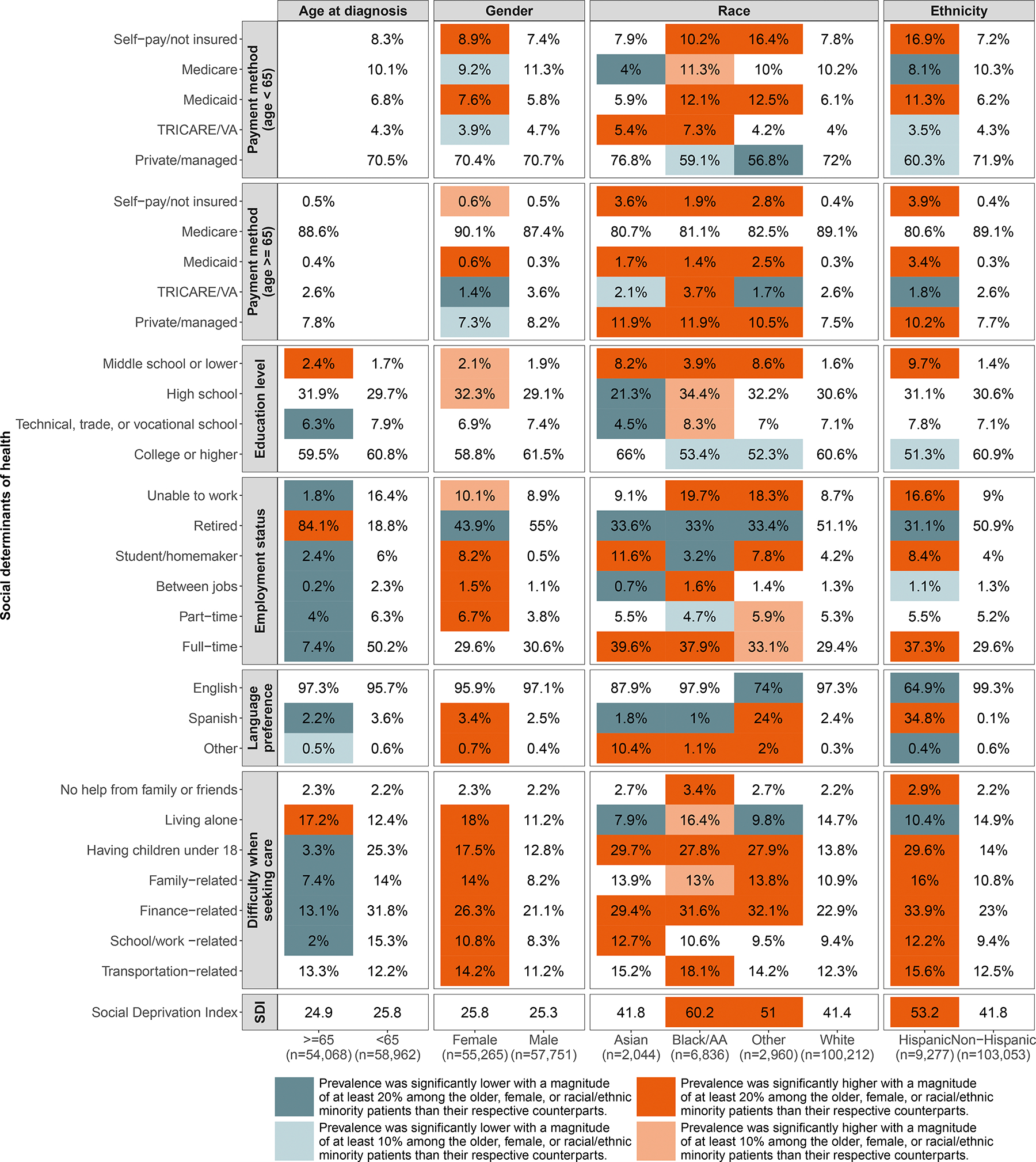
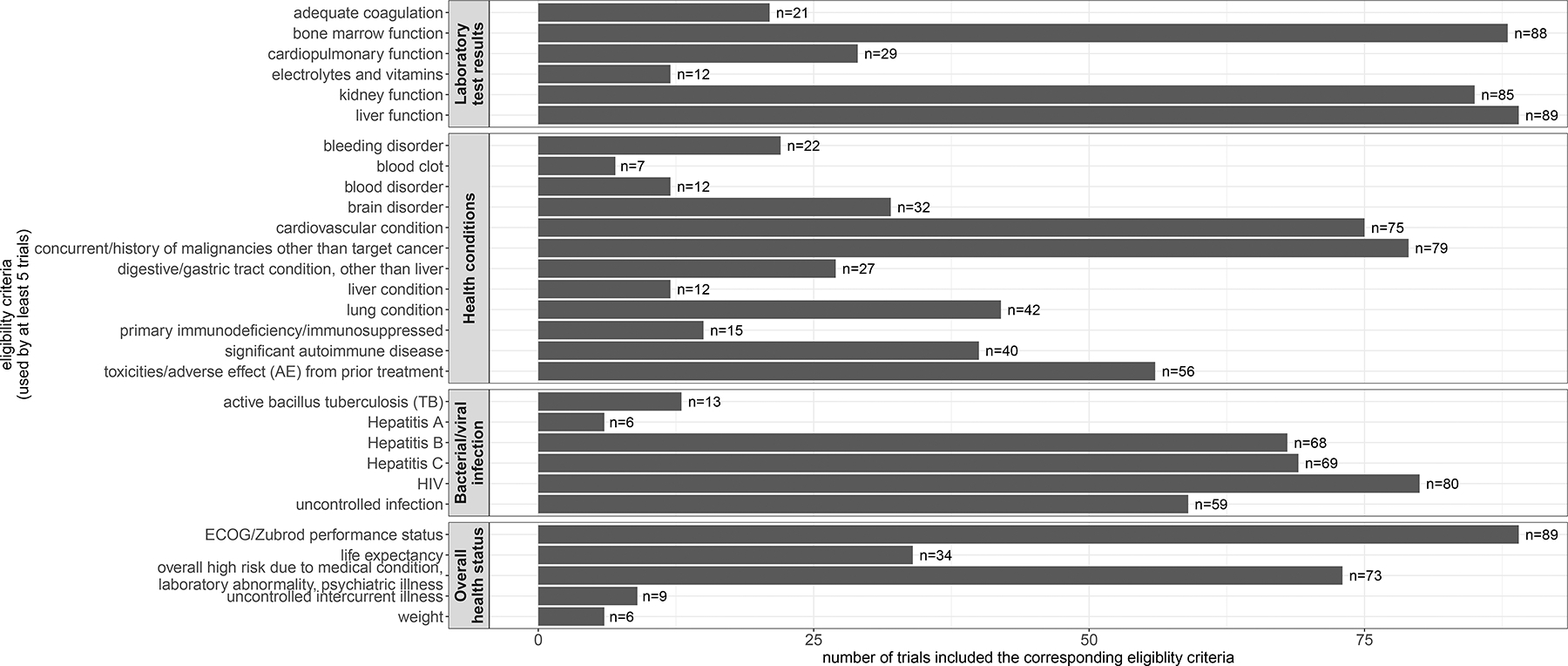
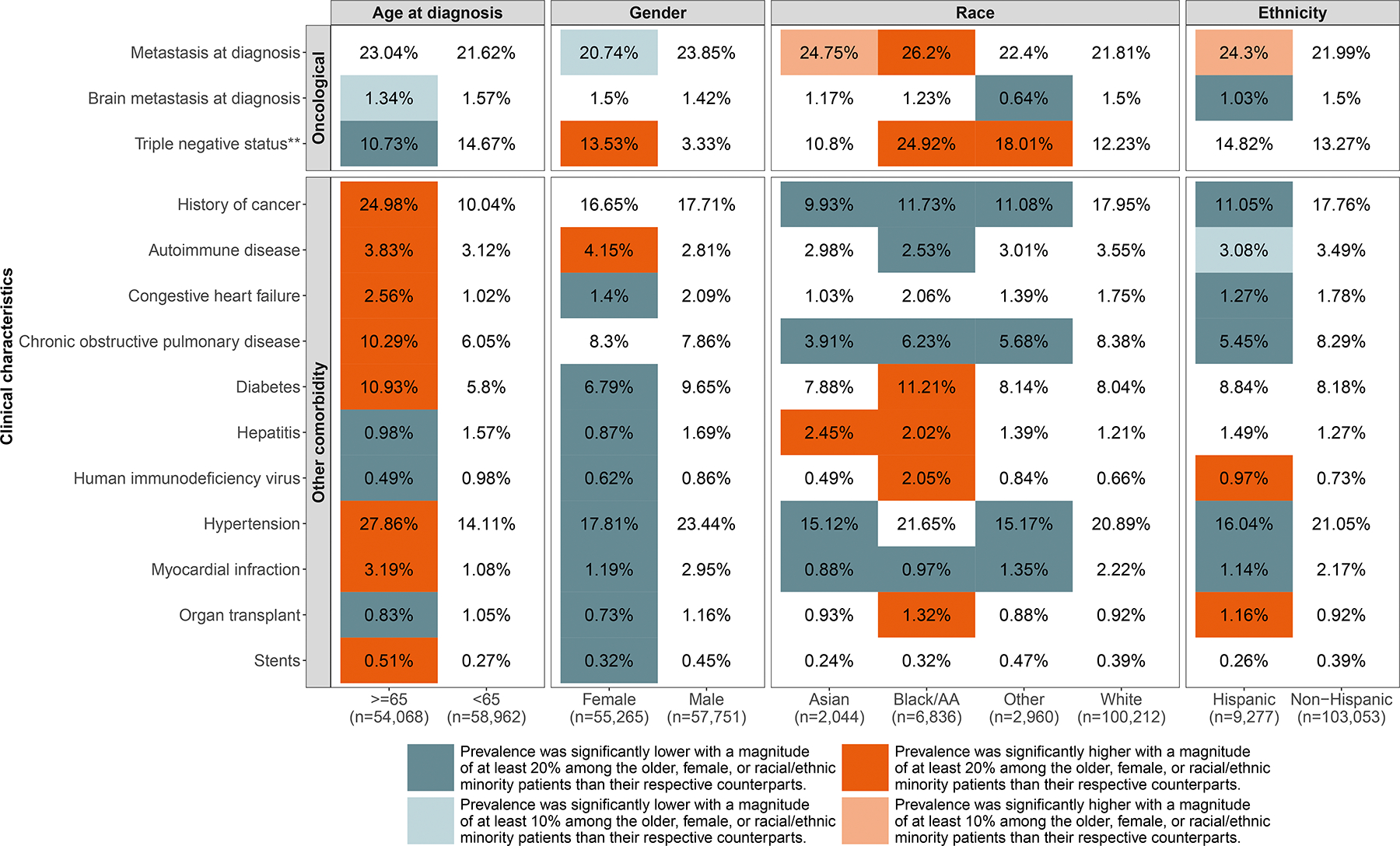
The most frequent eligibility criteria in the abstracted CCTs included laboratory results associated with liver function (89%) and bone marrow function (88%). Thirty-nine percent of the protocols required genetic testing. Black/African American patients experienced a higher prevalence of diabetes (Δ = 3.2%), human immunodeficiency virus infection (Δ = 1.4%), and abnormal laboratory results compared with White patients. Hispanic patients experienced a higher prevalence of human immunodeficiency virus infection (Δ = 0.2%) and a history of organ transplantation (Δ = 0.2%) compared with non-Hispanic patients. Compared with younger patients, older adults had a higher prevalence of nononcologic conditions. Female, Black, and/or Hispanic patients were more likely to experience barriers to care, including childcare and transportation, and to live in more socially deprived areas compared with male, White, or non-Hispanic patients.
Restrictive CCT eligibility criteria and social determinants of health may pose structural barriers that disproportionately affect patient diversity. Investigators should leverage real-world data to design appropriate trial eligibility criteria.
由于包括资格差异在内的各种因素,不同人口群体的患者在癌症临床试验(CCT)中的代表性仍然不足。在本研究中,作者使用真实世界数据调查了人口统计学特征与CCT资格和入组相关因素之间的关联。
对2011年至2021年期间在莫菲特癌症中心接受治疗的113,030名成年癌症患者进行了横断面分析。从100项CCT中手动提取资格标准,并在概念上映射到莫菲特癌症分析平台中的变量。按照社会生态模型确定了其他可能影响患者参与CCT资格或入组的因素,并按年龄、性别、种族和族裔对患者组进行了比较。
提取的CCT中最常见的资格标准包括与肝功能(89%)和骨髓功能(88%)相关的实验室检查结果。39%的方案要求进行基因检测。与白人患者相比,黑人/非裔美国患者患糖尿病(差异=3.2%)、人类免疫缺陷病毒感染(差异=1.4%)的患病率更高,实验室检查结果异常的情况也更多。与非西班牙裔患者相比,西班牙裔患者患人类免疫缺陷病毒感染(差异=0.2%)和器官移植史(差异=0.2%)的患病率更高。与年轻患者相比,老年人患有非肿瘤疾病的患病率更高。与男性、白人或非西班牙裔患者相比,女性、黑人或西班牙裔患者更有可能遇到护理障碍,包括儿童保育和交通问题,并且生活在社会经济条件更差的地区。
严格的CCT资格标准和健康的社会决定因素可能构成结构性障碍,对患者多样性产生不成比例的影响。研究人员应利用真实世界数据来设计适当的试验资格标准。