Casali Claudio, Gaiaschi Ludovica, Pelloni Enrico, Gola Federica, Cavallo Margherita, Milanesi Gloria, Ravera Mauro, Biggiogera Marco, De Luca Fabrizio, Bottone Maria Grazia
Laboratory of Cell Biology and Neurobiology, Department of Biology and Biotechnology "L. Spallanzani", University of Pavia, Pavia, Italy.
Department of Sciences and Technological Innovation (DiSIT), University of Piemonte Orientale "A. Avogadro", Alessandria, Italy.
Front Cell Dev Biol. 2025 Jun 4;13:1506206. doi: 10.3389/fcell.2025.1506206. eCollection 2025.
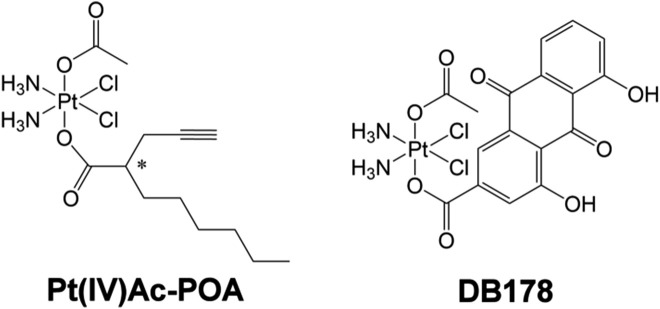
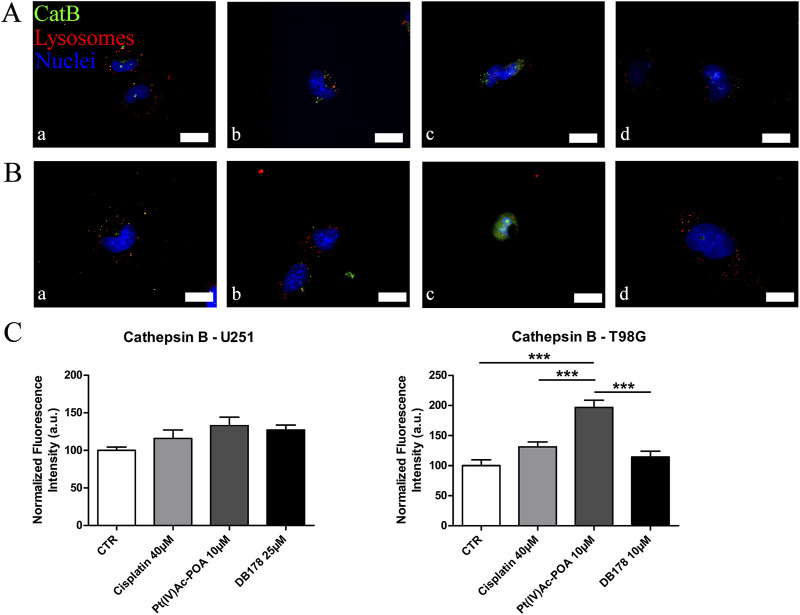
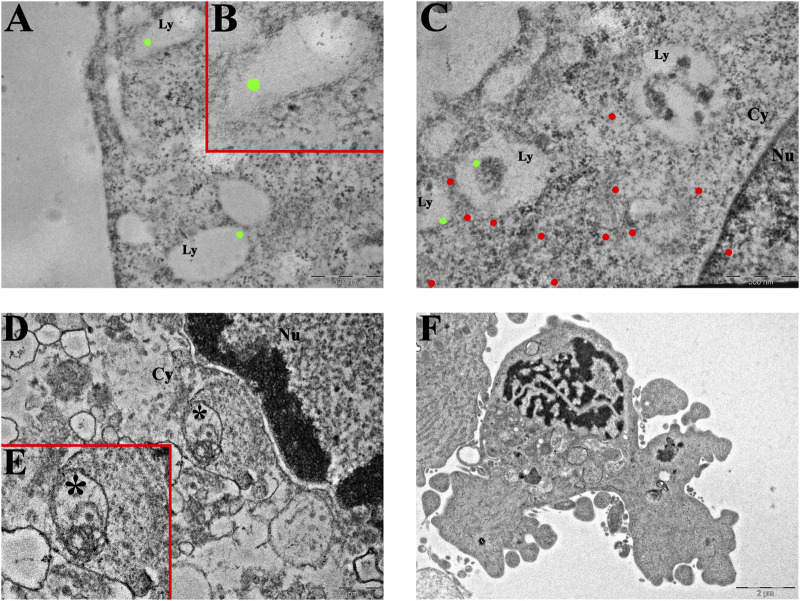
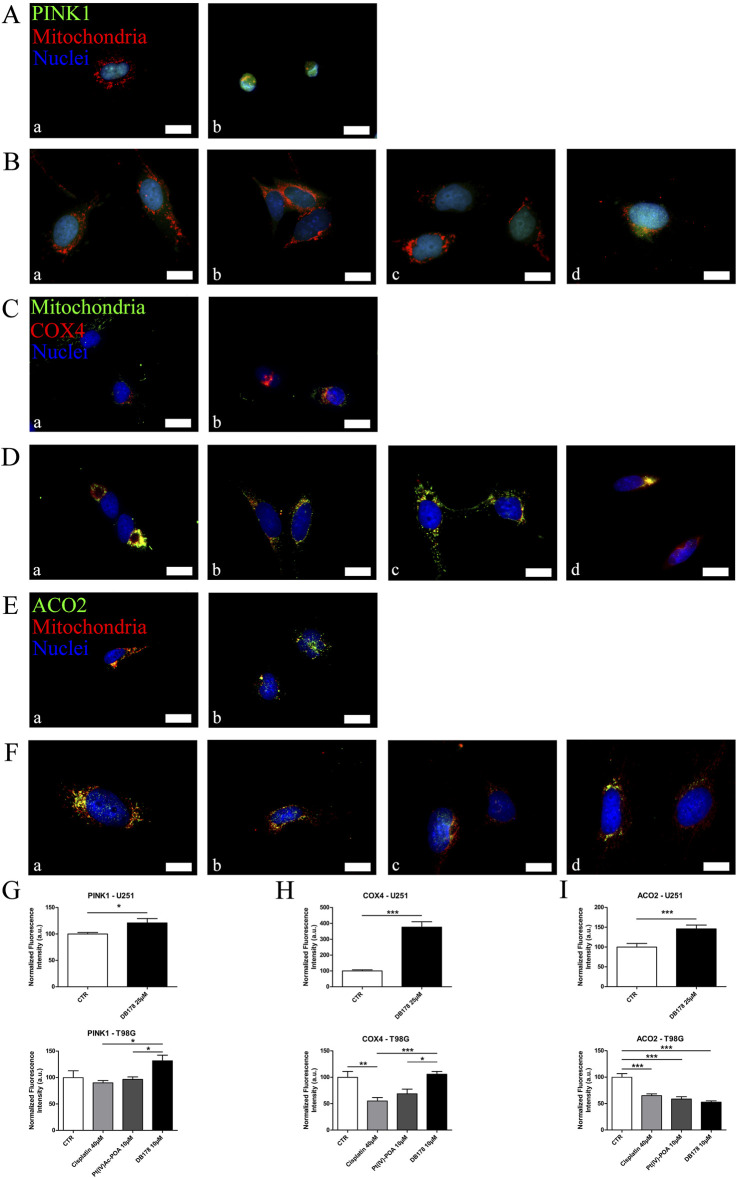
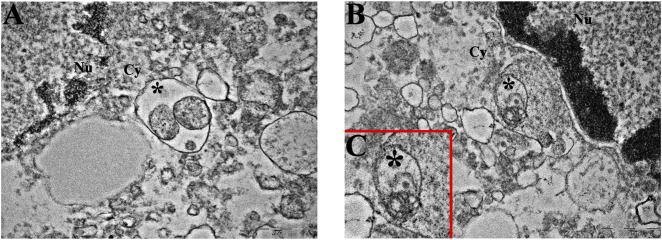
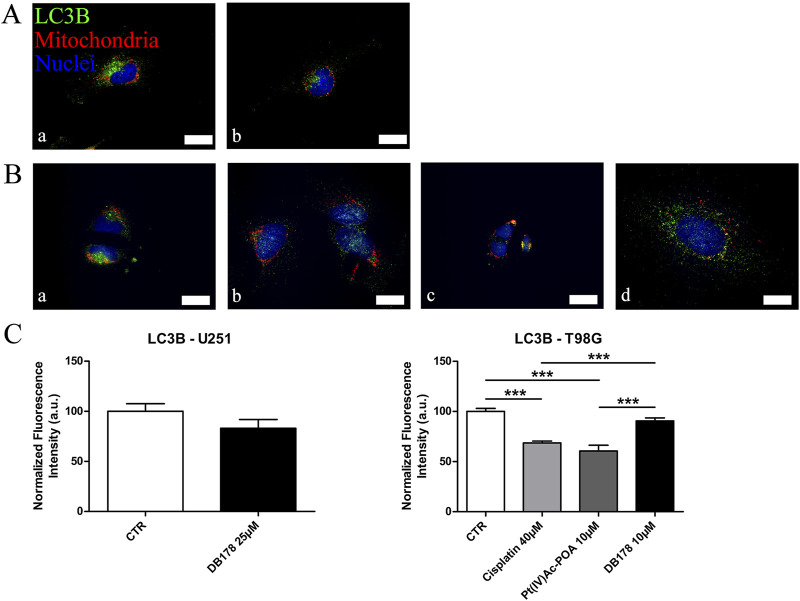
Glioblastoma (GBM) is the most frequent and aggressive brain tumor in adults. Due to its heterogeneity, the abundance of altered signaling pathways within the same tumoral mass, its low immunogenicity, and the presence of the blood-brain barrier, standard therapies based on surgical resection, radiotherapy, and chemotherapy result in ineffective tumor removal. For these reasons, the development of new drugs is mandatory to ameliorate patients' life expectancy and quality of life. Cathepsins are lysosomal proteases involved in several physiological and pathological processes, and they play key roles in modulating cell death and pharmacological resistance. In particular, cathepsin B is a crucial regulatory protein in different types of cell death, and its overexpression contributes to GBM angiogenesis and tumor progression. Octahedral platinum(IV) (Pt(IV))-based prodrugs have already demonstrated improved anticancer efficacy compared to routinely used cisplatin. This work aims to investigate the effects of two such prodrugs-Pt(IV)Ac-POA ((-6-44)-acetatodiamminedichlorido(2-(2-propynyl)octanoato)platinum(IV)) and DB178 ((-6-44)-acetatodiamminedichlorido(4,5-dihydroxy-9,10-dioxo-9,10-dihydroanthracene-2-carboxylato)platinum(IV))-on two different glioblastoma cell lines, U251 and T98G, with particular attention to their effects on cathepsin B. The immunocytochemical and biochemical results obtained on the two cell lines highlight the maintenance of basal levels of cathepsin B while efficiently activating programmed cell death mechanisms, as investigated by optical and electronic microscopy. These findings may serve as a valid starting point for further approaches that incorporate cathepsins' inhibitors to improve therapeutic efficacy and possibly reveal novel pharmacological targets.
胶质母细胞瘤(GBM)是成人中最常见且侵袭性最强的脑肿瘤。由于其异质性、同一肿瘤块内大量改变的信号通路、低免疫原性以及血脑屏障的存在,基于手术切除、放疗和化疗的标准疗法导致肿瘤切除无效。基于这些原因,开发新药对于改善患者的预期寿命和生活质量至关重要。组织蛋白酶是参与多种生理和病理过程的溶酶体蛋白酶,它们在调节细胞死亡和药理抗性中起关键作用。特别是,组织蛋白酶B是不同类型细胞死亡中的关键调节蛋白,其过表达促进GBM血管生成和肿瘤进展。与常规使用的顺铂相比,基于八面体铂(IV)(Pt(IV))的前药已显示出更高的抗癌疗效。这项工作旨在研究两种这样的前药——Pt(IV)Ac - POA((-6-44)-乙酰二胺二氯(2-(2-丙炔基)辛酸酯)铂(IV))和DB178((-6-44)-乙酰二胺二氯(4,5-二羟基-9,10-二氧代-9,10-二氢蒽-2-羧酸酯)铂(IV))——对两种不同的胶质母细胞瘤细胞系U251和T98G的影响,特别关注它们对组织蛋白酶B的影响。通过光学和电子显微镜研究,在这两种细胞系上获得的免疫细胞化学和生化结果突出了组织蛋白酶B基础水平的维持,同时有效地激活了程序性细胞死亡机制。这些发现可能作为进一步方法的有效起点,这些方法纳入组织蛋白酶抑制剂以提高治疗效果,并可能揭示新的药理学靶点。