Kebede Shimels Derso, Walle Agmasie Damtew, Mamo Daniel Niguse, Enyew Ermias Bekele, Adem Jibril Bashir, Alemayehu Meron Asmamaw
Department of Health Informatics, School of Public Health, College of Medicine and Health Science, Wollo University, Dessie, Ethiopia.
Department of Health Informatics, School of Public Health, Asrat Woldeyes Health Science Campus, Debre Birhan University, Debre Berhan, Ethiopia.
PLOS Glob Public Health. 2025 Jun 20;5(6):e0004787. doi: 10.1371/journal.pgph.0004787. eCollection 2025.
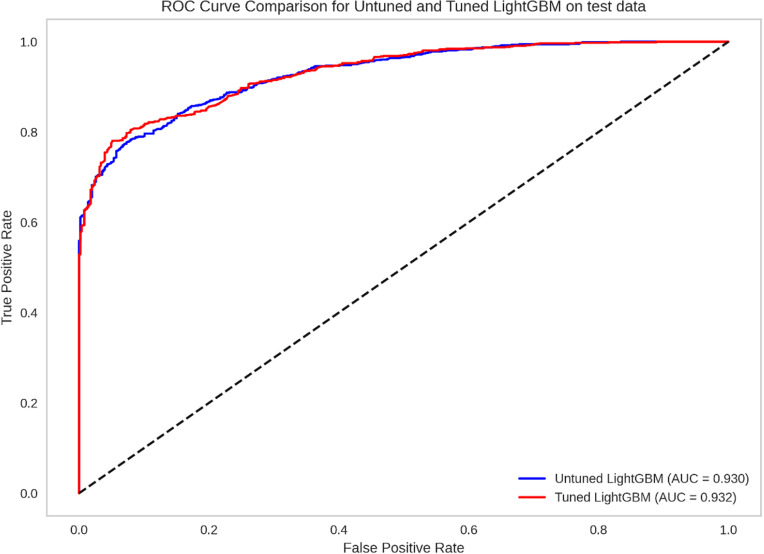
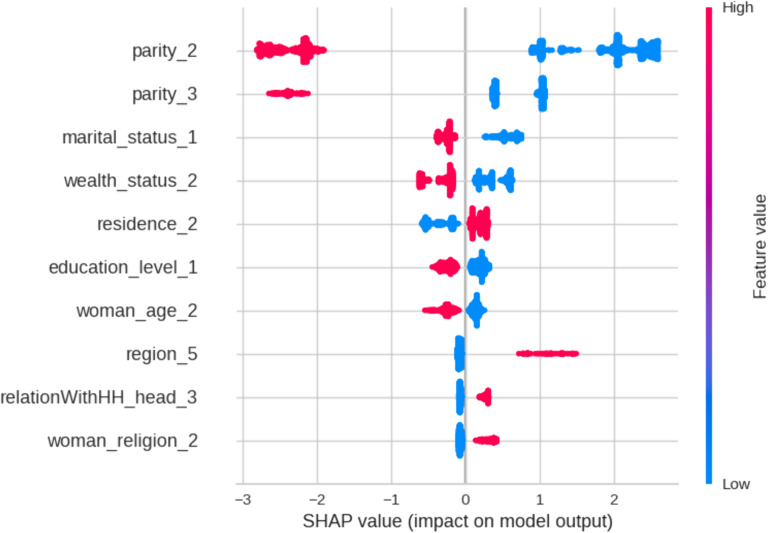
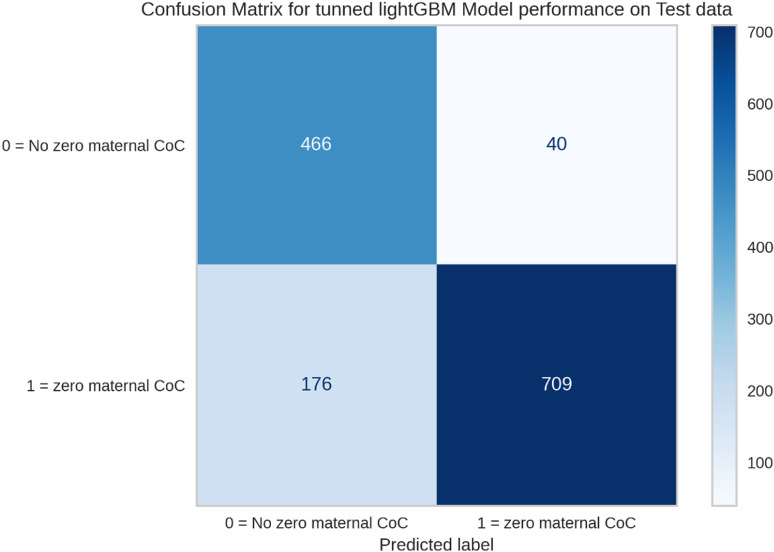
Ensuring complete utilization of maternal continuum of care is essential for reducing maternal and neonatal mortality. In Ethiopia, significant gaps remain in maternal healthcare utilization, particularly among women who do not engage in any stage of the maternal care continuum. This study aims to identify the determinants of zero utilization in the maternal continuum of care among Ethiopian women using machine learning techniques, with insights provided by SHAP (SHapley Additive exPlanations) analysis. This study analyzed data from the 2019 Ethiopian Mini Demographic and Health Survey, using a cross-sectional design. The dataset was preprocessed and modeled using various machine learning algorithms through the PyCaret library, with lightGBM emerging as the best model after various models trained and evaluated based on classification performance metrics. S Synthetic Minority Over-sampling Technique was applied to address class imbalance. SHAP analysis was used to interpret model predictions and identify key predictors. lightGBM demonstrated robust performance with an accuracy of 84.47%, an AUC of 0.93, a recall of 0.80, a precision of 0.95, and an F1-score of 0.87 on test data. SHAP analysis revealed that residence in rural areas, the Somali region, being a daughter in the household, and Protestant religion were positively associated with zero maternal care utilization. Conversely, secondary or higher education, being married, higher wealth status, and having multiple children were associated with lower likelihoods of zero care utilization. The findings highlight the critical role of socioeconomic, demographic, and regional factors in maternal care utilization in Ethiopia. Targeted interventions, particularly in rural and underserved areas, are necessary to reduce barriers and promote equitable access to maternal healthcare services across Ethiopia. These insights can inform policies aimed at expanding female education, strengthening community-based maternal health programs, and prioritizing resource allocation to regions such as Somali where zero utilization is highest.
确保孕产妇连续护理的充分利用对于降低孕产妇和新生儿死亡率至关重要。在埃塞俄比亚,孕产妇医疗保健利用方面仍存在重大差距,尤其是在未参与孕产妇护理连续体任何阶段的妇女中。本研究旨在使用机器学习技术确定埃塞俄比亚妇女孕产妇连续护理零利用的决定因素,并通过SHAP(SHapley加性解释)分析提供见解。本研究采用横断面设计,分析了2019年埃塞俄比亚小型人口与健康调查的数据。通过PyCaret库使用各种机器学习算法对数据集进行预处理和建模,在基于分类性能指标对各种模型进行训练和评估后,lightGBM成为最佳模型。应用合成少数过采样技术来解决类别不平衡问题。使用SHAP分析来解释模型预测并识别关键预测因素。lightGBM在测试数据上表现出稳健的性能,准确率为84.47%,AUC为0.93,召回率为0.80,精确率为0.95,F1分数为0.87。SHAP分析表明,农村地区居住、索马里地区、家庭中是女儿以及新教与孕产妇护理零利用呈正相关。相反,中等或高等教育、已婚、较高的财富状况以及有多个孩子与零护理利用的可能性较低相关。研究结果突出了社会经济、人口和地区因素在埃塞俄比亚孕产妇护理利用中的关键作用。有针对性的干预措施,特别是在农村和服务不足地区,对于减少障碍并促进埃塞俄比亚各地公平获得孕产妇医疗服务是必要的。这些见解可为旨在扩大女性教育、加强基于社区的孕产妇健康项目以及优先向零利用最高的索马里等地区分配资源的政策提供参考。