Zhao Fengxin, Chen Fuying, Song Tao, Tian Luoqiang, Guo Hang, Li Dongxiao, Yang Jirong, Zhang Kai, Xiao Yumei, Zhang Xingdong
National Engineering Research Center for Biomaterials, College of Biomedical Engineering, Research Center for Material Genome Engineering, Sichuan University, Chengdu, 610065, China.
Sichuan Academy of Chinese Medicine Science, Chengdu, Sichuan, 610042, China.
Bioact Mater. 2025 Jun 10;52:271-286. doi: 10.1016/j.bioactmat.2025.06.001. eCollection 2025 Oct.
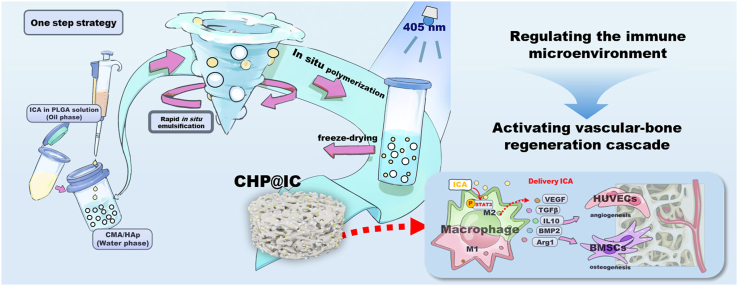
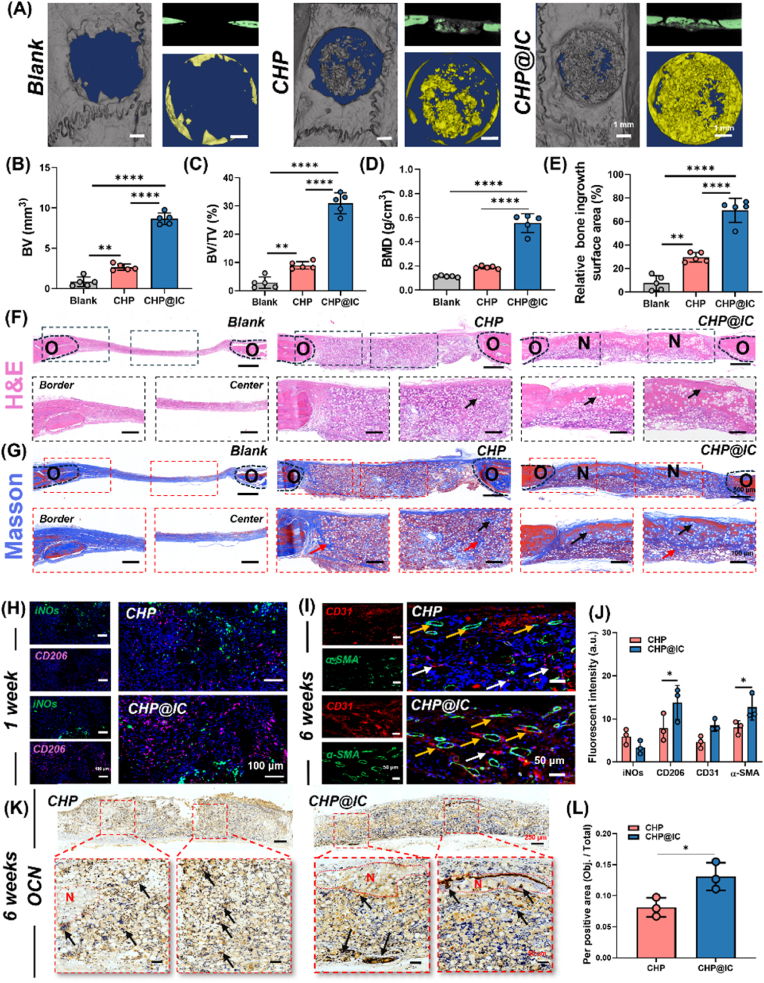
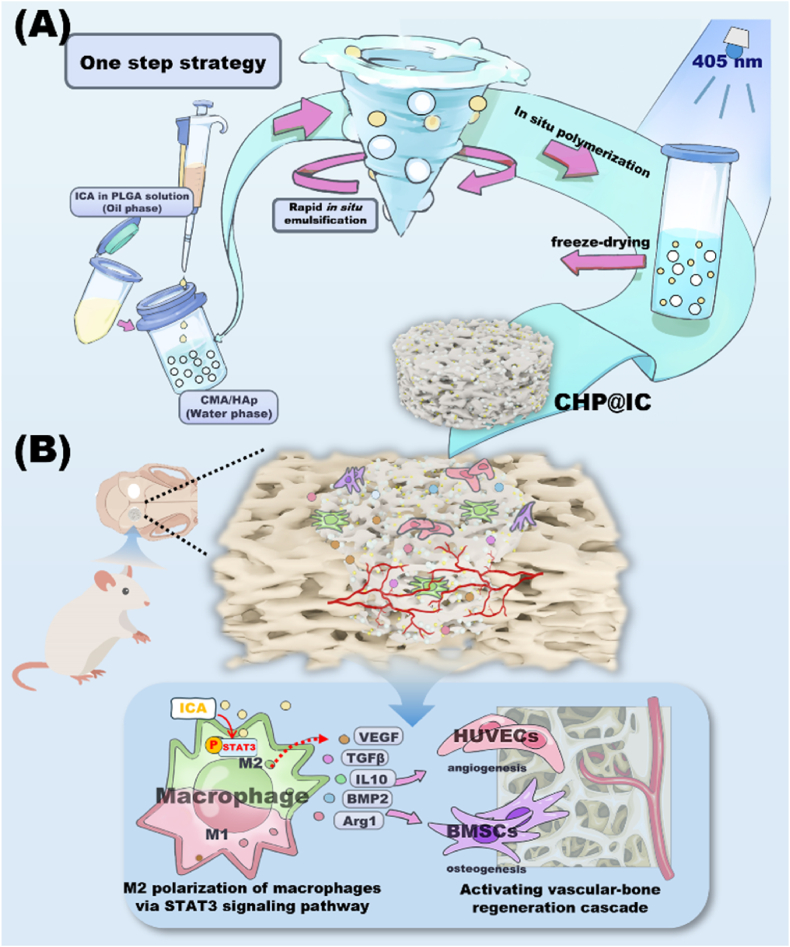
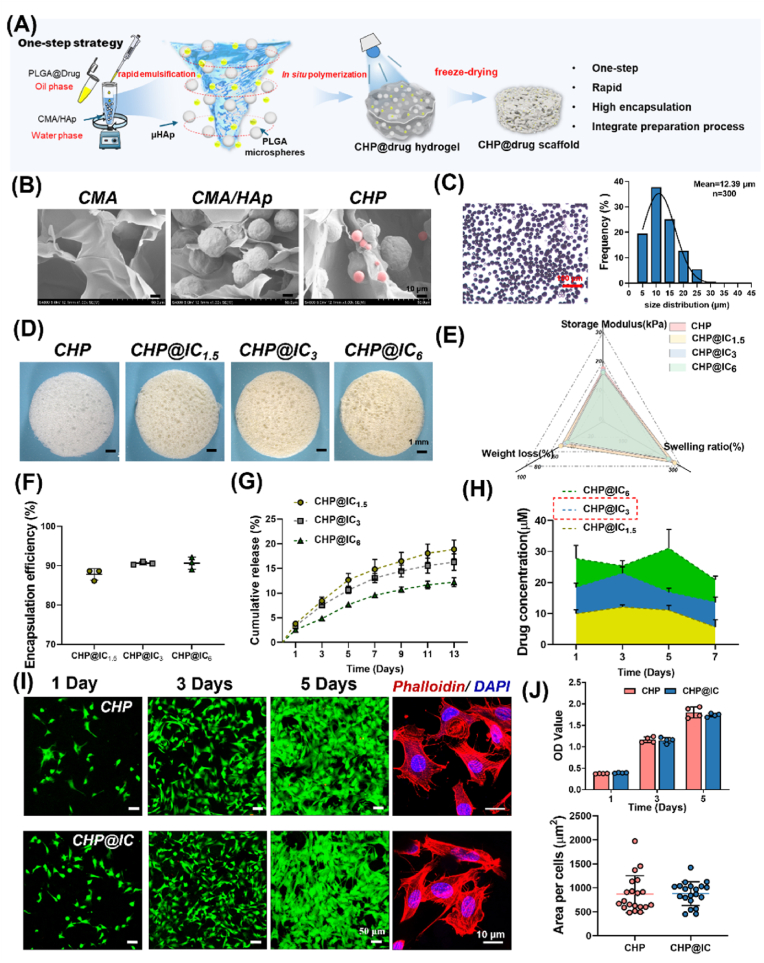
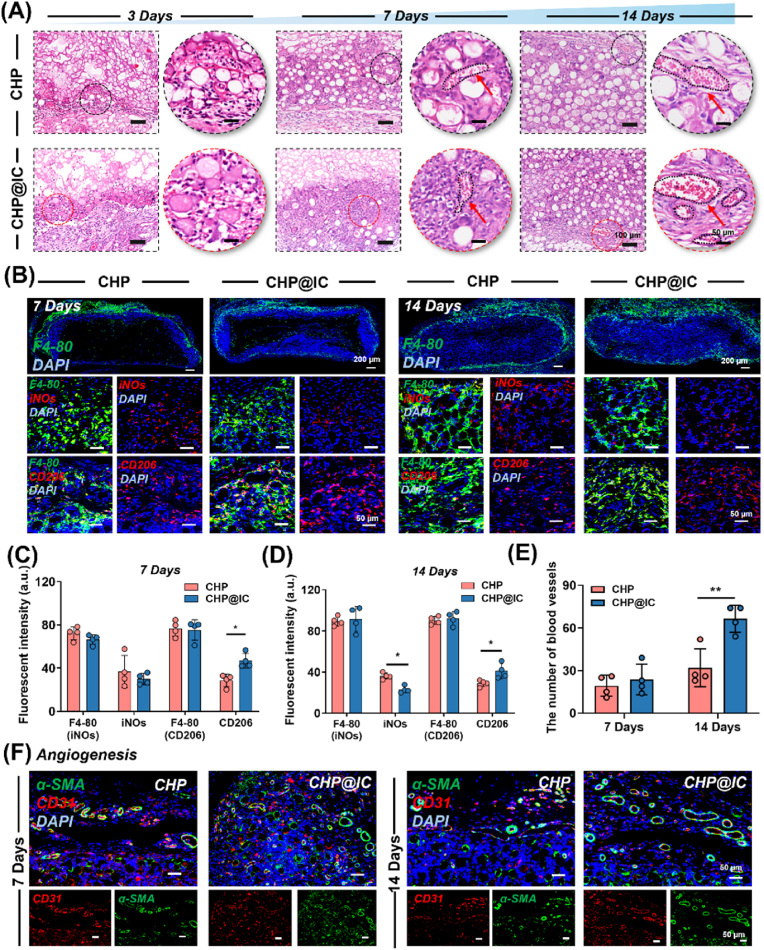
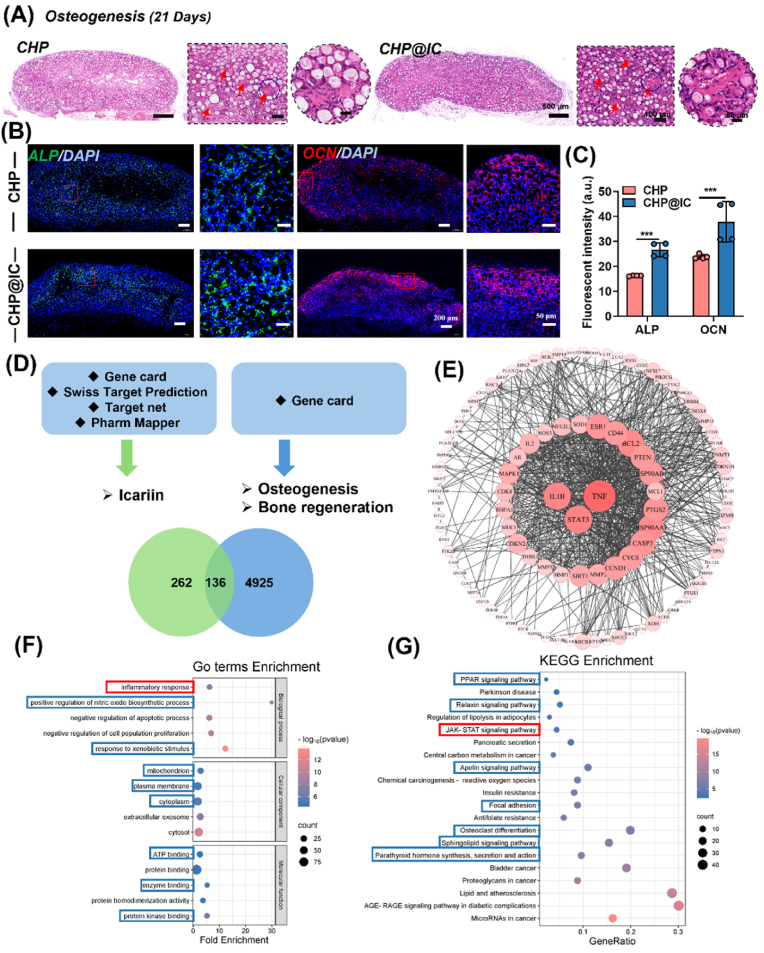
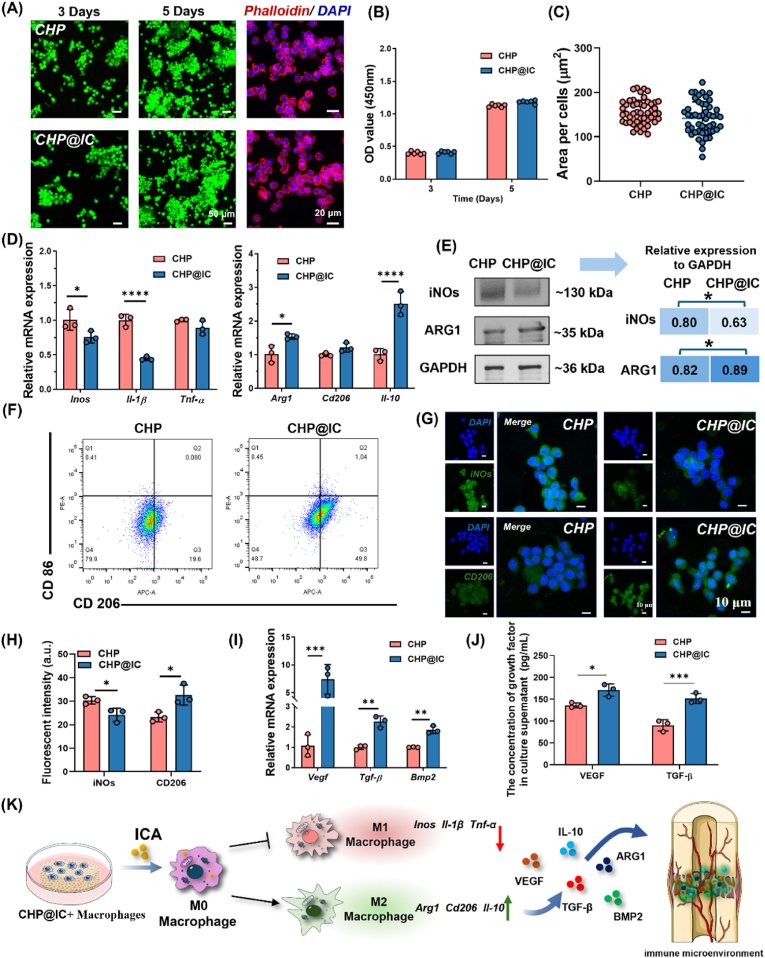
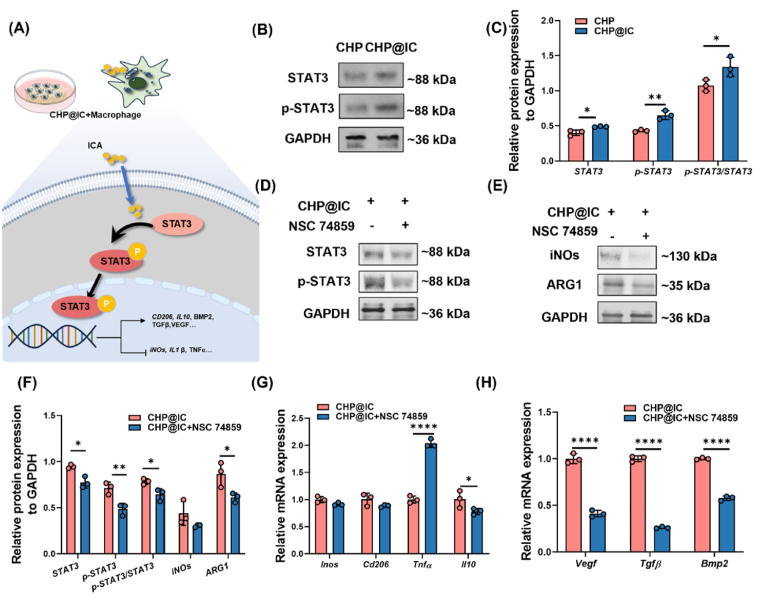
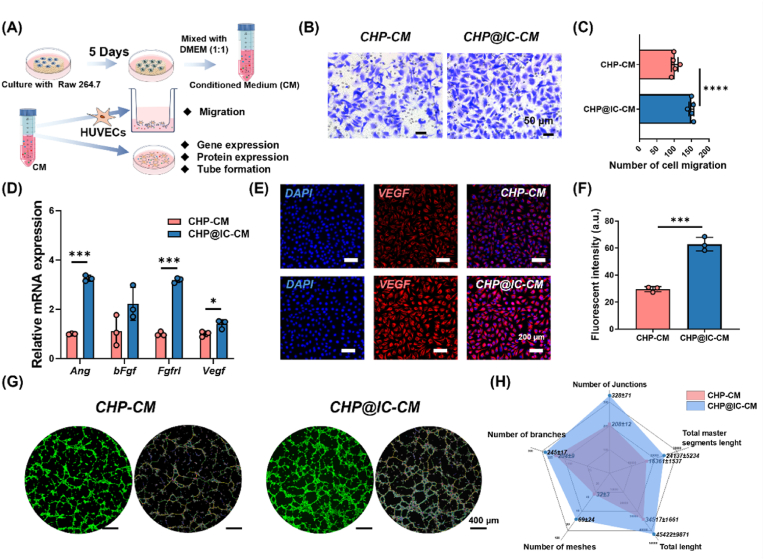
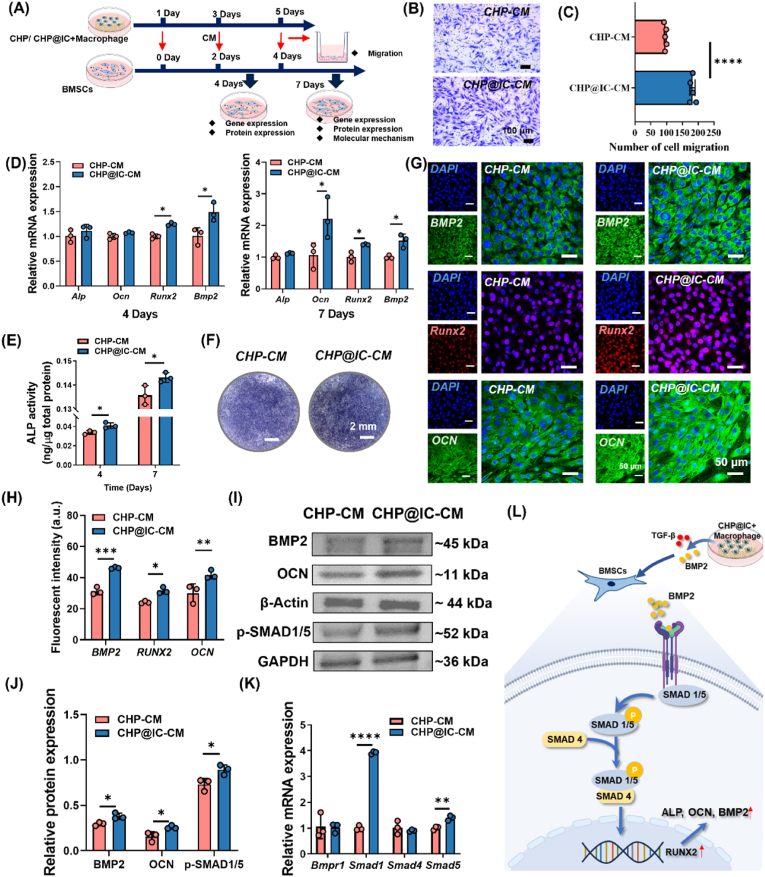
The repair of bone defects relies on the intricate coordination of inflammation, angiogenesis, and osteogenesis. However, scaffolds capable of integrating osteo-immunomodulation and vascular-bone coupling to cascade-activate these processes remain a challenge. Here, a biomimetic scaffold (CHP@IC) with PLGA@icariin (PLGA@IC) microspheres encapsulation was successfully fabricated using a one-step emulsification and polymerization strategy. This approach not only simplifies the fabrication process but also ensures high encapsulation efficiency and sustained release of IC through PLGA@IC microspheres. The findings from subcutaneous implantation, network pharmacology-predicted molecular targets, and studies collectively reveal that the CHP@IC-induced M2 polarization of macrophages via STAT3 signaling pathway triggers the sequential activation of inflammation, angiogenesis, and osteogenesis to enhance bone regeneration. The CHP@IC scaffold exhibited a significant osteogenic advantage in cranial defect repair, yielding new bone volumes approximately 3-fold and 10-fold greater than those in the CHP group and blank control group, respectively. This study not only elucidates the mechanism of IC in promoting regeneration of bone but also provides a novel method for designing scaffolds aimed at the efficient repair of bone defects.
骨缺损的修复依赖于炎症、血管生成和成骨之间的复杂协调。然而,能够整合骨免疫调节和血管-骨耦合以级联激活这些过程的支架仍然是一个挑战。在此,采用一步乳化聚合策略成功制备了一种包载PLGA@淫羊藿苷(PLGA@IC)微球的仿生支架(CHP@IC)。这种方法不仅简化了制备过程,还确保了高包封率以及通过PLGA@IC微球实现IC的持续释放。皮下植入实验结果、网络药理学预测的分子靶点以及相关研究共同表明,CHP@IC通过STAT3信号通路诱导巨噬细胞向M2极化,从而触发炎症、血管生成和成骨的顺序激活,以增强骨再生。CHP@IC支架在颅骨缺损修复中表现出显著的成骨优势,产生的新骨体积分别比CHP组和空白对照组大3倍和10倍左右。本研究不仅阐明了IC促进骨再生的机制,还为设计旨在有效修复骨缺损的支架提供了一种新方法。