Maiello Pauline, Diedrich Collin, Rutledge Tara, Rodgers Mark, Kracinovsky Kara, Borish H Jacob, White Alexander, Hopkins Forrest, Chao Michael C, Klein Edwin, Fortune Sarah, Flynn JoAnne L, Lin Philana Ling
Department of Microbiology and Molecular Genetics, University of Pittsburgh School of Medicine, Pittsburgh, Pennsylvania, USA.
Center for Vaccine Research, University of Pittsburgh School of Medicine, Pittsburgh, Pennsylvania, USA.
Infect Immun. 2025 Aug 12;93(8):e0017725. doi: 10.1128/iai.00177-25. Epub 2025 Jun 23.
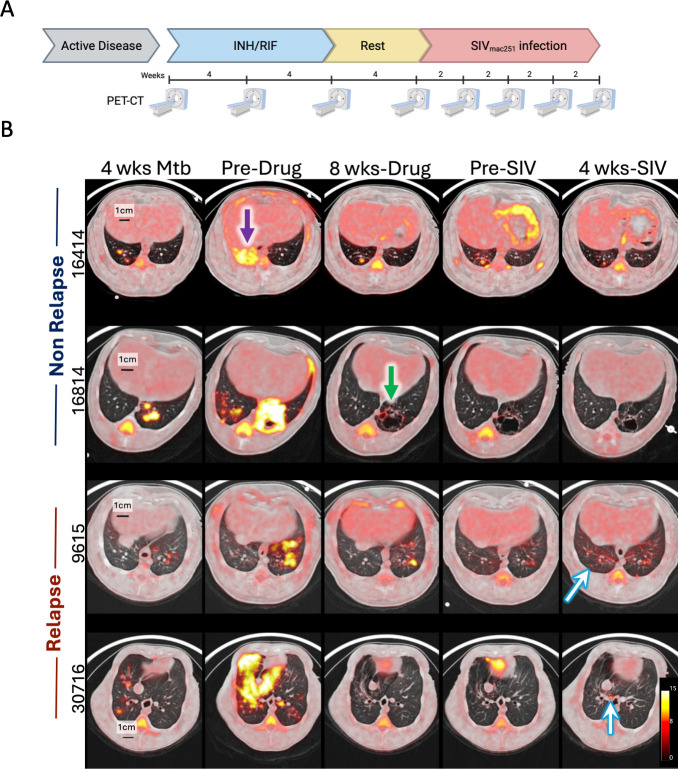
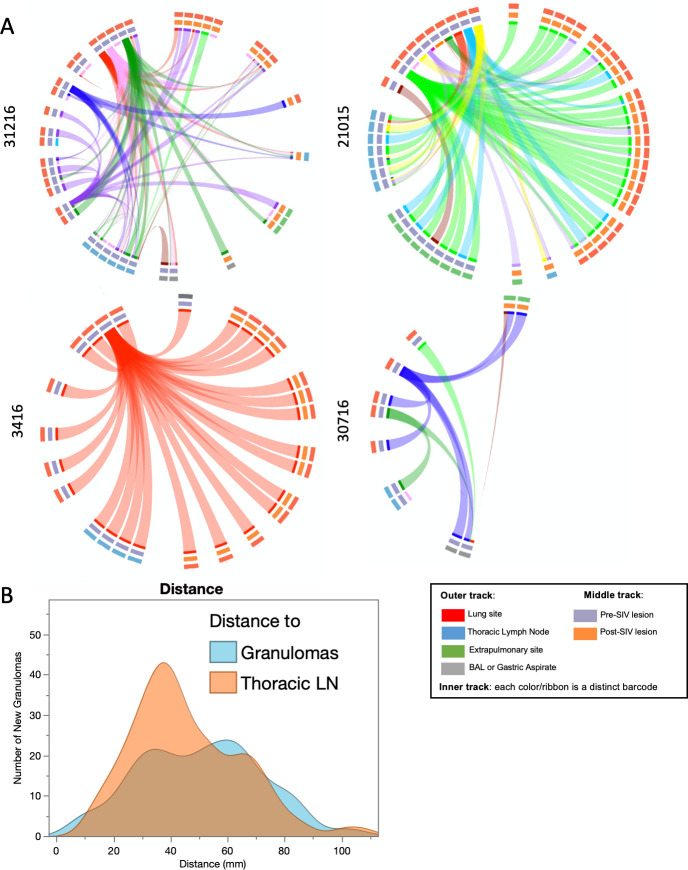
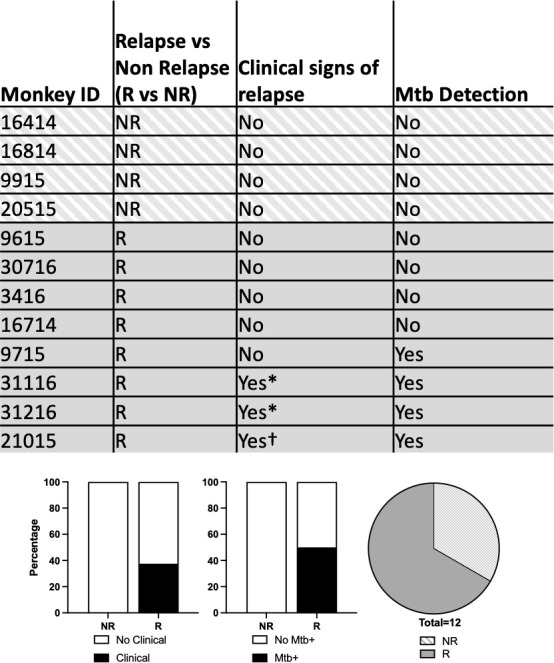
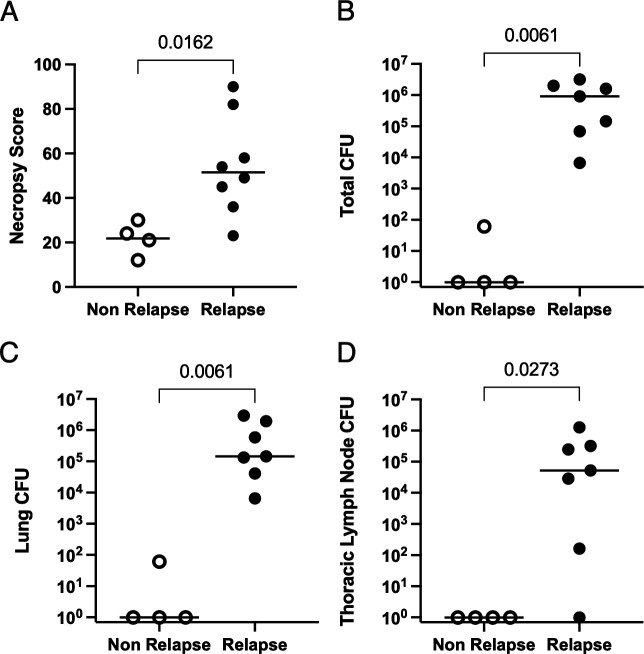
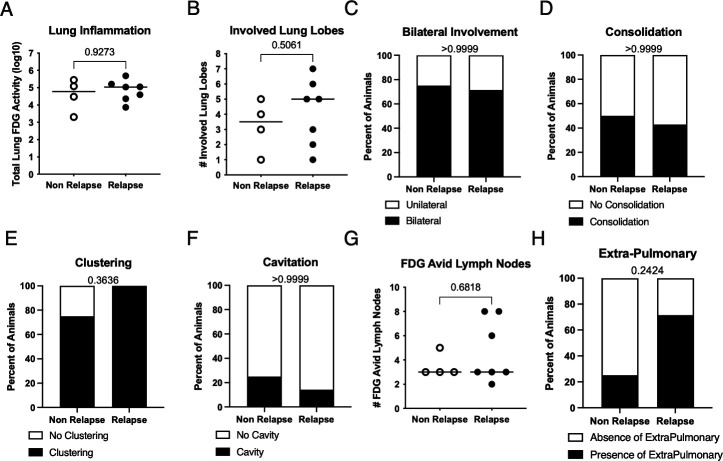
Tuberculosis (TB) relapse after appropriate drug treatment is poorly understood but critical to developing shorter treatment regimens. Using a cynomolgus macaque model of human TB, macaques with active TB disease were treated with a short course of isoniazid and rifampin and subsequently infected with SIV. Serial clinical, microbiologic, immunologic, and position emission and computed tomography (PET CT) assessments were performed to identify risk factors of relapse. Of the 12 animals, eight developed radiologically defined relapse, including four that had clinical and/or microbiologic signs. Greater gross pathology and bacterial burden were observed in relapse animals. PET CT characteristics before, during, and at the end of the treatment were similar among relapse and non-relapse animals. We show that complete sterilization or very low Mtb burden is protective against SIV-induced TB relapse but cannot be predicted by PET CT. Using barcoded , we found that Mtb dissemination during relapse originated from both lung and thoracic lymph nodes, underscoring the importance of lymph nodes as a reservoir. By matching barcoded Mtb and serial PET CT, we also demonstrate that not every site of persistent Mtb growth after drug treatment is capable of dissemination and relapse, underscoring the complex nature of drug treatment and relapse.
在适当的药物治疗后,肺结核(TB)复发的情况目前了解甚少,但对于制定更短疗程的治疗方案至关重要。利用食蟹猴人类结核病模型,对患有活动性结核病的食蟹猴进行短疗程异烟肼和利福平治疗,随后感染猴免疫缺陷病毒(SIV)。进行了一系列临床、微生物学、免疫学以及正电子发射断层扫描和计算机断层扫描(PET CT)评估,以确定复发的危险因素。在12只动物中,8只出现了影像学定义的复发,其中4只伴有临床和/或微生物学体征。复发动物的大体病理学表现和细菌负荷更严重。复发动物与未复发动物在治疗前、治疗期间和治疗结束时的PET CT特征相似。我们发现,完全杀菌或极低的结核分枝杆菌负荷可预防SIV诱导的结核病复发,但无法通过PET CT预测。使用条形码技术,我们发现复发期间结核分枝杆菌的播散源自肺和胸段淋巴结,这突出了淋巴结作为储存库的重要性。通过匹配条形码结核分枝杆菌和连续PET CT,我们还证明,药物治疗后并非每个持续存在结核分枝杆菌生长的部位都能够播散和复发,这突出了药物治疗和复发的复杂性。