Malherbe Stephanus T, Chen Ray Y, Dupont Patrick, Kant Ilse, Kriel Magdalena, Loxton André G, Smith Bronwyn, Beltran Caroline G G, van Zyl Susan, McAnda Shirely, Abrahams Charmaine, Maasdorp Elizna, Doruyter Alex, Via Laura E, Barry Clifton E, Alland David, Richards Stephanie Griffith-, Ellman Annare, Peppard Thomas, Belisle John, Tromp Gerard, Ronacher Katharina, Warwick James M, Winter Jill, Walzl Gerhard
Department of Science and Technology/National Research Foundation, Centre of Excellence for Biomedical Tuberculosis Research and South African Medical Research Council Centre for Tuberculosis Research, Cape Town, South Africa.
Division of Molecular Biology and Human Genetics, Faculty of Medicine and Health Sciences, Stellenbosch University, Cape Town, South Africa.
EJNMMI Res. 2020 Feb 10;10(1):8. doi: 10.1186/s13550-020-0591-9.
There is a growing interest in the use of F-18 FDG PET-CT to monitor tuberculosis (TB) treatment response. Tuberculosis lung lesions are often complex and diffuse, with dynamic changes during treatment and persisting metabolic activity after apparent clinical cure. This poses a challenge in quantifying scan-based markers of burden of disease and disease activity. We used semi-automated, whole lung quantification of lung lesions to analyse serial FDG PET-CT scans from the Catalysis TB Treatment Response Cohort to identify characteristics that best correlated with clinical and microbiological outcomes.
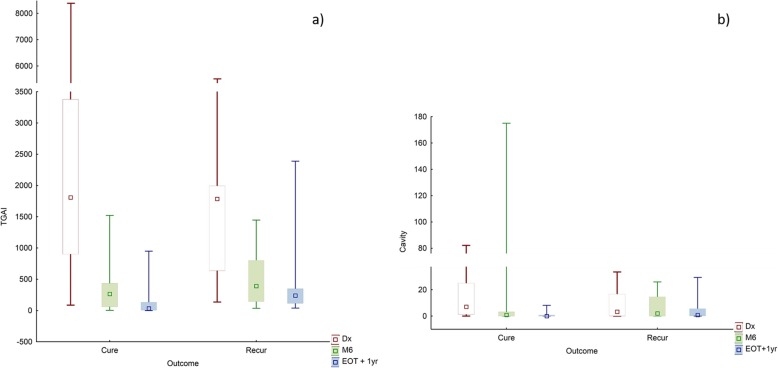
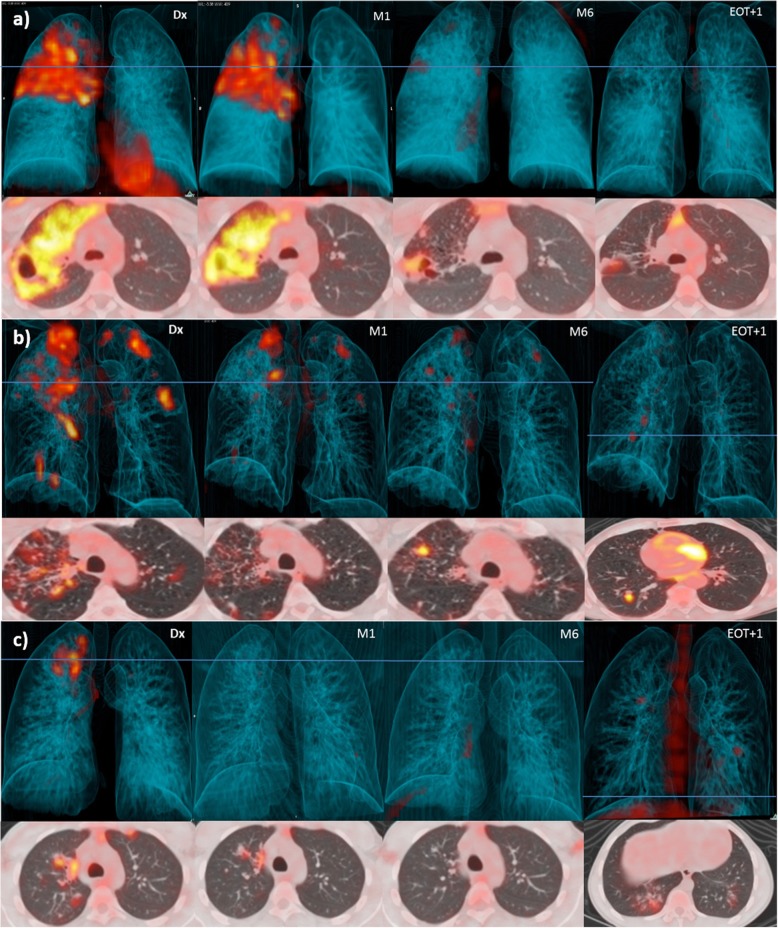
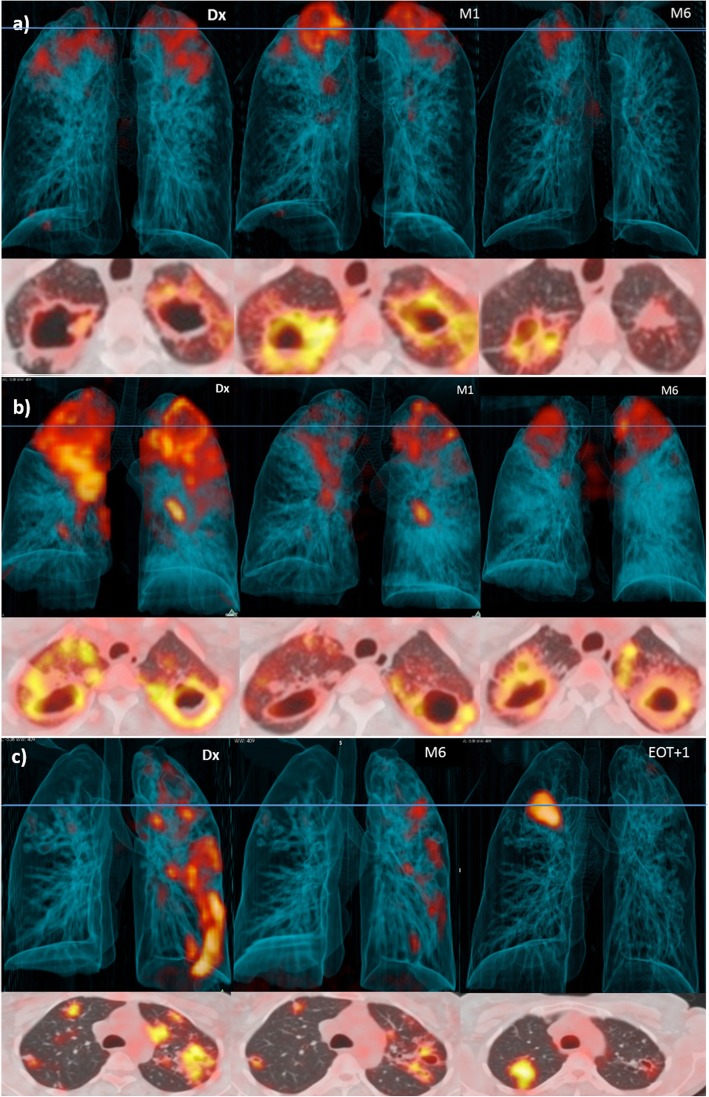
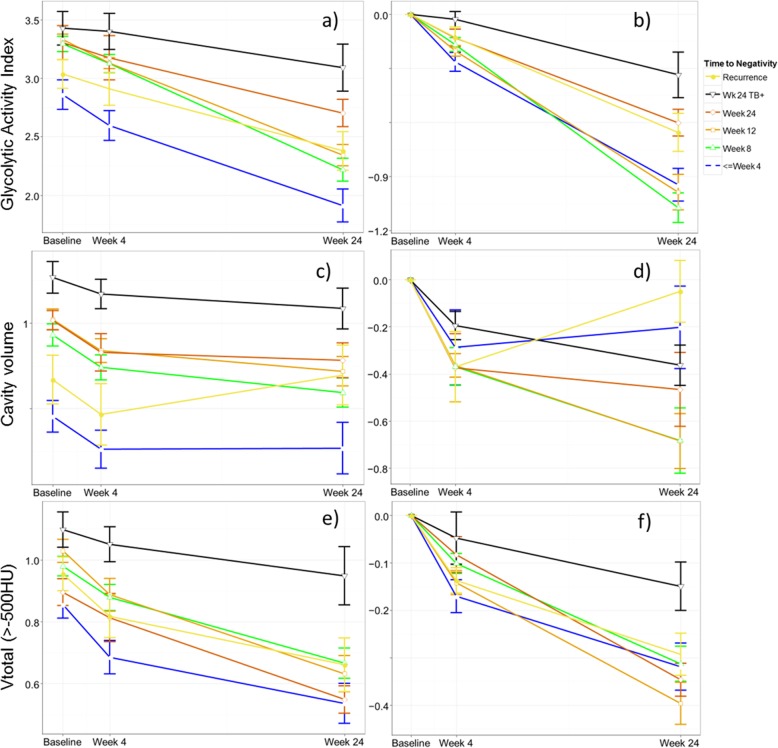
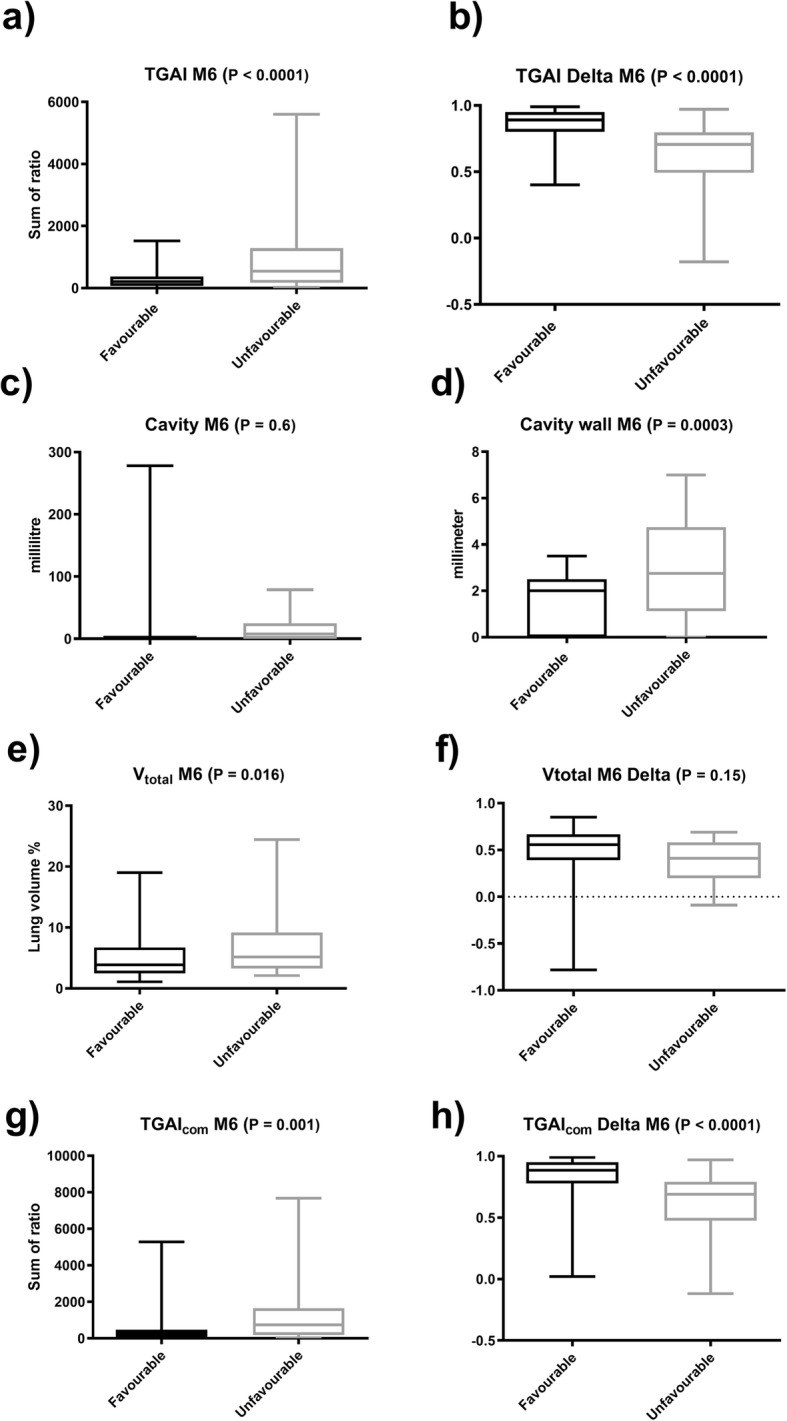
Quantified scan metrics were already associated with clinical outcomes at diagnosis and 1 month after treatment, with further improved accuracy to differentiate clinical outcomes after standard treatment duration (month 6). A high cavity volume showed the strongest association with a risk of treatment failure (AUC 0.81 to predict failure at diagnosis), while a suboptimal reduction of the total glycolytic activity in lung lesions during treatment had the strongest association with recurrent disease (AUC 0.8 to predict pooled unfavourable outcomes). During the first year after TB treatment lesion burden reduced; but for many patients, there were continued dynamic changes of individual lesions.
Quantification of FDG PET-CT images better characterised TB treatment outcomes than qualitative scan patterns and robustly measured the burden of disease. In future, validated metrics may be used to stratify patients and help evaluate the effectiveness of TB treatment modalities.
使用F-18氟代脱氧葡萄糖正电子发射断层扫描-计算机断层扫描(F-18 FDG PET-CT)监测结核病(TB)治疗反应的兴趣日益浓厚。肺结核病变通常复杂且弥漫,在治疗过程中会动态变化,并且在临床明显治愈后仍存在代谢活性。这对量化基于扫描的疾病负担和疾病活动标志物构成了挑战。我们使用半自动的全肺病变量化方法,分析了来自催化结核病治疗反应队列的系列FDG PET-CT扫描,以确定与临床和微生物学结果最相关的特征。
量化的扫描指标在诊断时和治疗后1个月就已与临床结果相关,在标准治疗疗程(第6个月)后区分临床结果的准确性进一步提高。高空洞体积与治疗失败风险的关联最强(诊断时预测失败的AUC为0.81),而治疗期间肺部病变总糖酵解活性降低不理想与疾病复发的关联最强(预测综合不良结果的AUC为0.8)。在结核病治疗后的第一年,病变负担减轻;但对许多患者来说,个别病变仍有持续的动态变化。
与定性扫描模式相比,FDG PET-CT图像的量化能更好地表征结核病治疗结果,并能可靠地测量疾病负担。未来,经过验证的指标可用于对患者进行分层,并有助于评估结核病治疗方式的有效性。