Mksyartinian Patil, Xu Selina, Barroma Chrissa, Peláez Sandra, Stein Barry D
Colorectal Cancer Canada, Westmount, QC H3Z 2P9, Canada.
School of Public Health Sciences, University of Waterloo, Waterloo, ON N2L 3G1, Canada.
Curr Oncol. 2025 May 22;32(6):292. doi: 10.3390/curroncol32060292.
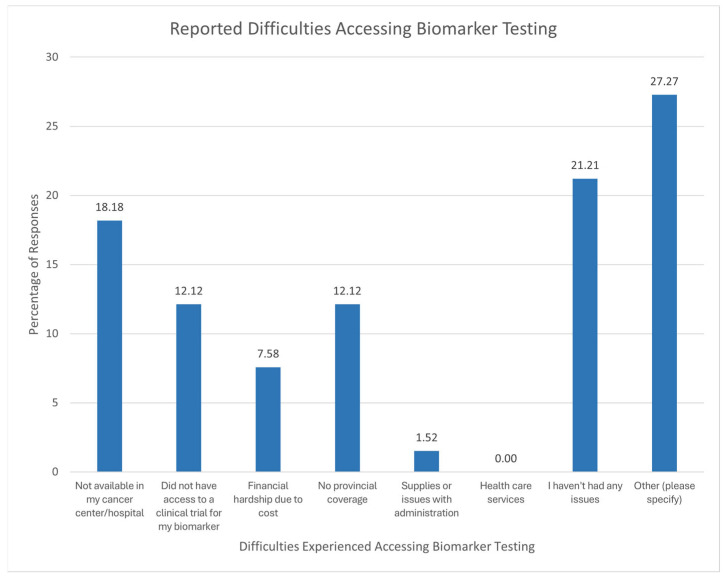
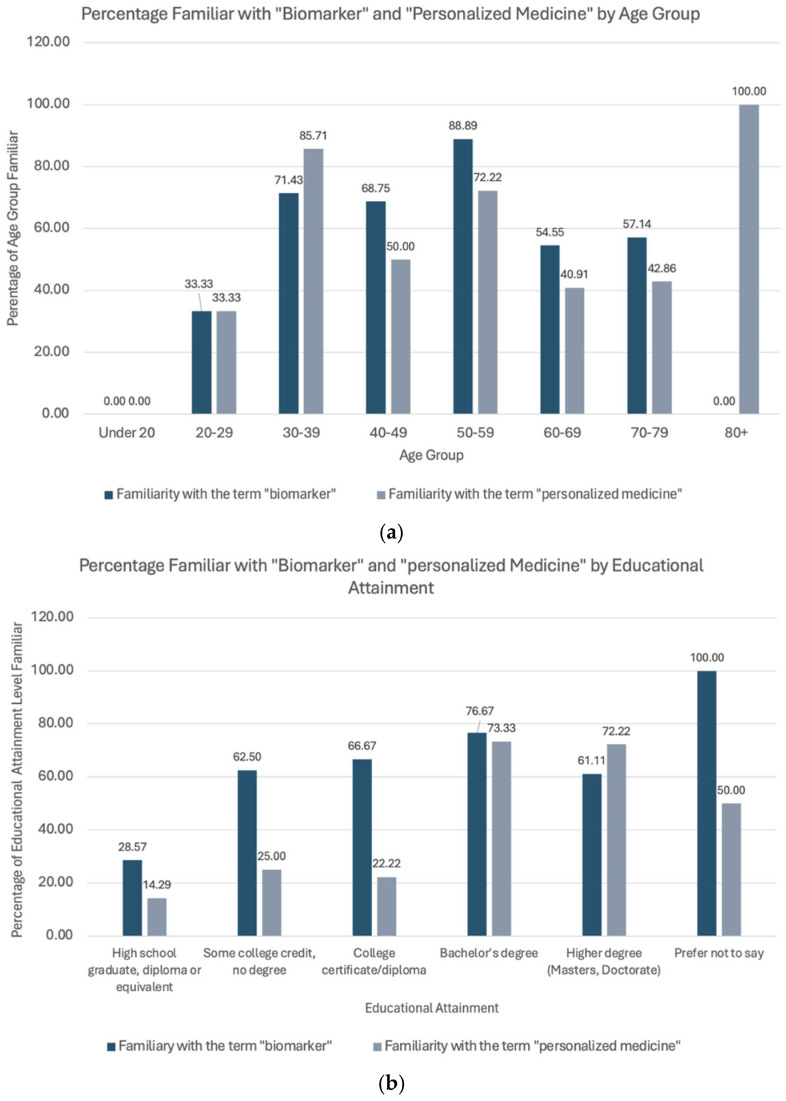
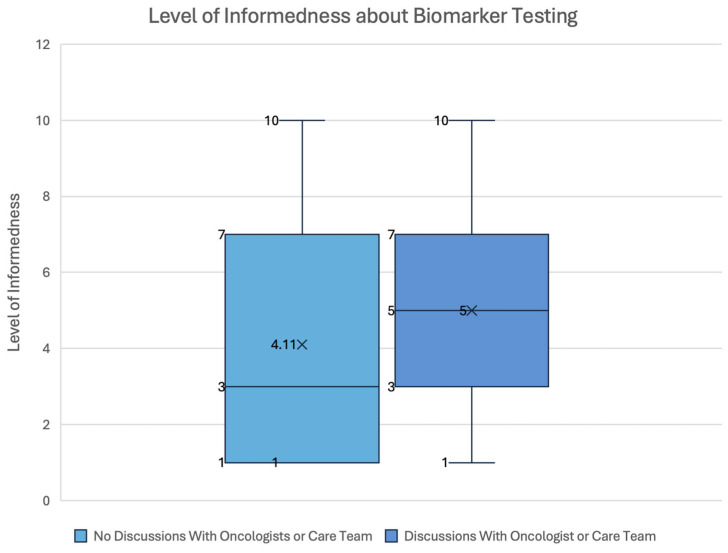
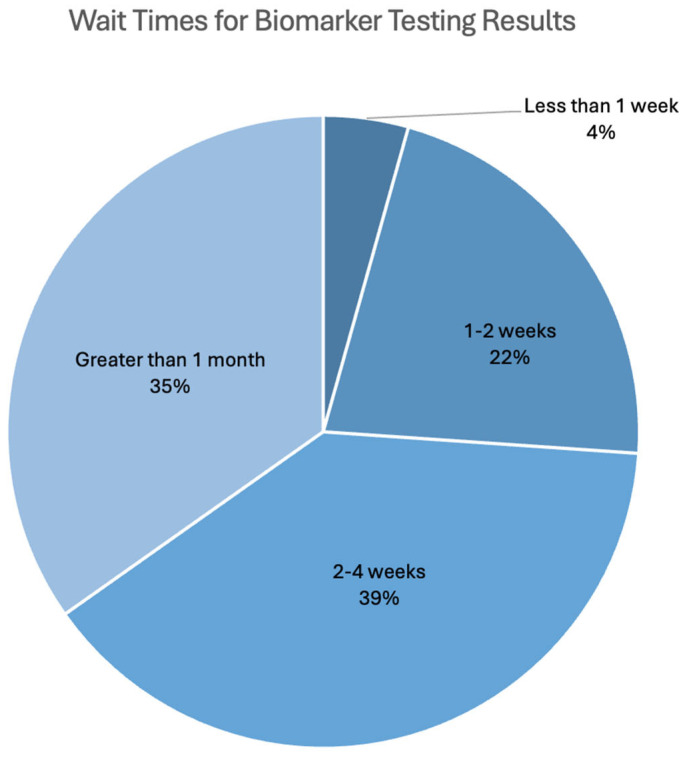
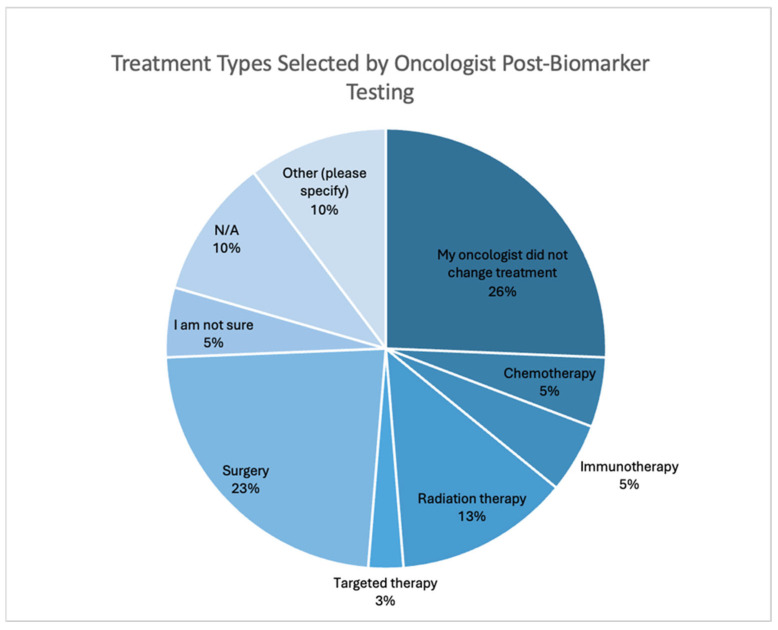
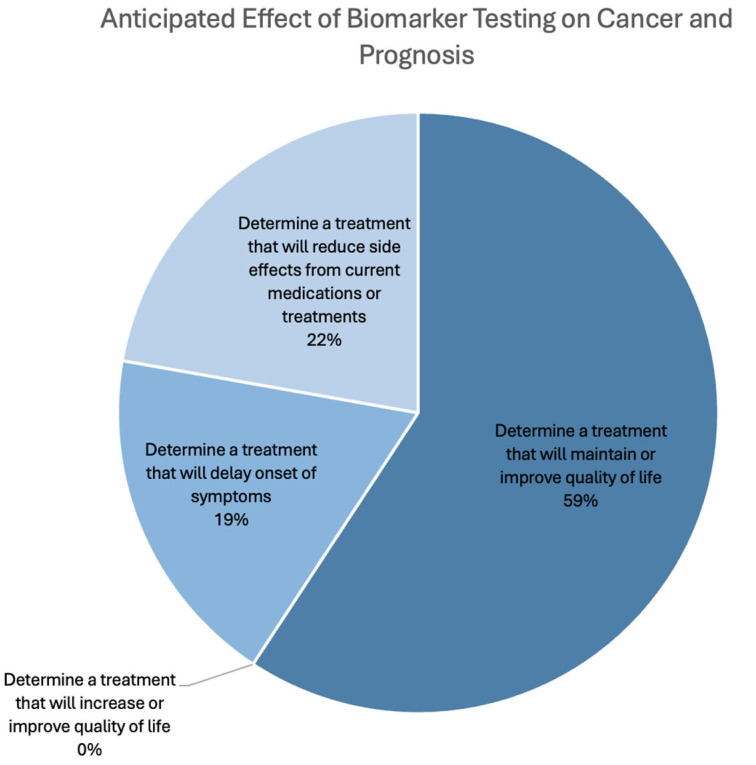
While biomarker testing can provide various benefits for cancer patient outcomes, numerous challenges persist that cause inequities in access across Canada. An online survey consisting of 51 questions was disseminated to evaluate biomarker testing and precision medicine knowledge and experiences from Canadian patients and caregivers. Responses were recorded between June 2023 and January 2024 and assessed various aspects of the biomarker testing experience including the expectations and challenges of patients. Quantitative and qualitative analyses were conducted using Microsoft Excel and R for descriptive and correlative data analysis, respectively. Among the 74 responses, patients reported an overall moderate experience with positive outcomes for those who underwent biomarker testing, including changes to treatment plans and the shrinking of tumours. The main challenges identified included knowledge gaps, a lack of testing availability, turnaround time for results, and financial constraints, all of which contribute to the disparities in biomarker testing access. Qualitative analysis of responses further emphasized a strong patient desire for patient-centred care and collaborative decision-making for biomarker testing options and treatment planning. Addressing these challenges through increased education, policy advocacy, and advancing infrastructure can help to reduce interprovincial inequities in biomarker testing and contribute to improving cancer patient outcomes.
虽然生物标志物检测可为癌症患者的治疗结果带来诸多益处,但加拿大各地仍存在诸多挑战,导致在获取检测方面存在不平等现象。一项包含51个问题的在线调查被广泛传播,以评估加拿大患者和护理人员对生物标志物检测以及精准医学的知识和经验。调查结果于2023年6月至2024年1月期间记录在案,并评估了生物标志物检测体验的各个方面,包括患者的期望和挑战。分别使用Microsoft Excel和R进行定量和定性分析,以进行描述性和相关性数据分析。在74份回复中,患者报告称,总体而言,接受生物标志物检测的患者体验适中,结果呈阳性,包括治疗方案的改变和肿瘤缩小。确定的主要挑战包括知识差距、检测机会不足、结果周转时间以及经济限制,所有这些都导致了生物标志物检测获取方面的差异。对回复的定性分析进一步强调,患者强烈希望以患者为中心进行护理,并就生物标志物检测选项和治疗规划进行共同决策。通过加强教育、政策倡导和改善基础设施来应对这些挑战,有助于减少生物标志物检测方面的省际不平等,并有助于改善癌症患者的治疗结果。