Wan Hsiao-Hsuan, Chiang Chao-Ching, Ren Fan, Tsai Cheng-Tse, Chou Yu-Siang, Chiu Chun-Wei, Liao Yu-Te, Neal Dan, Heldermon Coy D, Rocha Mateus G, Esquivel-Upshaw Josephine F
Department of Chemical Engineering, University of Florida, Gainesville, FL 32611, USA.
Department of Electronics and Electrical Engineering, National Yang Ming Chiao Tung University, Hsinchu 30010, Taiwan.
Biosensors (Basel). 2025 Jun 15;15(6):386. doi: 10.3390/bios15060386.
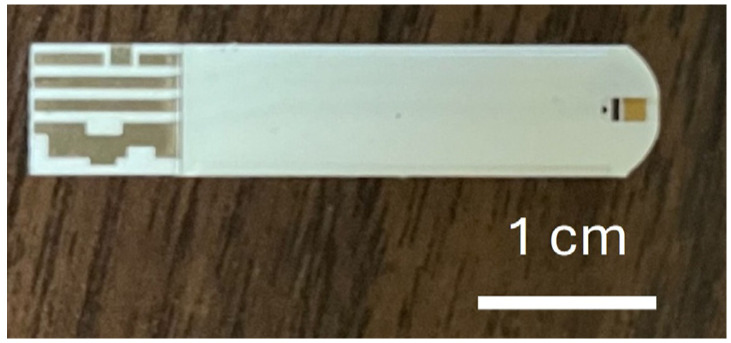
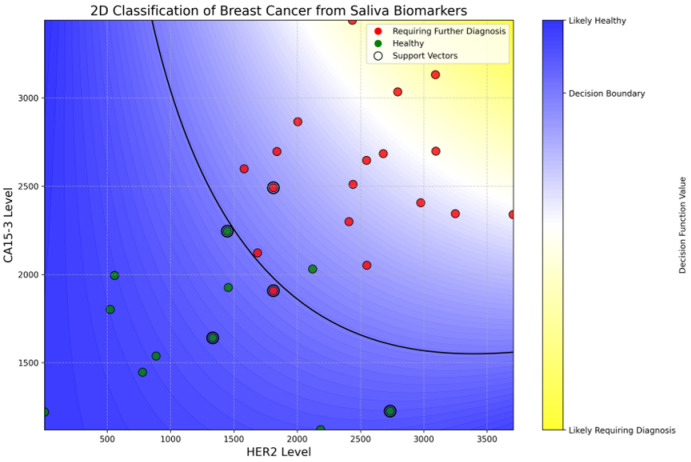
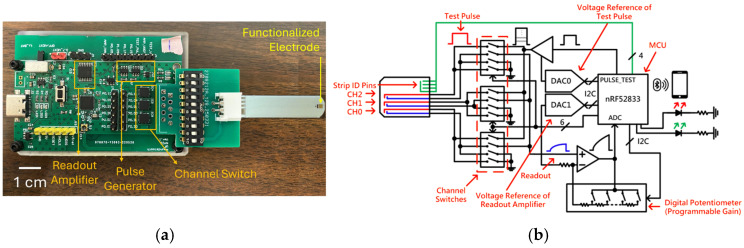
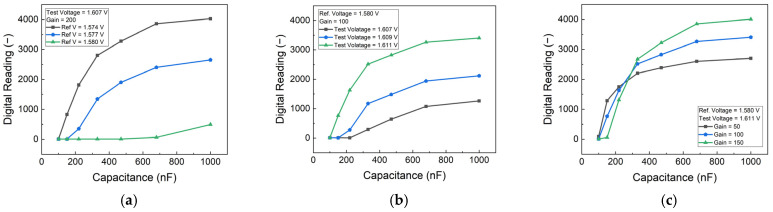
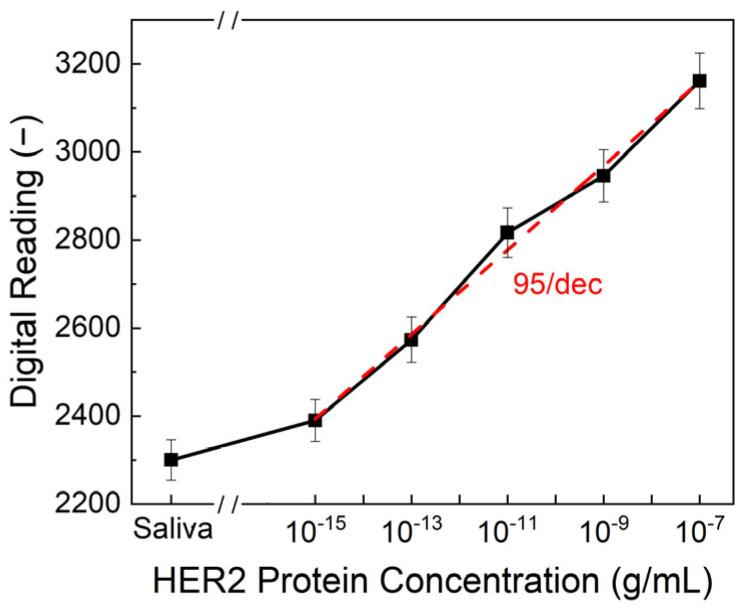
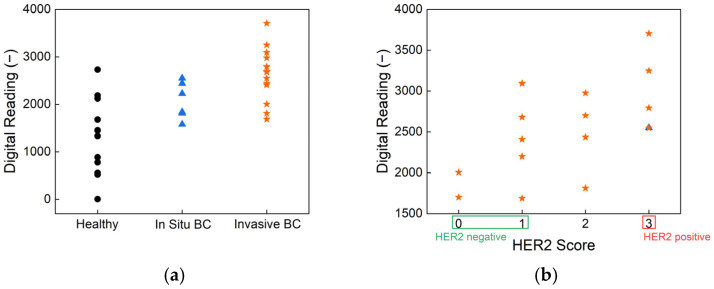
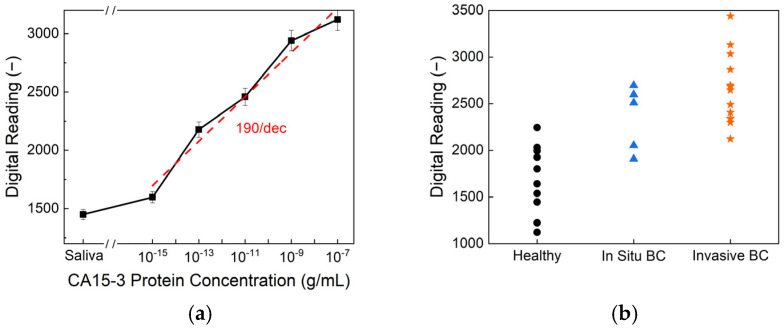
Breast cancer is a leading cause of cancer-related mortality worldwide, requiring efficient diagnostic tools for early detection and monitoring. Human epidermal growth factor receptor 2 (HER2) is a key biomarker for breast cancer classification, typically assessed using immunohistochemistry (IHC). However, IHC requires invasive biopsies and time-intensive laboratory procedures. In this study, we present a biosensor integrated with a reusable printed circuit board (PCB) and functionalized glucose test strips designed for rapid and non-invasive HER2 detection in saliva. The biosensor achieved a limit of detection of 10 g/mL, 4 to 5 orders of magnitude more sensitive than the enzyme-linked immunosorbent assay (ELISA), with a sensitivity of 95/dec and a response time of 1 s. In addition to HER2, the biosensor also detects cancer antigen 15-3 (CA15-3), another clinically relevant breast cancer biomarker. The CA15-3 test demonstrated an equally low limit of detection, 10 g/mL, and a higher sensitivity, 190/dec, further validated using human saliva samples. Clinical validation using 29 saliva samples confirmed our biosensor's ability to distinguish between healthy, in situ breast cancer, and invasive breast cancer patients. The system, which integrates a Bluetooth Low-Energy (BLE) module, enables remote monitoring, reduces hospital visits, and enhances accessibility for point-of-care and mobile screening applications. This ultra-sensitive, rapid, and portable biosensor can serve as a promising alternative for breast cancer detection and monitoring, particularly in rural and underserved communities.
乳腺癌是全球癌症相关死亡的主要原因,需要有效的诊断工具用于早期检测和监测。人表皮生长因子受体2(HER2)是乳腺癌分类的关键生物标志物,通常使用免疫组织化学(IHC)进行评估。然而,IHC需要侵入性活检和耗时的实验室程序。在本研究中,我们展示了一种集成了可重复使用印刷电路板(PCB)和功能化葡萄糖测试条的生物传感器,用于在唾液中快速、非侵入性地检测HER2。该生物传感器的检测限达到10 g/mL,比酶联免疫吸附测定(ELISA)灵敏4至5个数量级,灵敏度为95/dec,响应时间为1秒。除了HER2,该生物传感器还能检测癌抗原15-3(CA15-3),另一种临床上相关的乳腺癌生物标志物。CA15-3测试显示出同样低的检测限,即10 g/mL,以及更高的灵敏度,为190/dec,使用人类唾液样本进一步验证。使用29份唾液样本进行的临床验证证实了我们的生物传感器能够区分健康、原位乳腺癌和浸润性乳腺癌患者。该系统集成了蓝牙低功耗(BLE)模块,能够实现远程监测,减少医院就诊次数,并增强了即时护理和移动筛查应用的可及性。这种超灵敏、快速且便携的生物传感器可作为乳腺癌检测和监测的一种有前景的替代方法,特别是在农村和医疗服务不足的社区。