Jeridi Roua, Davière Antoine, Jolivet Sylvie, Zarattini Marco, Clement Gilles, Soulie Marie-Christine, Landoulsi Ahmed, Fagard Mathilde
INRAE, AgroParisTech, Institute Jean-Pierre Bourgin for Plant Sciences (IJPB), Université Paris-Saclay, Versailles, France.
Laboratoire des Risques liés Aux Stress Environnementaux, Lutte et prévention, UR17ES20, Faculté des Sciences de Bizerte, Université de Carthage, Carthage, Tunisia.
Mol Plant Pathol. 2025 Jun;26(6):e70110. doi: 10.1111/mpp.70110.
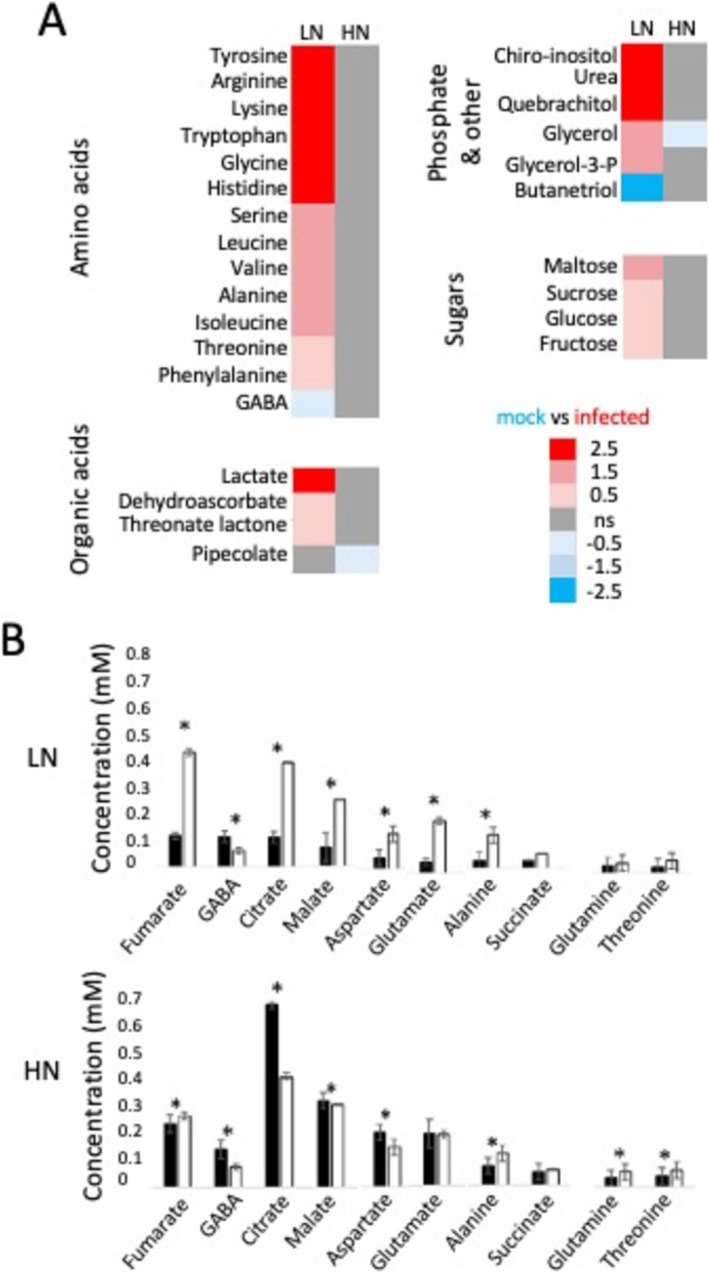
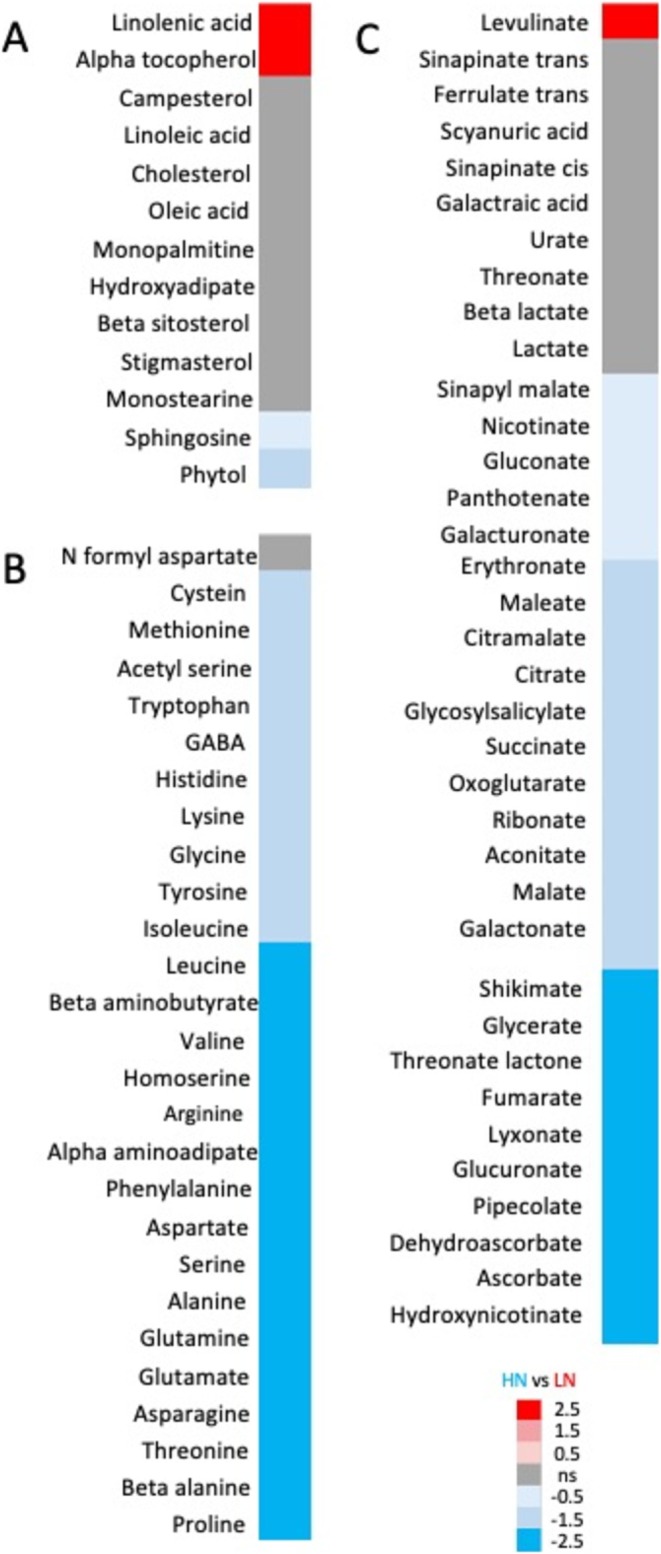
In the present study, we analysed the role played by the apoplast in the crosstalk between biotic and abiotic stress conditions. In particular, we studied the crosstalk between nitrogen (N) limitation and infection of the model plant Arabidopsis thaliana by Erwinia amylovora, an apoplastic bacterium. Our previous findings indicated that low N (LN) conditions increase E. amylovora in planta titres and expression of virulence factors. In this work, we extracted the apoplast wash fluids (AWF) from plants grown under low N or high N (HN) conditions and applied them to bacteria in vitro. We observed that LN-AWF induced stronger virulence gene expression than HN-AWF. Metabolomic analysis of both apoplast extracts revealed the presence of common metabolites; however, their proportions were distinct, indicating a direct effect of N availability on apoplast content. Interestingly, changes in the apoplast metabolite proportions were also observed early after bacterial infection, but only in plants grown under LN conditions. To evaluate the effect of single metabolites on virulence gene expression, we selected 43 metabolites and observed that 29 of them were activators, whereas two, GABA and citrate, acted as repressors. This study shows that environmental constraints, such as N availability, impact plant-pathogen interactions by altering the apoplastic content.
在本研究中,我们分析了质外体在生物和非生物胁迫条件相互作用中所起的作用。具体而言,我们研究了氮(N)限制与模式植物拟南芥被解淀粉欧文氏菌(一种质外体细菌)感染之间的相互作用。我们之前的研究结果表明,低氮(LN)条件会增加植物体内解淀粉欧文氏菌的滴度以及毒力因子的表达。在这项工作中,我们从低氮或高氮(HN)条件下生长的植物中提取了质外体洗涤液(AWF),并将其应用于体外培养的细菌。我们观察到,LN-AWF比HN-AWF诱导更强的毒力基因表达。对两种质外体提取物的代谢组学分析揭示了常见代谢物的存在;然而,它们的比例不同,这表明氮供应对质外体成分有直接影响。有趣的是,在细菌感染后早期也观察到了质外体代谢物比例的变化,但仅在LN条件下生长的植物中出现。为了评估单一代谢物对毒力基因表达的影响,我们选择了43种代谢物,观察到其中29种是激活剂,而γ-氨基丁酸(GABA)和柠檬酸这两种代谢物起到了抑制剂的作用。这项研究表明,诸如氮供应等环境限制因素通过改变质外体成分来影响植物与病原体的相互作用。