Bono Nina, Fruzzetti Flaminia, Farinazzo Giorgia, Candiani Gabriele, Marcuzzo Stefania
genT_LΛB, Department of Chemistry, Materials and Chemical Engineering "Giulio Natta", Politecnico di Milano, 20131 Milan, Italy.
Neurology 4-Neuroimmunology and Neuromuscular Diseases, Fondazione IRCCS Istituto Neurologico Carlo Besta, 20133 Milan, Italy.
Int J Mol Sci. 2025 Jun 13;26(12):5671. doi: 10.3390/ijms26125671.
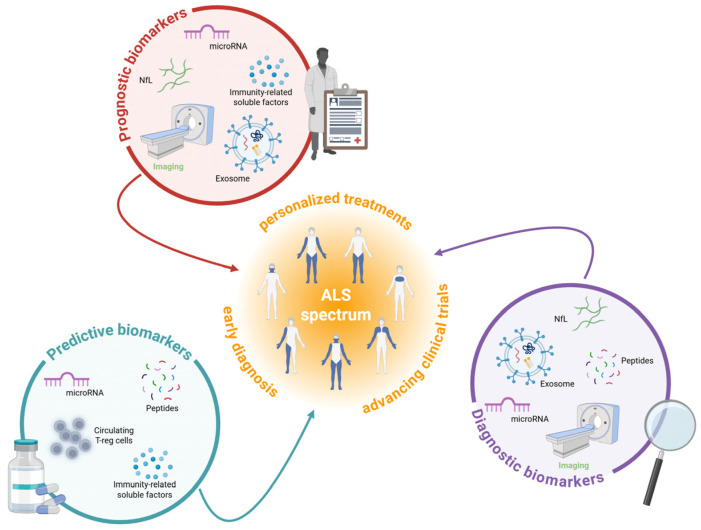
Amyotrophic lateral sclerosis (ALS) is a fatal neurodegenerative disease characterized by the progressive loss of upper and lower motor neurons, leading to muscle weakness, paralysis, and ultimately respiratory failure. Despite advances in understanding its genetic basis, particularly mutations in (), (), (), and () gene, current diagnostic methods result in delayed intervention, and available treatments offer only modest benefits. This review examines innovative approaches transforming ALS research and clinical management. We explore emerging biomarkers, including the fluid-based markers such as neurofilament light chain, exosomes, and microRNAs in biological fluids, alongside the non-fluid-based biomarkers, including neuroimaging and electrophysiological markers, for early diagnosis and patient stratification. The integration of multi-omics data reveals complex molecular mechanisms underlying ALS heterogeneity, potentially identifying novel therapeutic targets. We highlight current gene therapy strategies, including antisense oligonucleotides (ASOs), RNA interference (RNAi), and CRISPR/Cas9 gene editing systems, alongside advanced delivery methods for crossing the blood-brain barrier. By bridging molecular neuroscience with bioengineering, these technologies promise to revolutionize ALS diagnosis and treatment, advancing toward truly disease-modifying interventions for this previously intractable condition.
肌萎缩侧索硬化症(ALS)是一种致命的神经退行性疾病,其特征是上下运动神经元逐渐丧失,导致肌肉无力、瘫痪,并最终导致呼吸衰竭。尽管在理解其遗传基础方面取得了进展,特别是()、()、()和()基因的突变,但目前的诊断方法导致干预延迟,现有的治疗方法仅提供有限的益处。本综述探讨了改变ALS研究和临床管理的创新方法。我们探索新兴的生物标志物,包括生物体液中基于液体的标志物,如神经丝轻链、外泌体和微小RNA,以及基于非液体的生物标志物,包括神经影像学和电生理标志物,用于早期诊断和患者分层。多组学数据的整合揭示了ALS异质性背后的复杂分子机制,有可能识别出新的治疗靶点。我们重点介绍了当前的基因治疗策略,包括反义寡核苷酸(ASO)、RNA干扰(RNAi)和CRISPR/Cas9基因编辑系统,以及跨越血脑屏障的先进递送方法。通过将分子神经科学与生物工程相结合,这些技术有望彻底改变ALS的诊断和治疗,朝着针对这种以前难以治疗的疾病的真正疾病修饰干预迈进。