Rodrigues Étria, Livanos Ariane, Garbin Joyce A L, Fernandes Susi M S, Simcsik Amanda O, Crocetta Tânia B, Dias Eduardo D, Monteiro Carlos B M, Magalhães Fernando H, Ré Alessandro H N, Moraes Íbis A P, Silva-Magalhães Talita D
Medicine (Cardiology), Escola Paulista de Medicina, Federal University of São Paulo (EPM/UNIFESP), São Paulo 04021-001, SP, Brazil.
Department of Physiotherapy, Mackenzie Presbyterian University, São Paulo 01302-907, SP, Brazil.
Healthcare (Basel). 2025 Jun 12;13(12):1402. doi: 10.3390/healthcare13121402.
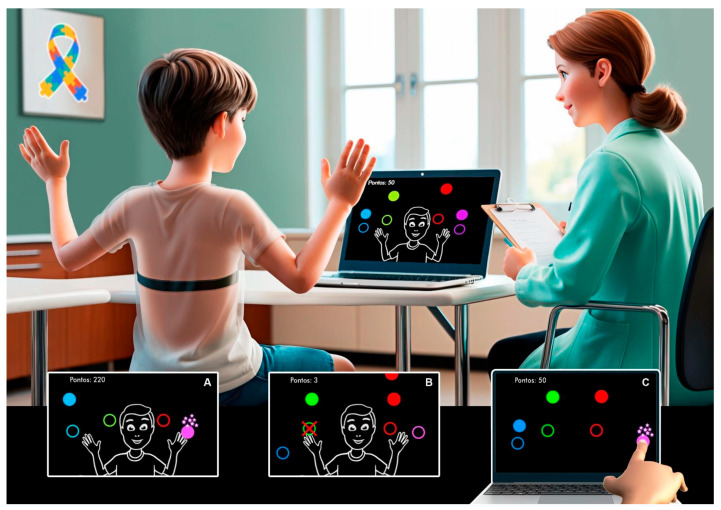
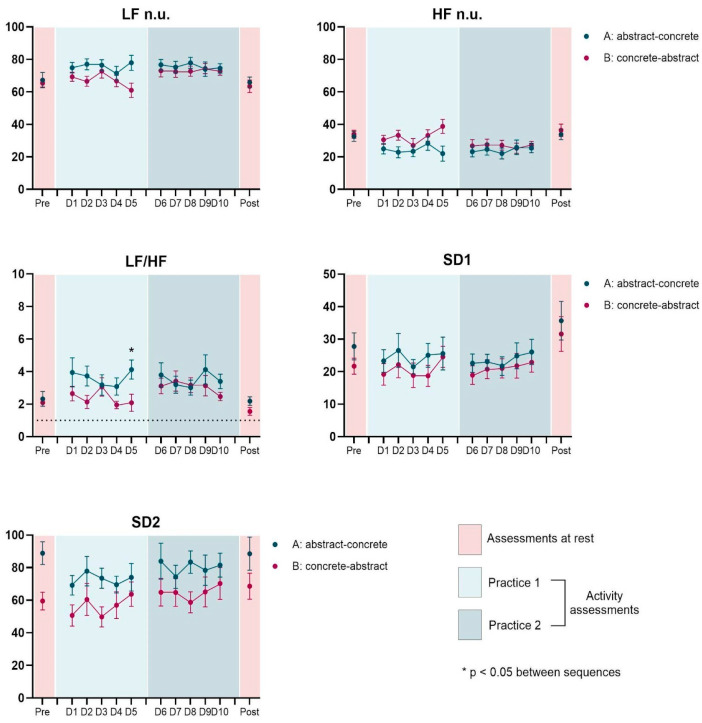
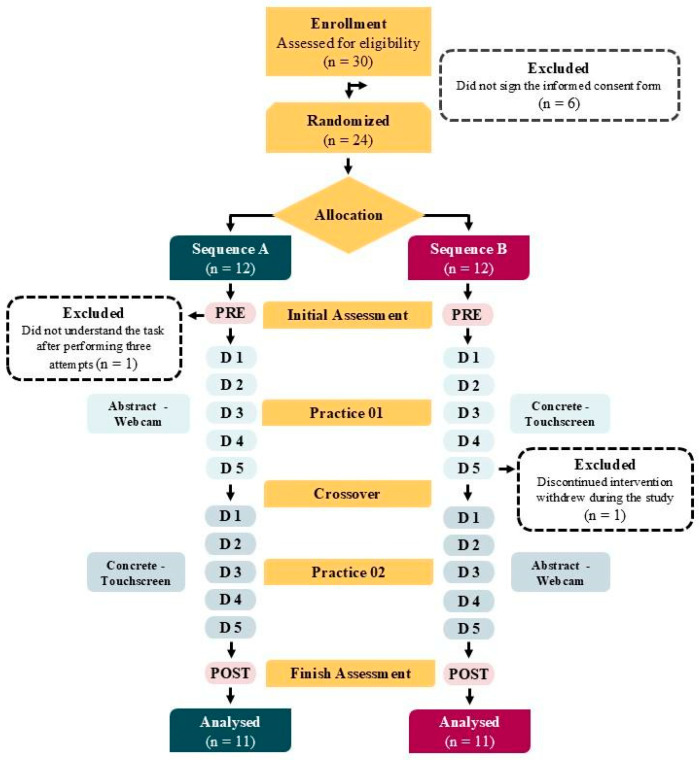
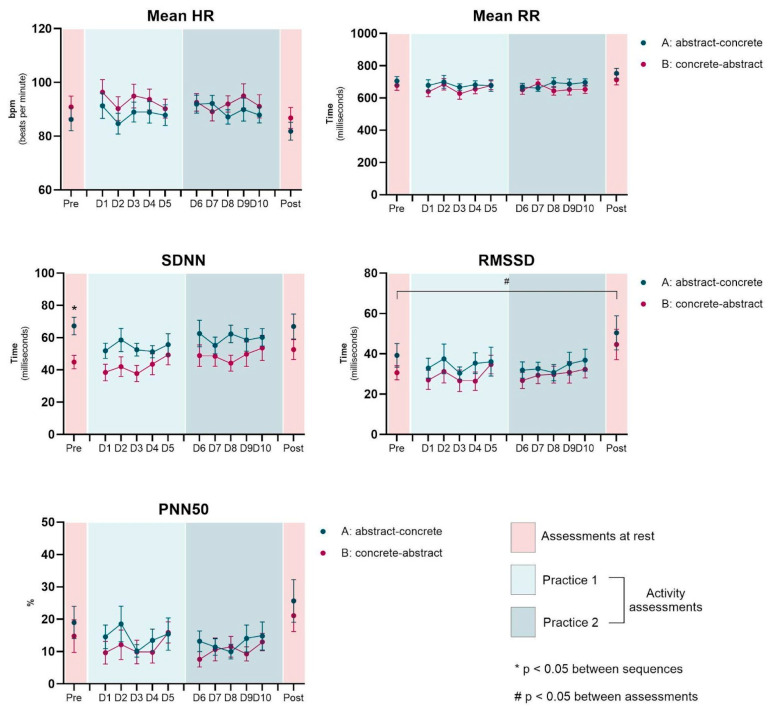
Individuals with autism spectrum disorder (ASD) often experience dysregulation of the autonomic nervous system, as evidenced by alterations in heart rate variability (HRV). It can be influenced by virtual reality (VR), which affects physiological responses due to its sensitivity to environmental and emotional stimuli. This study aimed to assess HRV in individuals with ASD before, during, and after VR-based tasks over a 10-day period, specifically examining how HRV fluctuated in response to concrete (touchscreen) and abstract (webcam) interactions. Twenty-two male participants were randomly assigned to two sequences based on the order of tasks performed (starting with either the concrete or abstract task). The findings revealed significant changes in HRV indices (RMSSD, SD1, SDNN, and SD2) between the two task types. The participants engaged in abstract tasks demonstrated higher motor demands, which were indicated by decreased parasympathetic activity and an increased LF/HF ratio, suggesting greater activation of the sympathetic nervous system.
患有自闭症谱系障碍(ASD)的个体常常经历自主神经系统的调节异常,心率变异性(HRV)的改变即为明证。它会受到虚拟现实(VR)的影响,由于VR对环境和情感刺激敏感,所以会影响生理反应。本研究旨在评估ASD个体在为期10天的基于VR的任务之前、期间和之后的HRV,特别考察HRV如何因具体(触摸屏)和抽象(网络摄像头)交互而波动。22名男性参与者根据执行任务的顺序被随机分配到两个序列(从具体任务或抽象任务开始)。研究结果显示,两种任务类型之间的HRV指标(RMSSD、SD1、SDNN和SD2)有显著变化。参与抽象任务的参与者表现出更高的运动需求,这表现为副交感神经活动减少和低频/高频比值增加,表明交感神经系统的激活程度更高。