Alam Ashrafe, Rabbani Md Golam, Prybutok Victor R
Department of Information Science, University of North Texas, Denton, TX 76207, USA.
Department of Information Technology and Decision Sciences, G. Brint Ryan College of Business, University of North Texas, Denton, TX 76201, USA.
Healthcare (Basel). 2025 Jun 13;13(12):1421. doi: 10.3390/healthcare13121421.
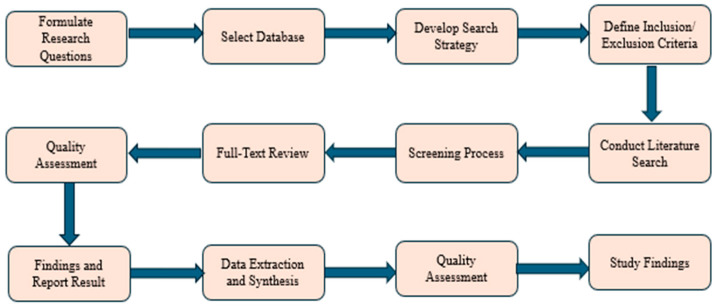
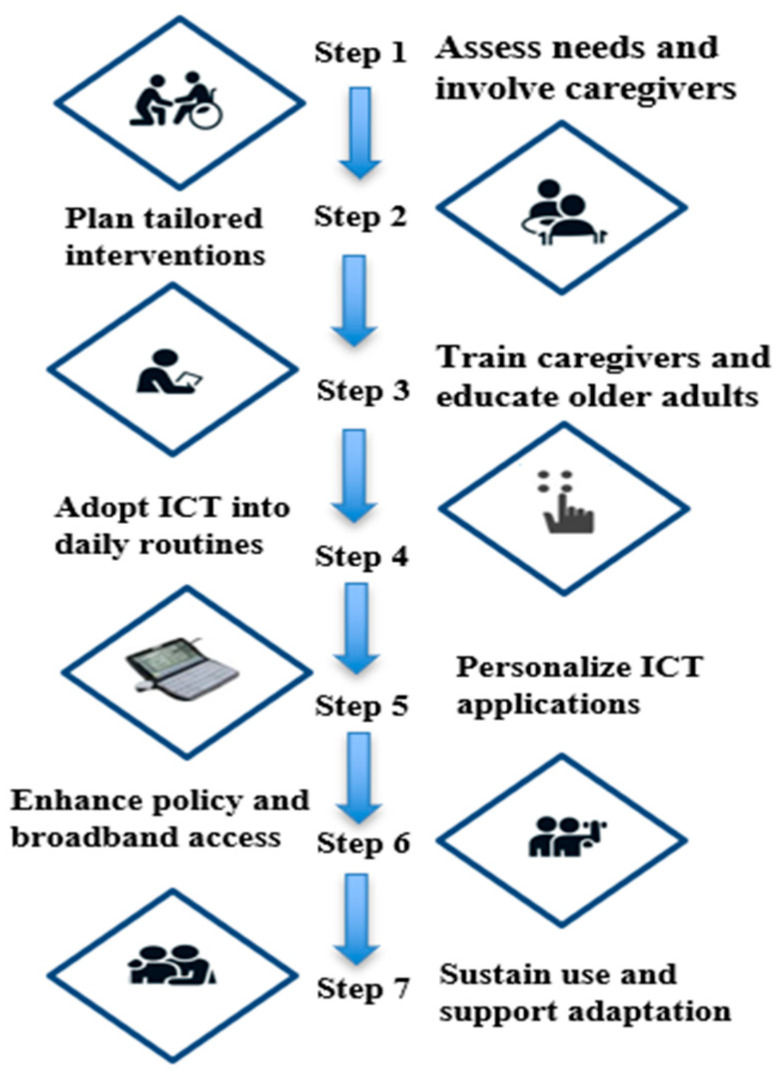
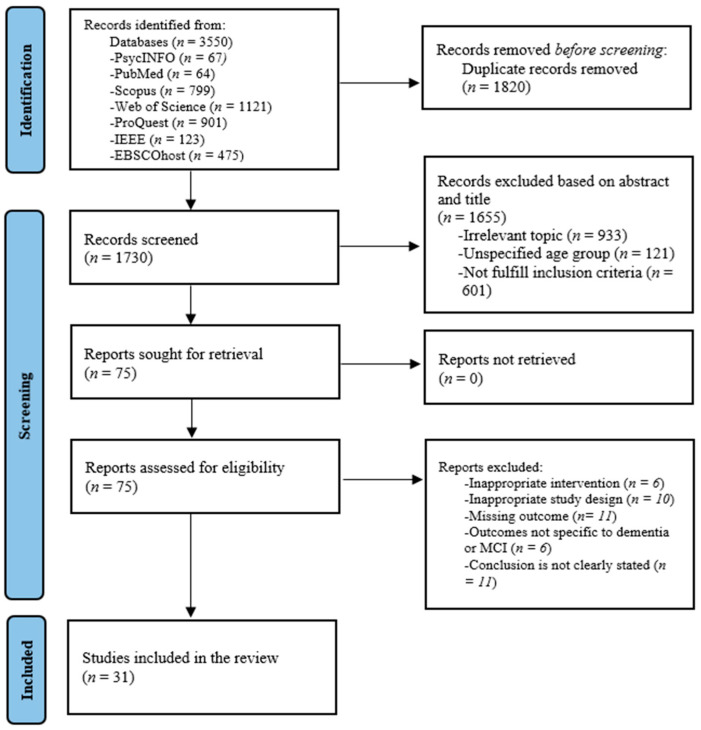
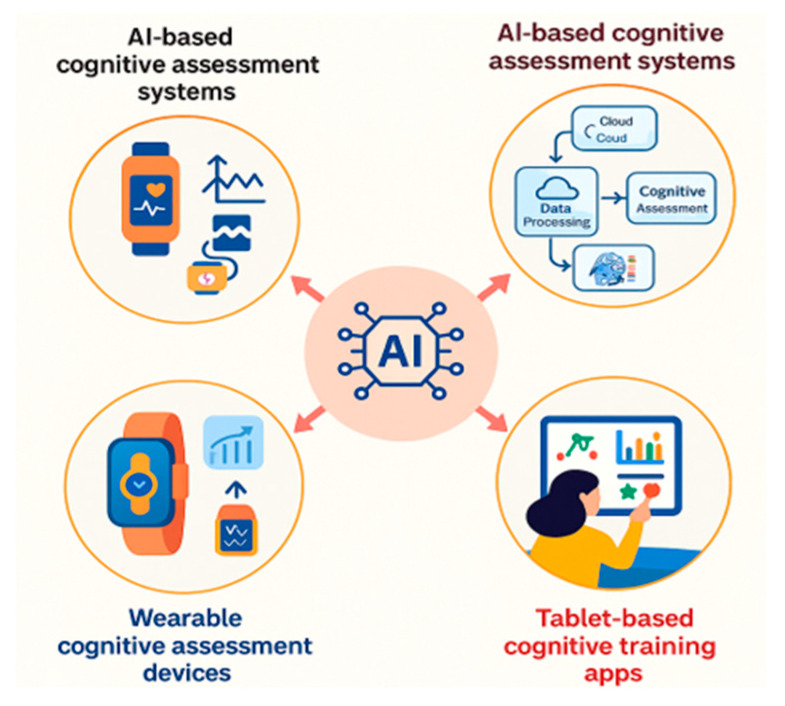
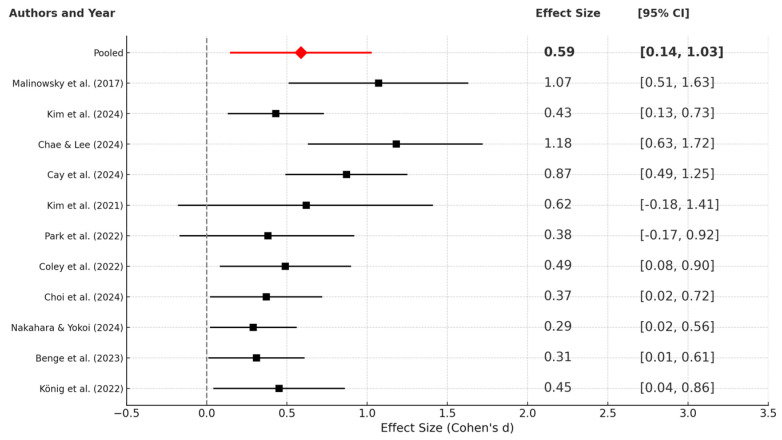
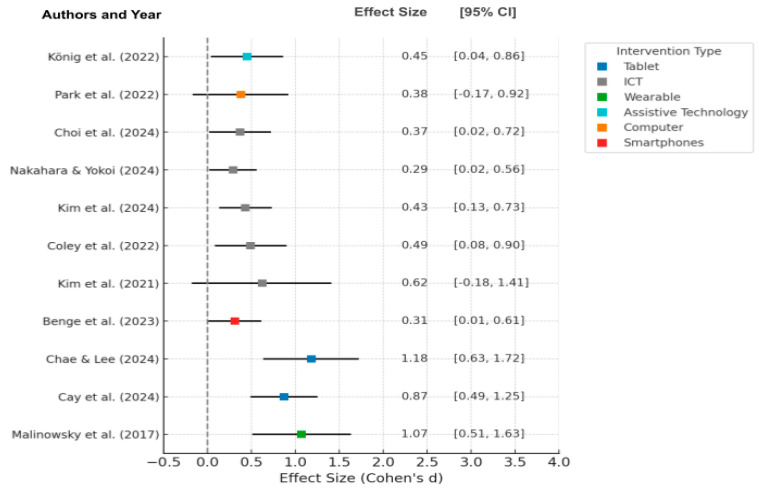
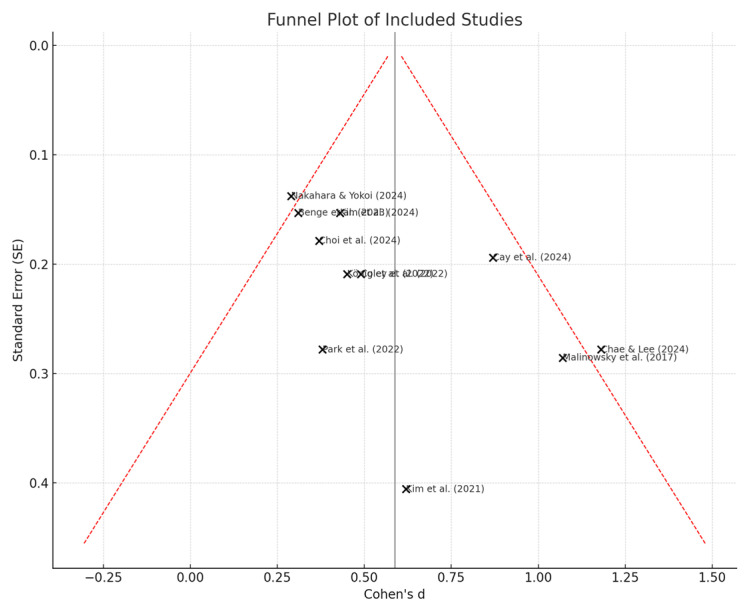
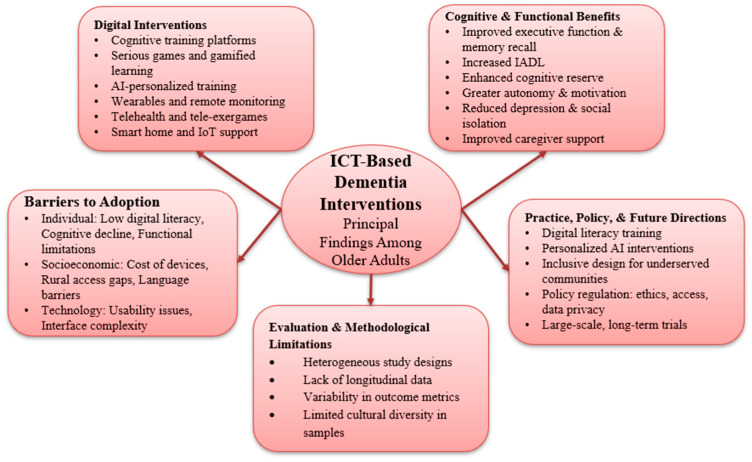
The increasing prevalence of dementia and mild cognitive impairment (MCI) among the elderly population is a global health issue. Information and Communication Technology (ICT)-based interventions hold promises for maintaining cognition, but their viability is affected by several challenges. : This study aimed to significantly assess the effectiveness of ICT-based cognitive and memory aid technology for individuals with MCI or dementia, identify adoption drivers, and develop an implementation model to inform practice. : A PRISMA-based systematic literature review, with the protocol registered in PROSPERO (CRD420251051515), was conducted using seven electronic databases published between January 2015 and January 2025 following the PECOS framework. Random effects models were used for meta-analysis, and risk of bias was assessed using the Joanna Briggs Institute (JBI) Critical Appraisal Checklists. : A total of ten forms of ICT interventions that had proved effective to support older adults with MCI and dementia. Barriers to adoption included digital literacy differences, usability issues, privacy concerns, and the lack of caregiver support. Facilitators were individualized design, caregiver involvement, and culturally appropriate implementation. ICT-based interventions showed moderate improvements in cognitive outcomes (pooled Cohen's = 0.49, 95% CI: 0.14-1.03). A sensitivity analysis excluding high-risk studies yielded a comparable effect size (Cohen's = 0.50), indicating robust findings. However, trim-and-fill analysis suggested a slightly reduced corrected effect (Cohen's = 0.39, 95% CI: 0.28-0.49), reflecting potential small-study bias. Heterogeneity was moderate (I = 46%) and increased to 55% after excluding high-risk studies. Subgroup analysis showed that tablet-based interventions tended to produce higher effect sizes. : ICT-based interventions considerably enhance cognition status, autonomy, and social interaction in older adults with MCI and dementia. To ensure long-term scalability, future initiatives must prioritize user-centered design, caregiver education, equitable access to technology, accessible infrastructure and supportive policy frameworks.
老年人中痴呆症和轻度认知障碍(MCI)患病率的不断上升是一个全球性的健康问题。基于信息通信技术(ICT)的干预措施有望维持认知功能,但其可行性受到若干挑战的影响。本研究旨在显著评估基于ICT的认知和记忆辅助技术对MCI或痴呆症患者的有效性,确定采用驱动因素,并开发一个实施模型以为实践提供参考。采用基于PRISMA的系统文献综述方法,按照PECOS框架,使用2015年1月至2025年1月期间发表的七个电子数据库进行检索,检索方案已在PROSPERO(CRD420251051515)注册。采用随机效应模型进行荟萃分析,并使用乔安娜·布里格斯研究所(JBI)批判性评价清单评估偏倚风险。共有十种形式的ICT干预措施被证明对支持患有MCI和痴呆症的老年人有效。采用障碍包括数字素养差异、可用性问题、隐私担忧以及缺乏护理人员支持。促进因素包括个性化设计、护理人员参与以及文化上适当的实施。基于ICT的干预措施在认知结果方面显示出中度改善(合并Cohen's d = 0.49,95% CI:0.14 - 1.03)。排除高风险研究的敏感性分析得出了可比的效应大小(Cohen's d = 0.50),表明研究结果稳健。然而,修剪填充分析表明校正效应略有降低(Cohen's d = 0.39,95% CI:0.28 - 0.49),反映出潜在的小研究偏倚。异质性为中度(I² = 46%),排除高风险研究后增加到55%。亚组分析表明基于平板电脑的干预措施往往产生更高的效应大小。基于ICT的干预措施显著提高了患有MCI和痴呆症的老年人的认知状态、自主性和社交互动。为确保长期可扩展性,未来的举措必须优先考虑以用户为中心的设计、护理人员教育、技术的公平获取、无障碍基础设施和支持性政策框架。