Kahwenga Kudzai D, Mnukwa Lindiwe, Bronkhorst Elmien
School of Pharmacy, Department of Clinical Pharmacy, Sefako Makgatho Health Sciences University, Ga-Rankuwa 0208, South Africa.
Department of Pharmacy, Dr George Mukhari Academic Hospital, Ga-Rankuwa 0208, South Africa.
Healthcare (Basel). 2025 Jun 17;13(12):1456. doi: 10.3390/healthcare13121456.
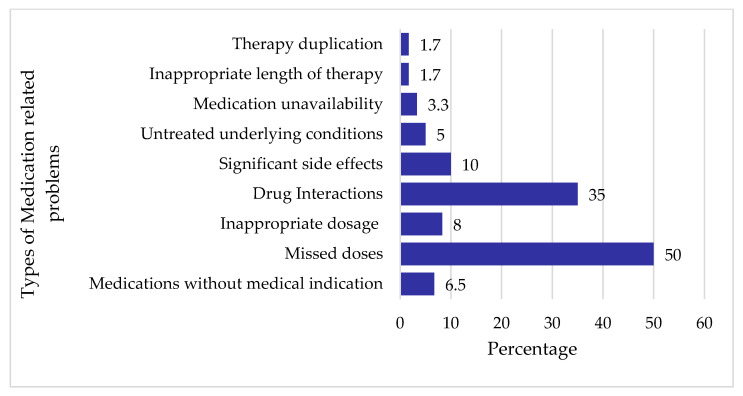
The effective management of psychotic and bipolar disorders in tertiary care can improve patient outcomes, yet the role of clinical pharmacists in optimising psychotropic medication use remains underexplored in South Africa. This study aims to investigate the role and interventions of clinical pharmacists in managing psychotic and bipolar disorders within a tertiary hospital in South Africa. A quantitative, descriptive study was conducted among 60 adult patients admitted to the psychiatric and internal medicine wards diagnosed with psychotic and/or bipolar disorder. A previously validated, standardised pharmaceutical care form was utilised for a purposive sample of inpatient files. Medication-related problems were identified, and appropriate interventions were suggested. Prescriptions were also assessed for adherence to treatment guidelines, including the South African Standard Treatment Guidelines, the American Psychiatric Association guidelines, and the National Institute for Health and Care Excellence guidelines. The study included 60 patients (37 females) with a mean age of 37 years. Diagnoses included schizophrenia (28.8%), bipolar disorder (27.5%), and stimulant-induced psychosis (19.3%). Sixty-two medication-related problems were identified, leading to 77 proposed interventions, of which 65 were implemented. Among the prescriptions, 75% ( = 45) adhered to the South African Standard Treatment guidelines, 76% ( = 46) adhered to the NICE guidelines, and 71% ( = 43) adhered to the APA guidelines. Clinical pharmacists identified a number of medication-related problems in patients with psychotic and bipolar disorders, and their proposed interventions were largely accepted. The findings highlight the pharmacist's role in optimising medication therapy and adherence to guidelines, suggesting that improved treatment monitoring is necessary in this setting.
三级医疗中对精神病性障碍和双相情感障碍的有效管理可改善患者预后,但在南非,临床药师在优化精神药物使用方面的作用仍未得到充分探索。本研究旨在调查南非一家三级医院中临床药师在管理精神病性障碍和双相情感障碍方面的作用及干预措施。对60名入住精神科和内科病房、被诊断患有精神病性和/或双相情感障碍的成年患者进行了一项定量描述性研究。采用一份先前验证过的标准化药学服务表格,对有目的抽取的住院病历进行分析。识别出与药物相关的问题,并提出了适当的干预措施。还评估了处方对治疗指南的遵循情况,包括《南非标准治疗指南》《美国精神病学协会指南》和《英国国家卫生与临床优化研究所指南》。该研究纳入了60名患者(37名女性),平均年龄为37岁。诊断包括精神分裂症(28.8%)、双相情感障碍(27.5%)和兴奋剂所致精神病(19.3%)。识别出62个与药物相关的问题,共提出77项干预措施,其中65项得到实施。在处方中,75%(n = 45)符合《南非标准治疗指南》,76%(n = 46)符合《英国国家卫生与临床优化研究所指南》,71%(n = 43)符合《美国精神病学协会指南》。临床药师识别出了精神病性和双相情感障碍患者中一些与药物相关的问题,他们提出的干预措施大多被采纳。研究结果凸显了药师在优化药物治疗和遵循指南方面的作用,表明在这种情况下有必要加强治疗监测。