Leite E Silva Matheus Henrique, Lima João Vitor Sabadine, da Silva Lopes Iza Paula, da Silva Ana Carolina Valgas, Lucchi Isabela Magalhães, Oliveira Gabriela Padovani, Vieira Luam Anacleto Mandonça, Bruno Guilherme Octávio Martins, de Paula França Resende Elisa
Department of Internal Medicine, Faculty of Medicine, Federal University of Minas Gerais, Belo Horizonte, Brazil.
J Epilepsy Res. 2025 Jun 10;15(1):23-32. doi: 10.14581/jer.25003. eCollection 2025 Jun.
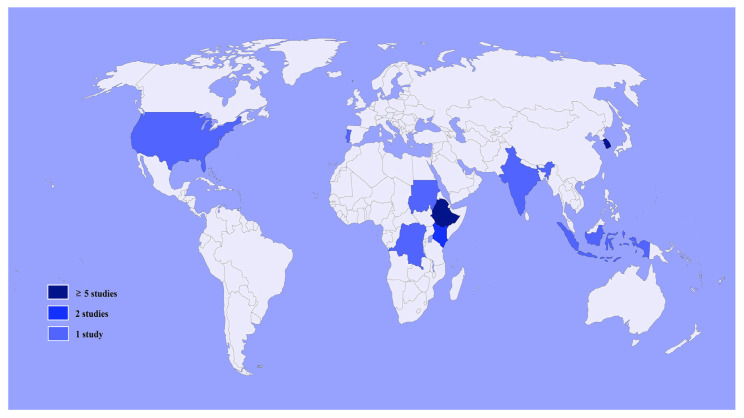
Recent research has disclosed significant associations between stigma suffered by people living with epilepsy (PWE) and psychiatric conditions, especially major depression. These results have practical implication when coupled with the precise regional-and-local prevalences of stigma in its heterogeneous manifestations among PWE. Here we review current research involving stigma in PWE to assess its prevalence and explore psychopathological associations. A systematic review was conducted in PubMed and Scopus to identify clinical trials objectively evaluating prevalence of any type of stigma, enacted and perceived, in PWE, published from database inception to 31 May 2024. A random effects meta-analysis was undertaken, with 6,072 participants, to obtain the meta-prevalence of stigma among PWE. Subgroup analysis moderated by major continent was delineated. A report was obtained from clinical documentation review and adjoined to the evidence generated. From the 105 records identified, 22 studies were eligible for inclusion. The meta-analysis revealed an overall stigma prevalence of 35% (29%; 41%), and subgroups, Africa or Asia (mostly); arbitrarily defined after analysis of geographical study distributions; indicated a prevalence of 40% (34%; 46%) and 28% (21%; 37%), respectively. Significant difference was identified (=0.03). The case reported exemplifies how stigma may impair development, especially in children and adolescents. Stigmas among PWE are prevalent. More than one in three PWE has already experienced some form of stigma and there is potential to undermine quality of life and associate with psychiatric disorders. PWE may benefit from tailored screening and management approaches to decrease stigma burden.
最近的研究揭示了癫痫患者(PWE)所遭受的耻辱感与精神疾病之间的显著关联,尤其是重度抑郁症。当这些结果与PWE中耻辱感在其异质性表现中的精确区域和地方患病率相结合时,具有实际意义。在这里,我们回顾了当前涉及PWE耻辱感的研究,以评估其患病率并探索心理病理学关联。在PubMed和Scopus上进行了系统综述,以识别从数据库建立到2024年5月31日发表的客观评估PWE中任何类型的已实施和感知到的耻辱感患病率的临床试验。对6072名参与者进行了随机效应荟萃分析,以获得PWE中耻辱感的荟萃患病率。划定了以主要大陆为调节因素的亚组分析。从临床文档回顾中获得了一份报告,并将其与所产生的证据相结合。从识别出的105条记录中,有22项研究符合纳入标准。荟萃分析显示总体耻辱感患病率为35%(29%;41%),亚组分析(主要是非洲或亚洲;在分析地理研究分布后任意定义)显示患病率分别为40%(34%;46%)和28%(21%;37%)。发现存在显著差异(=0.03)。所报告的案例例证了耻辱感如何可能损害发育,尤其是在儿童和青少年中。PWE中的耻辱感很普遍。超过三分之一的PWE已经经历过某种形式的耻辱感,这有可能破坏生活质量并与精神障碍相关联。PWE可能会从量身定制的筛查和管理方法中受益,以减轻耻辱感负担。