Franchini Cinzia, Biasini Beatrice, Sogari Giovanni, Wongprawmas Rungsaran, Andreani Giulia, Gómez Miguel I, Menozzi Davide, Mora Cristina, Scazzina Francesca, Rosi Alice
Department of Food and Drug, University of Parma, 43124 Parma, Italy.
Charles H. Dyson School of Applied Economics and Management, Cornell University, Ithaca, NY 14853, USA.
Nutrients. 2025 Jun 12;17(12):1988. doi: 10.3390/nu17121988.
BACKGROUND/OBJECTIVES: Recent decades have seen a remarkable westernization of diets and a decline in adherence to the Mediterranean diet (MD). This study examined the eating habits of a representative sample of Italian university students to identify the determinants of adherence to the MD and the most relevant actions to improve their well-being.
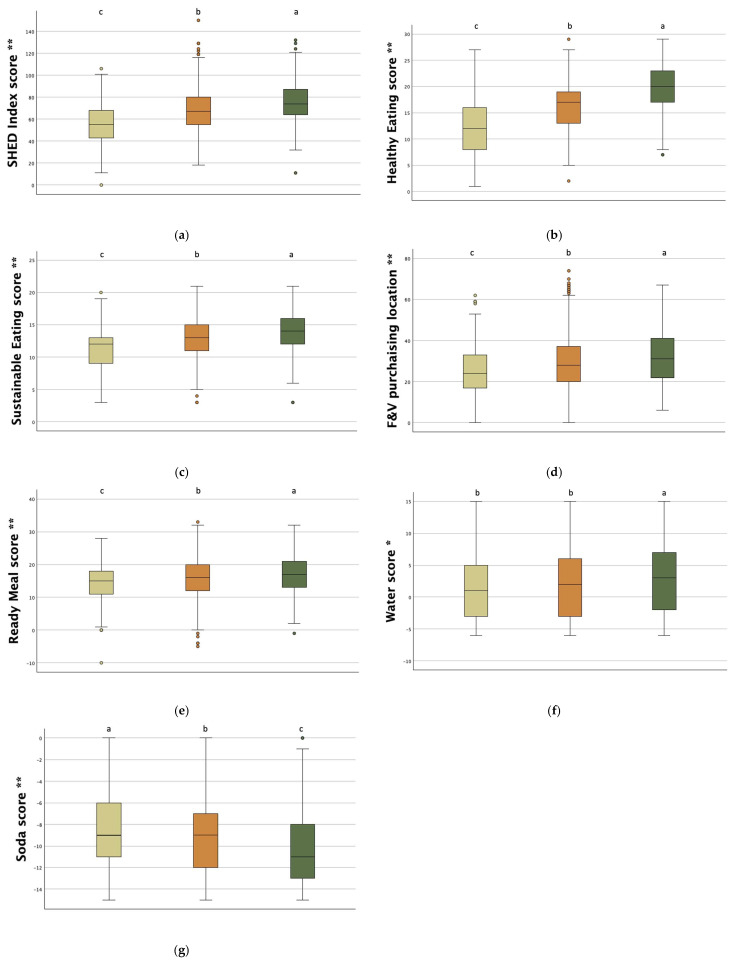
The Mediterranean Diet Quality Index for Children and Adolescents (KIDMED) and Sustainable Healthy Diet (SHED) index questionnaires were used to explore MD adherence as the primary outcome, and dietary behavior sustainability, respectively. Sociodemographic, anthropometric, and lifestyle information was also collected.
The final sample included 1434 subjects (18-24; 60% female). The median (IQR) KIDMED score was 6.0 (4.0-8.0) and 33% showed a high adherence to the MD. Having breakfast, eating fruit and vegetables at least once a day, consuming pasta or other grains almost daily, and using olive oil at home were among the most common positive aspects of students' diets. However, regular consumption of fish, nuts, legumes, dairy products, and a second serving of fruit and vegetables was less prevalent. Having an active lifestyle, eating more plant products, and having more sustainable dietary behaviors in terms of the SHED index, were the main determinants of a high KIDMED score. Likewise, graduate students, daily consumers of plant-based meat alternatives, and students attending university canteens daily were more likely to adopt healthier diets.
Future actions are crucial to create a food environment that facilitates healthy and sustainable dietary choices among young adults, such as improving the nutritional quality of processed products and regulating their promotion, as well as implementing initiatives to improve university food services and encourage the use of campus dining facilities.
背景/目的:近几十年来,饮食出现了显著的西方化,对地中海饮食(MD)的依从性有所下降。本研究调查了意大利大学生代表性样本的饮食习惯,以确定对MD依从性的决定因素以及改善他们健康状况的最相关行动。
分别使用儿童和青少年地中海饮食质量指数(KIDMED)问卷和可持续健康饮食(SHED)指数问卷来探讨MD依从性这一主要结果以及饮食行为的可持续性。还收集了社会人口统计学、人体测量学和生活方式信息。
最终样本包括1434名受试者(18 - 24岁;60%为女性)。KIDMED评分中位数(IQR)为6.0(4.0 - 8.0),33%的人对MD有较高依从性。吃早餐、每天至少吃一次水果和蔬菜、几乎每天食用面食或其他谷物以及在家使用橄榄油是学生饮食中最常见的积极方面。然而,经常食用鱼类、坚果、豆类、乳制品以及再吃一份水果和蔬菜的情况不太普遍。积极的生活方式、食用更多植物性产品以及在SHED指数方面有更可持续的饮食行为是KIDMED高分的主要决定因素。同样,研究生、每天食用植物性肉类替代品的人以及每天在大学食堂就餐的学生更有可能采用更健康的饮食。
未来的行动对于营造一个促进年轻人做出健康和可持续饮食选择的食物环境至关重要,例如提高加工产品的营养质量并规范其推广,以及实施改善大学食品服务和鼓励使用校园餐饮设施的举措。