Choe Young June, Jeon Yunjin, Park Jihyun, Kim Hyesun, Yang Gyongseon, Mohanty Salini, Floros Lefteris, Huang Min, Chhabra Nitika, Kumari Shalini, Singh Jasmeet, Sukarom Isaya
Department of Pediatrics, Korea University College of Medicine, Seoul, South Korea.
Market Access, External Affairs, MSD Korea, Seoul, South Korea.
Hum Vaccin Immunother. 2025 Dec;21(1):2515650. doi: 10.1080/21645515.2025.2515650. Epub 2025 Jun 27.
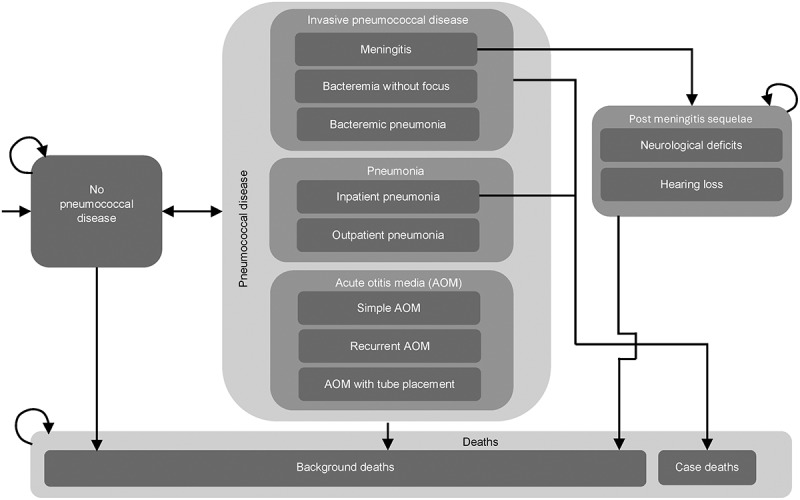
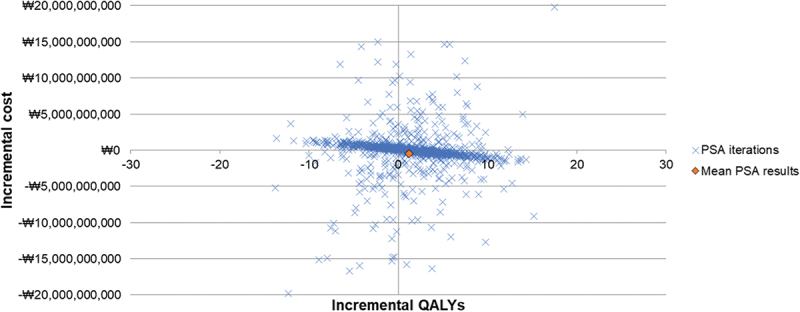
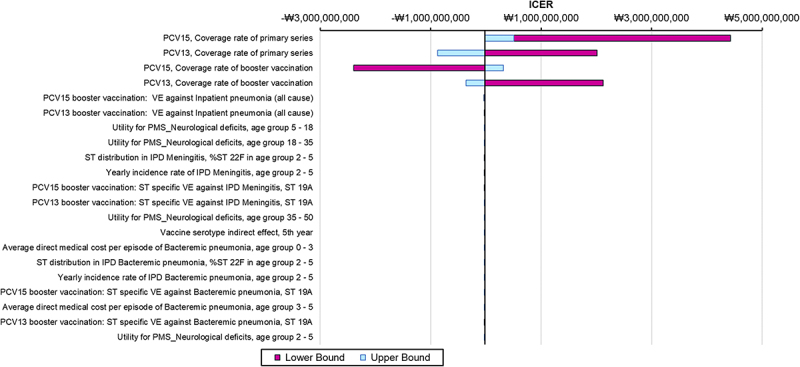
Pneumococcal disease poses a substantial clinical and economic burden, especially among children under 5 years old. The 13-valent pneumococcal conjugate vaccine (PCV13) was first introduced in South Korea's Childhood Immunization Program in 2014. In October 2023, the Ministry of Food and Drug Safety approved the use of a 15-valent pneumococcal conjugate vaccine (PCV15) in infants, children, adolescents, and adults. The aim of this study was to evaluate the cost savings of routine vaccination with PCV15 versus PCV13 in a pediatric population in South Korea. A Markov model was adapted to estimate costs and health outcomes from a societal perspective over a 100-year time horizon. The model estimated the impact of PCV15 versus PCV13 on pneumococcal disease incidence, post-meningitis sequalae, and deaths. The effectiveness of PCV15 was extrapolated from PCV13 data. Herd immunity effects were applied. Costs and epidemiological data were obtained from published literature and the National Health Information Database. Costs were reported in 2023 Korean Won (₩) with USD ($) equivalents. Quality-adjusted life years (QALYs) and incremental cost-effectiveness ratios were estimated. The model assumed a discount rate of 4.5%. PCV15 was projected to provide a total savings of ₩36,213,756 [$27,751] with a gain of 2 QALYs versus PCV13. Under the model assumptions, switching from PCV13 to PCV15 is a cost-saving option for South Korea's routine pediatric pneumococcal vaccination program.
肺炎球菌疾病带来了巨大的临床和经济负担,尤其是在5岁以下儿童中。13价肺炎球菌结合疫苗(PCV13)于2014年首次被纳入韩国的儿童免疫计划。2023年10月,韩国食品药品安全部批准在婴儿、儿童、青少年和成人中使用15价肺炎球菌结合疫苗(PCV15)。本研究的目的是评估在韩国儿科人群中,常规接种PCV15与PCV13相比的成本节约情况。采用马尔可夫模型从社会角度估计100年时间范围内的成本和健康结果。该模型估计了PCV15与PCV13对肺炎球菌疾病发病率、脑膜炎后遗症和死亡的影响。PCV15的有效性是根据PCV13的数据推断得出的。应用了群体免疫效应。成本和流行病学数据来自已发表的文献和国家健康信息数据库。成本以2023年韩元(₩)报告,并换算为美元($)等价物。估计了质量调整生命年(QALYs)和增量成本效益比。模型假设贴现率为4.5%。与PCV13相比,预计PCV15可节省总计₩36,213,756(27,751美元),并增加2个QALYs。在模型假设下,从PCV13切换到PCV15对于韩国的常规儿科肺炎球菌疫苗接种计划来说是一个节省成本的选择。