Al-Awwal Nasruddeen, Mahdi Samira, El-Dweik Majed, Anderson Stephen H, Wuliji Tumen
Cooperative Research and Extension, College of Agriculture, Environmental and Human Sciences, Lincoln University Missouri 65101, USA.
Office of the Vice President Research and Economic Development Alabama A&M University, Huntsville AL 35811, USA.
MethodsX. 2025 Jun 6;14:103406. doi: 10.1016/j.mex.2025.103406. eCollection 2025 Jun.
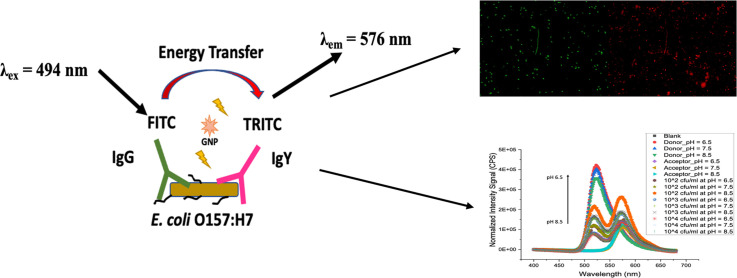
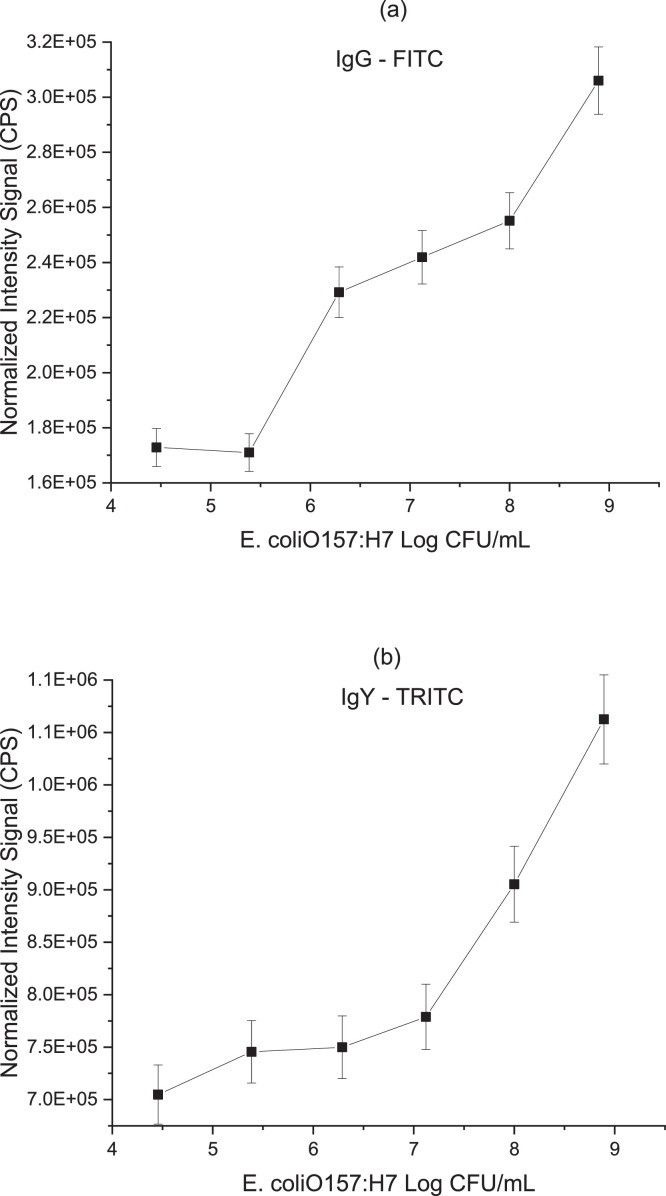
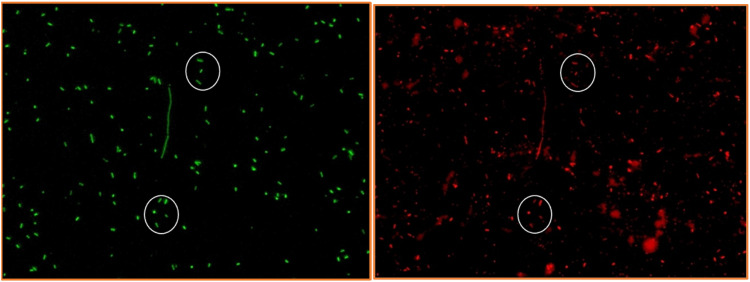
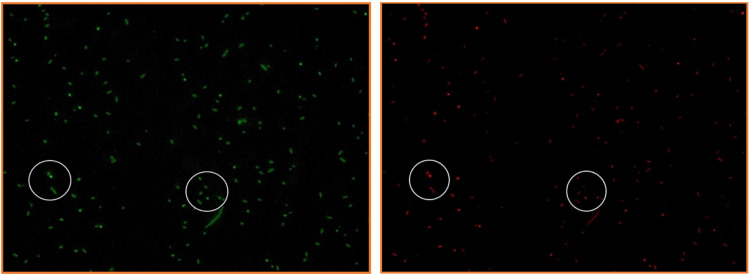
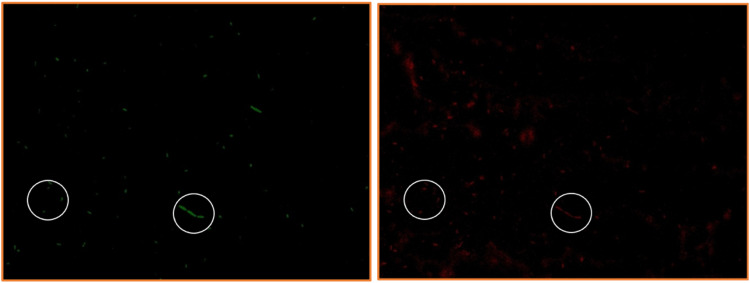
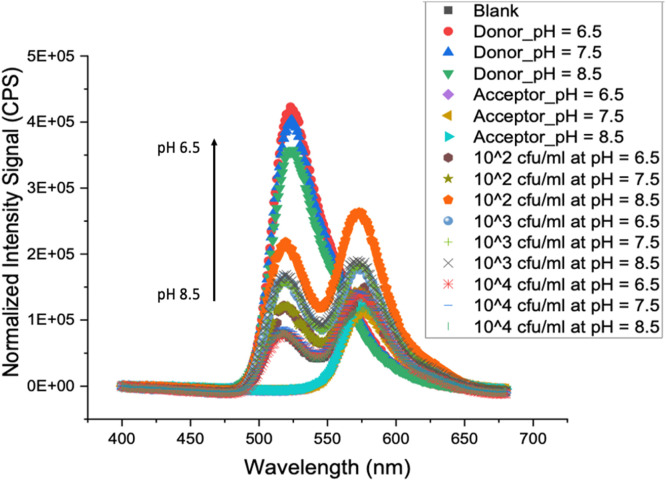
Improved rapid and sensitive biosensors for detecting foodborne pathogens in the environment are urgently needed to curtail disease outbreaks. This study aims to develop and optimize a fast and sensitive biosensor for detecting O157 using an advanced Förster Resonance Energy Transfer (FRET) technology. Building on recent FRET technological advancements, we intend to measure the degree of interaction between primary antibodies labeled with fluorescein isothiocyanate (FITC) and secondary antibodies labeled with tetramethyl rhodamine isothiocyanate (TRITC) in a sandwich format. This study assesses the detection of O157:H7 at various pH levels in contaminated lettuce juice. A detection range of 10 to 10 CFU/mL after a 4-h pre-enrichment at 37 °C enabled sensitive quantification. In this FRET-based method, FITC-IgG was used as the donor and TRITC-IgY as the acceptor. Samples were stimulated at 350 nm, and emissions were measured from 500 to 680 nm, capturing a wide range of fluorescence signals. FRET microscopic fluorescence imaging was used to determine how pH affects the concentration of live O157:H7. The results showed that pH change has a considerable impact on detection. The approach illustrates FRET's effectiveness in identifying live pathogens under diverse settings, indicating its underlying relevance in pathogen identification.•FITC-labeled primary antibodies and TRITC-labeled secondary antibodies were used in a sandwich arrangement to optimize a Förster Resonance Energy Transfer (FRET) biosensor for the detection of O157:H7.•A detection range of 10² to 10⁴ CFU/mL was achieved by pre-enriching the samples for four hours at 37 °C. Emissions from 500 to 680 nm were recorded after exciting the samples at 350 nm to measure fluorescence signals. The LOD and LOQ were found to be 168 CFU/mL and 510 CFU/mL, respectively.• O157:H7 detection in contaminated lettuce juice at varying pH levels was examined using FRET microscopic fluorescence imaging, which demonstrated a notable influence of pH on pathogen identification.
迫切需要改进用于检测环境中食源性病原体的快速灵敏生物传感器,以减少疾病爆发。本研究旨在利用先进的Förster共振能量转移(FRET)技术开发并优化一种用于检测O157的快速灵敏生物传感器。基于FRET技术的最新进展,我们打算以夹心形式测量异硫氰酸荧光素(FITC)标记的一抗和异硫氰酸四甲基罗丹明(TRITC)标记的二抗之间的相互作用程度。本研究评估了在受污染生菜汁中不同pH水平下对O157:H7的检测。在37°C预富集4小时后,检测范围为10²至10⁴CFU/mL,实现了灵敏定量。在这种基于FRET的方法中,FITC-IgG用作供体,TRITC-IgY用作受体。样品在350nm处激发,并测量500至680nm的发射,捕获广泛的荧光信号。FRET显微荧光成像用于确定pH如何影响活O157:H7的浓度。结果表明,pH变化对检测有相当大的影响。该方法说明了FRET在不同环境下识别活病原体方面的有效性,表明其在病原体识别中的潜在相关性。
•使用FITC标记的一抗和TRITC标记的二抗以夹心形式优化用于检测O157:H7的Förster共振能量转移(FRET)生物传感器。
•通过在37°C下将样品预富集4小时,实现了10²至10⁴CFU/mL的检测范围。在350nm激发样品后,记录500至680nm的发射以测量荧光信号。检测限和定量限分别为168CFU/mL和510CFU/mL。
•使用FRET显微荧光成像检查了不同pH水平下受污染生菜汁中的O157:H7检测,结果表明pH对病原体识别有显著影响。