
埃塞俄比亚东部产后常见精神障碍及其相关因素:一项基于社区的横断面研究。
Postpartum common mental disorders and its associated factors in eastern Ethiopia: a community-based cross-sectional study.
作者信息
Tesfaye Dejene, Misgana Tadesse, Gebremichael Berhe, Alemu Daniel, Tamiru Dawit, Weldesenbet Adisu Birhanu, Tariku Mandaras, Dheresa Merga
机构信息
Department of Psychiatry, College of Health and Medical Sciences, Haramaya University, Harar, Ethiopia.
School of Public Health, College of Health and Medical Sciences, Haramaya University, Harar, Ethiopia.
出版信息
Front Glob Womens Health. 2025 Jun 13;6:1484834. doi: 10.3389/fgwh.2025.1484834. eCollection 2025.
INTRODUCTION
Common mental disorders (CMD) cause marked emotional distress and interfere with daily function among postpartum women. In addition, the negative attitude towards mental disorders and their treatments prevents the women from seeking mental healthcare. Very little is known about CMD among women, especially in the postpartum period. This study, therefore, aimed at assessing the prevalence of CMD and its associated factors among women in the postpartum period at Kersa and Haramaya Health and Demographic Surveillance Sites (HDSS) sites, in eastern Ethiopia, between 1 July 2021 and 28 February 2022.
METHODS
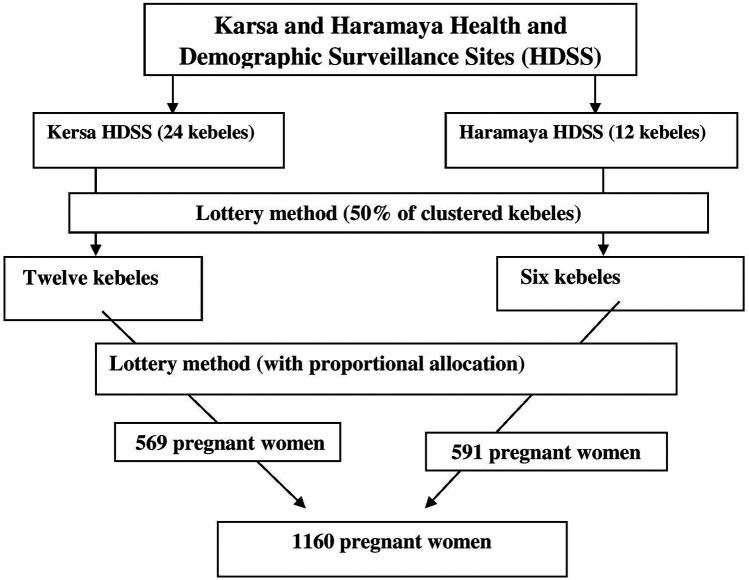
This study employed a community-based cross-sectional study design using a quantitative method and was conducted in Kersa and Haramaya HDSS among 1,016 postpartum women. A structured questionnaire was used to collect data through face-to-face interviews about the variables related to sociodemographic and economic, clinical, psychosocial, substance use, and obstetric complication characteristics. The CMD was assessed by using the Self-Reporting Questionnaire (SRQ-20). A bivariable and multivariable logistic regression analysis was performed. All the variables with a -value <0.25 in bivariable logistic regression were taken to multivariable logistic regression. Variables with a -value < 0.05 in the multivariable regression were declared statistically significant associations. The odds ratio (OR) and 95% confidence intervals (CI) were used to show the strength of the association.
RESULT
The prevalence of postpartum CMD was 23.84% (95% CI: 21.21-26.47). Among pregnant women who had CMD, only 103 (27.7%) had CMD and persisted to the postpartum period. Poor social support [adjusted OR (aOR): 1.88, 95% CI: 1.28-2.74], wealth index in the first quantile (aOR: 1.59, 95% CI: 1.06-2.39), presence of obstetric complication (aOR: 7.74, 95% CI: 4.38-13.69), and cesarean delivery (aOR: 5.01, 95% CI: 1.14-22.13) were the factors that showed a statistically significant association with postpartum CMD.
CONCLUSION
One in every four study participants had CMD, which was higher than in studies conducted in Ethiopia among postpartum women. Social support, wealth index, obstetric complications, and mode of delivery were the factors with statistically significant associations. Postpartum women may benefit from the early diagnosis and treatment of CMD at the community and the primary healthcare level, and the integration of mental healthcare into maternal health services.
引言
常见精神障碍(CMD)会给产后女性带来明显的情绪困扰,并干扰其日常功能。此外,对精神障碍及其治疗的负面态度阻碍了女性寻求心理保健服务。关于女性中的CMD,尤其是产后阶段的CMD,我们知之甚少。因此,本研究旨在评估2021年7月1日至2022年2月28日期间,埃塞俄比亚东部克尔萨和哈拉马亚健康与人口监测点(HDSS)产后女性中CMD的患病率及其相关因素。
方法
本研究采用基于社区的横断面研究设计,运用定量方法,在克尔萨和哈拉马亚HDSS对1016名产后女性进行了调查。通过面对面访谈,使用结构化问卷收集有关社会人口学和经济、临床、心理社会、物质使用及产科并发症特征等变量的数据。使用自评问卷(SRQ-20)评估CMD。进行了双变量和多变量逻辑回归分析。双变量逻辑回归中P值<0.25的所有变量都纳入多变量逻辑回归。多变量回归中P值<0.0
 Zotero 插件