Li Bing, Li Xiaoxuan, Peng Jihong, Zhang Pengfei
Department of General Surgery, Yiling Hospital of Yichang City, Yichang, Hubei, China.
College of Basic Medical Sciences, China Three Gorges University, Yichang, Hubei, China.
Front Surg. 2025 Jun 13;12:1573430. doi: 10.3389/fsurg.2025.1573430. eCollection 2025.
As obesity rates rise and Bariatric & Metabolic surgery (MBS) becomes more common, many patients with obesity opt for these procedures. Despite this, there are still concerns regarding the risk of postoperative gastric cancer. This study reviews comparative studies on the risk of gastric gancer among MBS vs. non MBS patients, reported in the last 15 years.
We conducted literature searches on PubMed, Web of Science, and Cochrane Library using specifically formulated terms and limited the publication period to 2000 to 2024. The number of people in the literature who underwent MBS and those who developed gastric cancer after MBS were extracted and statistically analyzed using RevMan 5.3. A random-effects model was employed to determine the merged odds ratio (OR) values, with the Mantel-Haenszel estimation method. Publication bias was assessed using a funnel plot. Heterogeneity between studies was analyzed with the Cochran Q (Chi-square) test and I² statistics.
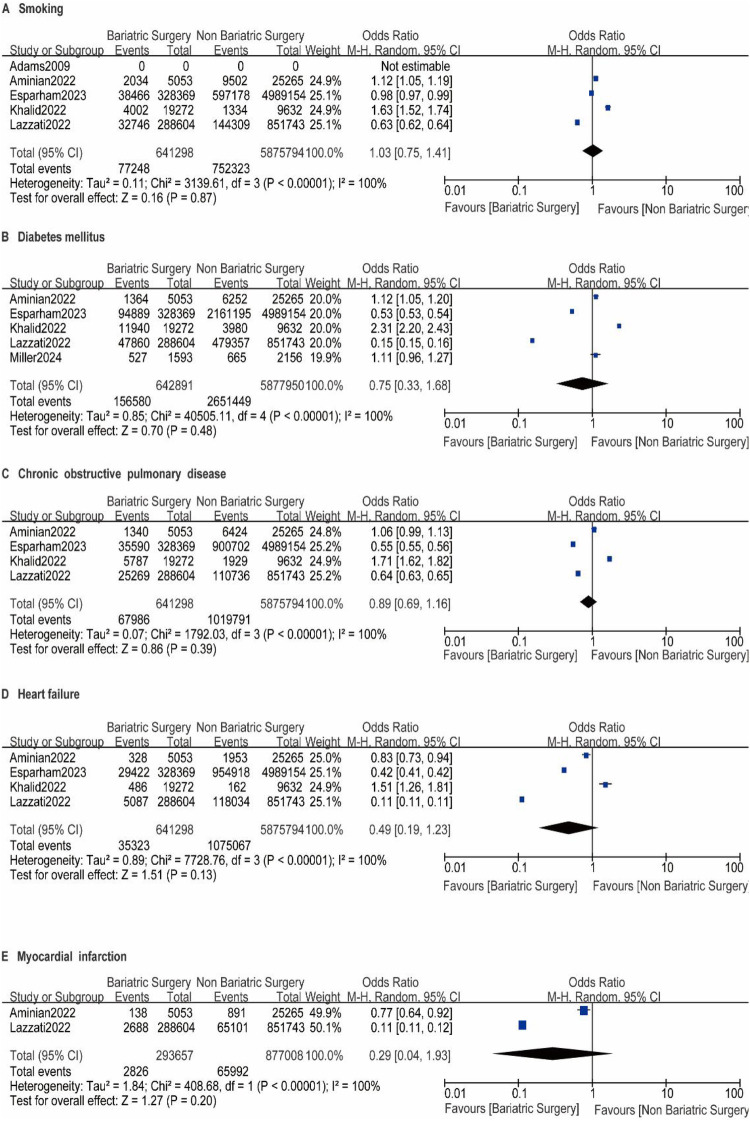
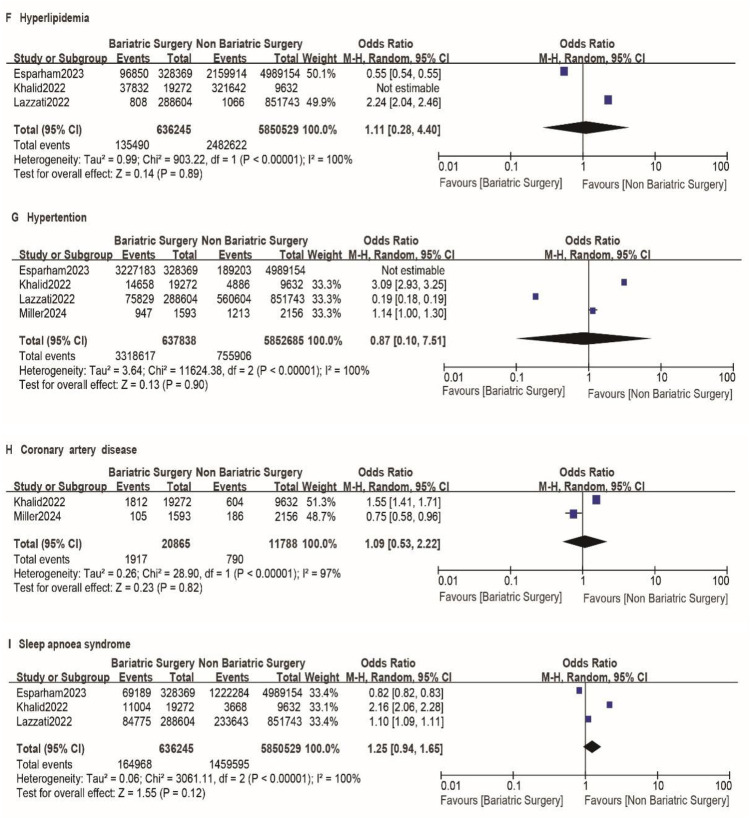
A total of nine studies reported the incidence of gastric cancer, with a total of 1,025,852 patients with obesity in the MBS group and 7,171,376 patients with obesity in the matched control group. After excluding the confounding factors commonly associated with gastric cancer in the included studies, we found that the incidence rate of gastric cancer was comparable for parents after MBS and patients with obesity (OR = 0.98, 95% CI 0.50-1.94, = 0.96) in meta-analysis.
It appears that there is no significant difference in the risk of gastric cancer between patients with obesity who have undergone MBS and those who have not, further investigation is needed to define the long term risk. Consequently, concerns can be reduced in patients with obesity who are in urgent need of MBS but are worried about developing gastric cancer. It provides evidence-based medicine evidence for clinical treatment.
随着肥胖率上升以及减重与代谢手术(MBS)变得越来越普遍,许多肥胖患者选择这些手术。尽管如此,术后胃癌风险仍令人担忧。本研究回顾了过去15年报道的关于MBS患者与非MBS患者胃癌风险的比较研究。
我们在PubMed、科学网和Cochrane图书馆进行文献检索,使用特定制定的术语,并将发表期限制在2000年至2024年。提取文献中接受MBS的人数以及MBS后发生胃癌的人数,并使用RevMan 5.3进行统计分析。采用随机效应模型确定合并比值比(OR)值,采用Mantel-Haenszel估计方法。使用漏斗图评估发表偏倚。用Cochran Q(卡方)检验和I²统计量分析研究间的异质性。
共有9项研究报告了胃癌发病率,MBS组共有1,025,852例肥胖患者,匹配对照组有7,171,376例肥胖患者。在排除纳入研究中通常与胃癌相关的混杂因素后,我们发现在荟萃分析中,MBS后患者与肥胖患者的胃癌发病率相当(OR = 0.98,95%CI 0.50 - 1.94,I² = 0.96)。
接受MBS的肥胖患者与未接受MBS的肥胖患者在胃癌风险上似乎没有显著差异,需要进一步研究来确定长期风险。因此,对于急需MBS但担心患胃癌的肥胖患者,可以减少其担忧。它为临床治疗提供了循证医学证据。