Luchini Simone A, Kaufman James C, Goecke Benjamin, Wilhelm Oliver, Kenett Yoed N, Lei Daisy, Benedek Mathias, van Hell Janet G, Beaty Roger E
Department of Psychology, Pennsylvania State University, Philadelphia, USA, PA.
Neag School of Education, University of Connecticut, Storrs, USA, CT.
NPJ Sci Learn. 2025 Jul 1;10(1):42. doi: 10.1038/s41539-025-00334-1.
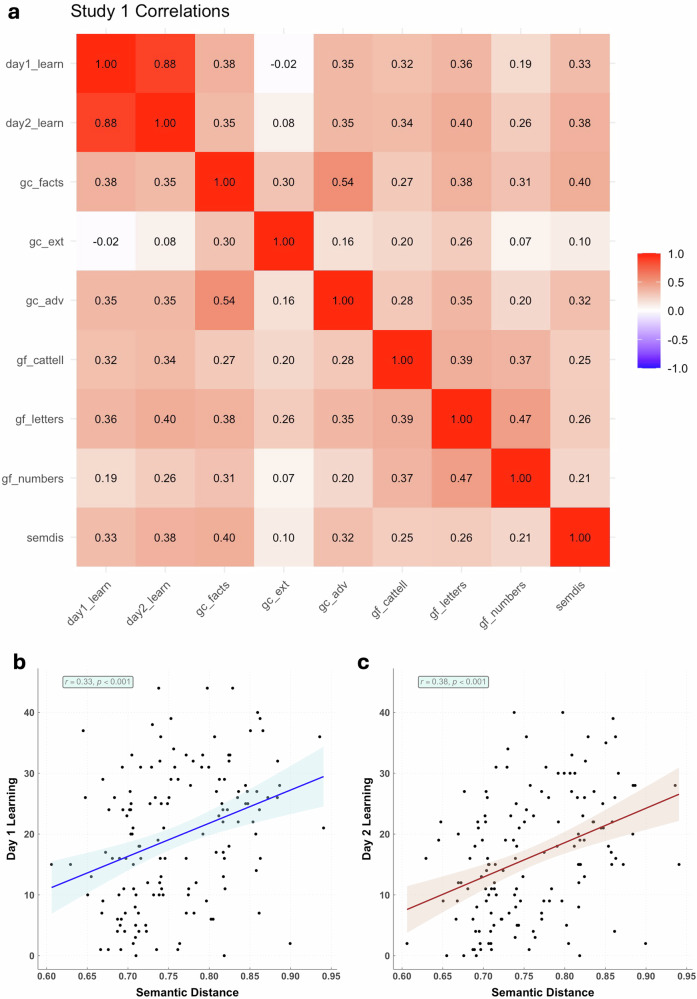
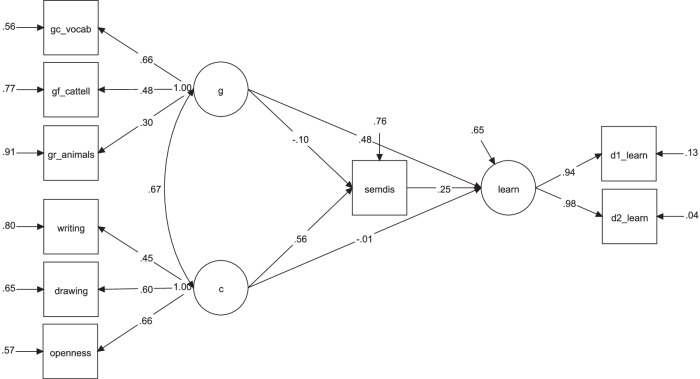
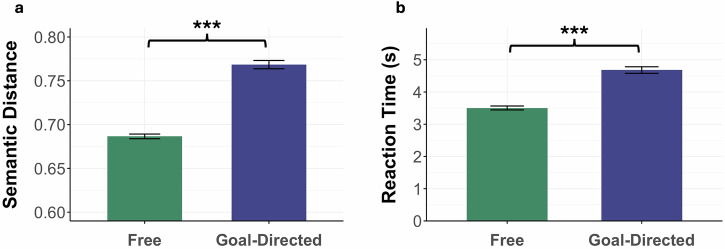
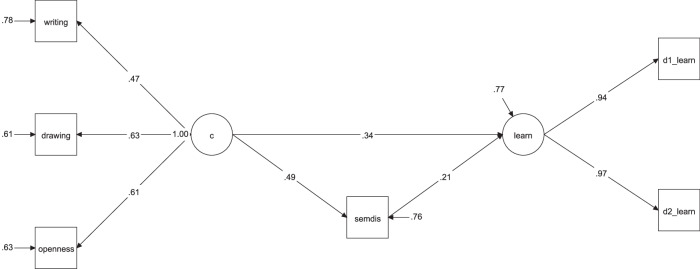
Creativity is a key 21st-century skill and a consistent predictor of academic learning outcomes. Despite decades of research on creativity and learning, little is known about the cognitive mechanisms underlying their relationship. In two studies, we examined whether creativity supports associative learning through associative thinking-the ability to generate novel word associations-an ability central to creativity which has not been previously tied to associative learning. In Study 1, we found that students who generated more novel word associations learned more words on a foreign language learning test 24 h later. In Study 2, we replicated and extended the effect to naturalistic creativity tasks (i.e., writing short stories and sketching line drawings), finding associative thinking mediated the relationship between creativity and associative learning. Importantly, both studies controlled for general intelligence. Our findings suggest that creativity's contribution to learning operates partly through a shared cognitive capacity for making new connections.
创造力是21世纪的一项关键技能,也是学术学习成果的一个可靠预测指标。尽管对创造力和学习进行了数十年的研究,但对于它们之间关系背后的认知机制却知之甚少。在两项研究中,我们考察了创造力是否通过联想思维支持联想学习,联想思维即产生新颖单词联想的能力,这是创造力的核心能力,此前尚未与联想学习联系起来。在研究1中,我们发现产生更多新颖单词联想的学生在24小时后的外语学习测试中学习到了更多单词。在研究2中,我们将这一效应复制并扩展到自然主义创造力任务(即写短篇小说和画素描),发现联想思维介导了创造力与联想学习之间的关系。重要的是,两项研究都控制了一般智力因素。我们的研究结果表明,创造力对学习的贡献部分是通过一种建立新联系的共享认知能力来实现的。