Ahmad Zahoor, Alzubaidi Mahmood, Al-Thelaya Khaled, Calí Corrado, Boughorbel Sabri, Schneider Jens, Agus Marco
College of Science and Engineering, Hamad Bin Khalifa University, Qatar Foundation, 34110 Doha, Qatar.
Neuroscience Institute Cavalieri Ottolenghi, University of Turin, Orbassano, Italy.
J Pathol Inform. 2025 May 23;18:100454. doi: 10.1016/j.jpi.2025.100454. eCollection 2025 Aug.
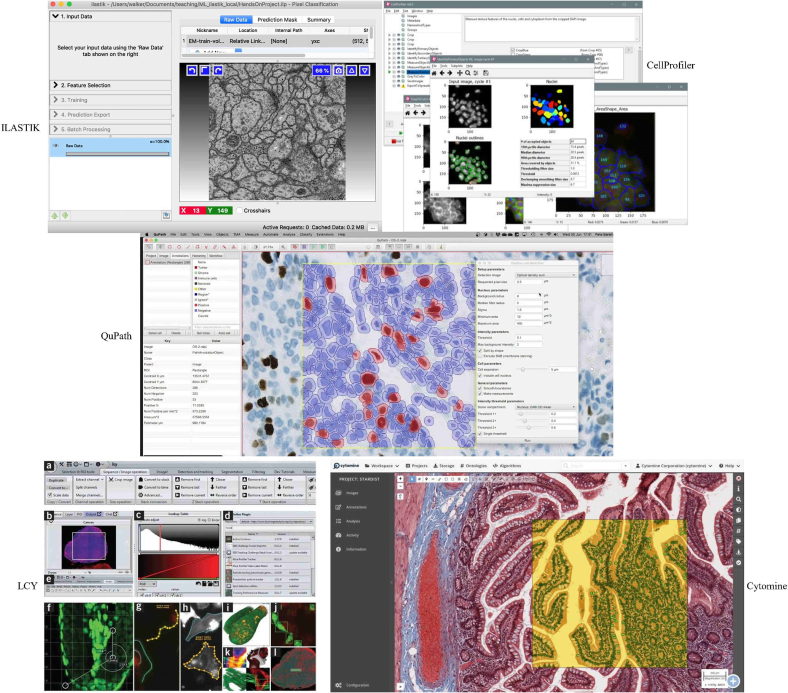
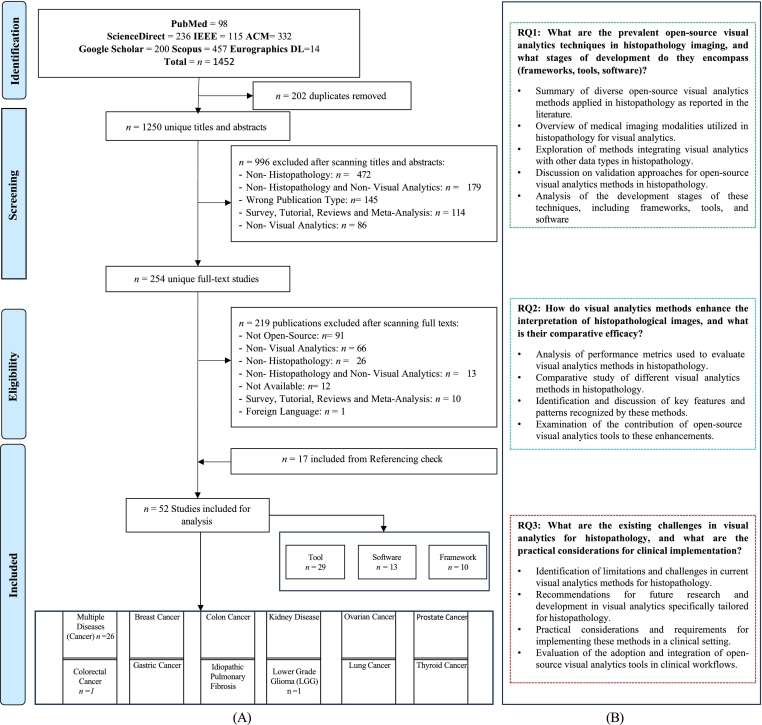
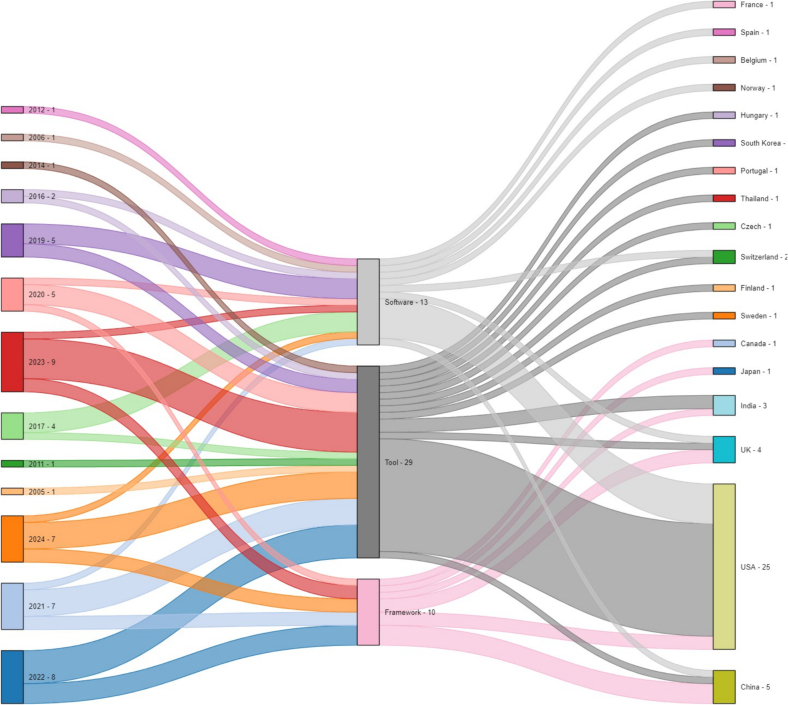
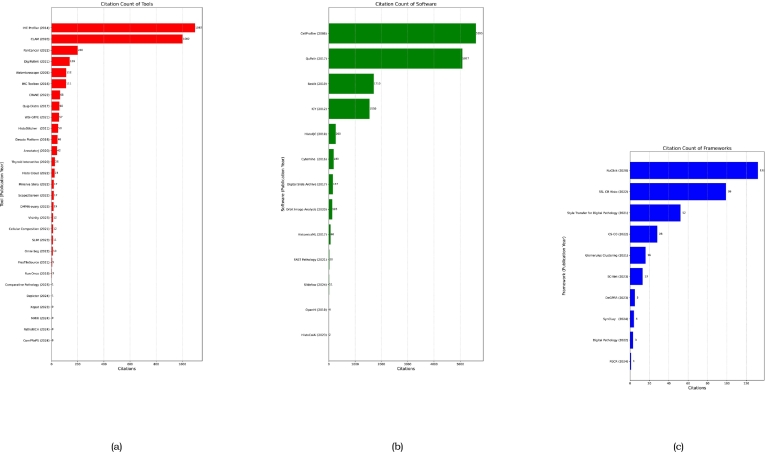
Histopathology is critical for disease diagnosis, and digital pathology has transformed traditional workflows by digitizing slides, enabling remote consultations, and enhancing analysis through computational methods. In this systematic review, we evaluated open-source visual analytics abilities in digital pathology by screening 254 studies and including 52 that met predefined criteria. Our analysis reveals that these solutions-comprising abilities ( = 29), software ( = 13), and frameworks ( = 10)-are predominantly applied in cancer research (e.g., breast, colon, ovarian, and prostate cancers) and primarily utilize whole slide images. Key contributions include advanced image analysis capabilities (as demonstrated by platforms such as QuPath and CellProfiler) and the integration of machine learning for diagnostic support, treatment planning, automated tissue segmentation, and collaborative research. Despite these promising advancements, challenges such as high computational demands, limited external validation, and difficulties integrating into clinical workflows remain. Future research should focus on establishing standardized validation frameworks, aligning with regulatory requirements, and enhancing user-centric designs to promote robust, interoperable solutions for clinical adoption.
组织病理学对疾病诊断至关重要,数字病理学通过将玻片数字化、实现远程会诊以及通过计算方法增强分析,改变了传统工作流程。在这项系统评价中,我们通过筛选254项研究并纳入52项符合预定义标准的研究,评估了数字病理学中的开源视觉分析能力。我们的分析表明,这些解决方案包括能力(=29)、软件(=13)和框架(=10),主要应用于癌症研究(如乳腺癌、结肠癌、卵巢癌和前列腺癌),并且主要利用全玻片图像。关键贡献包括先进的图像分析能力(如QuPath和CellProfiler等平台所示)以及机器学习在诊断支持、治疗规划、自动组织分割和协作研究中的整合。尽管有这些令人鼓舞的进展,但诸如高计算需求、有限的外部验证以及融入临床工作流程的困难等挑战仍然存在。未来的研究应专注于建立标准化的验证框架,符合监管要求,并加强以用户为中心的设计,以促进强大、可互操作的解决方案用于临床应用。