Afifah Nadiya Nurul, Larasati Annisa Lazuardi, Wijaya Indra, Zakiyah Neily, Intania Ruri, Obinata Hideru, Barliana Melisa Intan
Department of Biological Pharmacy, Faculty of Pharmacy, Universitas Padjadjaran, Sumedang, Indonesia.
Department of Pharmacy, Faculty of Health Sciences, Universitas Esa Unggul, Jakarta, Indonesia.
Appl Clin Genet. 2025 Jun 27;18:93-112. doi: 10.2147/TACG.S518467. eCollection 2025.
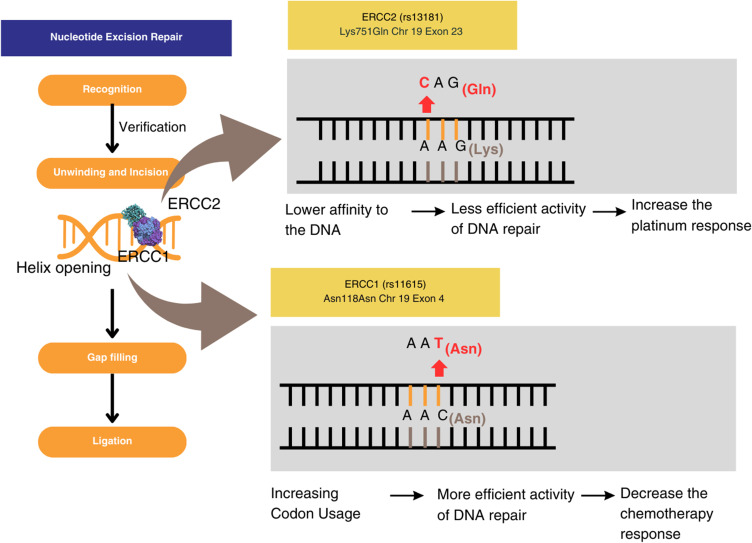
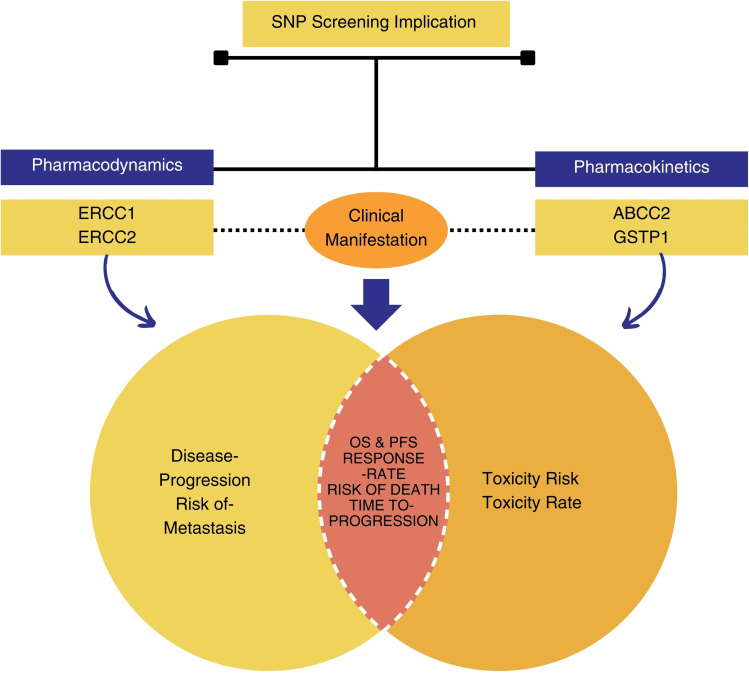
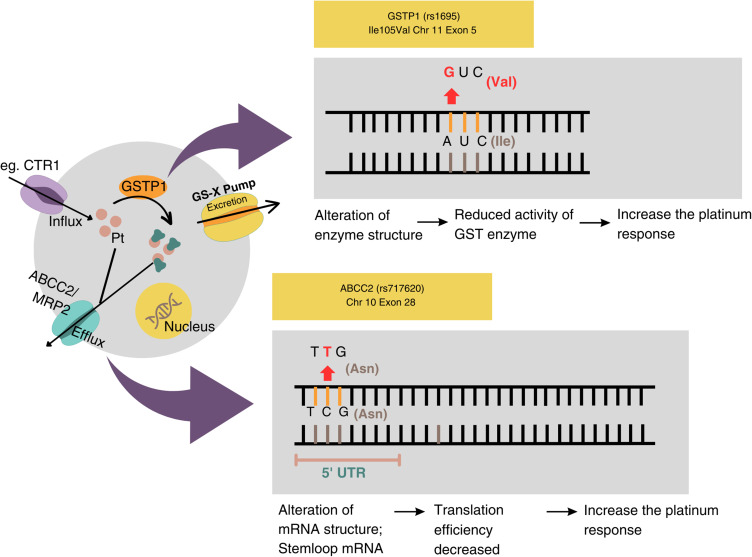
Traditional treatments for non-small cell lung cancer (NSCLC), such as chemotherapy, especially platinum-based regimens, often lack efficacy due to the disease's inherent heterogeneity. Precision medicine in NSCLC recognizes each tumor's unique genetic profile. Alterations in the pharmacokinetics and pharmacodynamics of platinum-based therapies significantly influence their clinical outcomes. Previous research has predominantly focused on genetic polymorphisms in genes like ), which play crucial roles in detoxification, drug transportation, and Nucleotide Excision Repair (NER). However, findings have shown considerable variability.
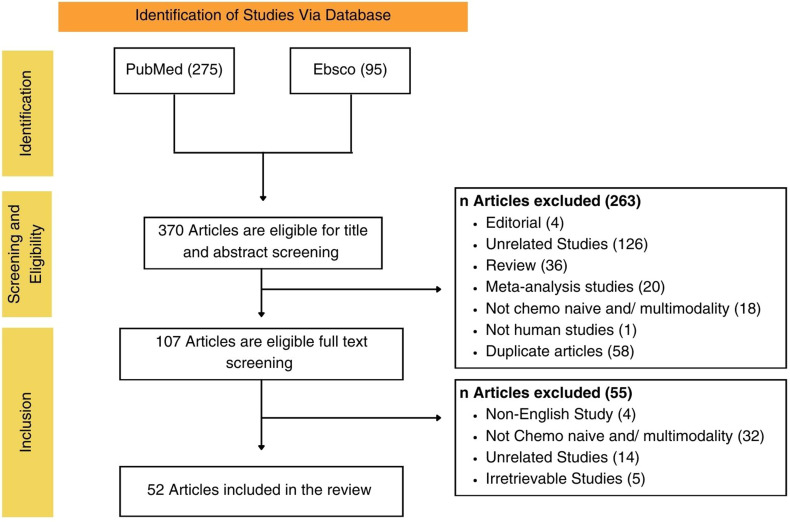
The analysis followed the PRISMA and STROPS Guidelines, using specific search terms including NSCLC, Chemotherapy, Polymorphisms, Single Nucleotide Polymorphisms (SNPs), , Effectiveness, and Clinical Response. These studies were subjected to full-text screening process.
Initial screening of 370 studies, comprising 275 from PubMed and 95 from EBSCO, identified 53 relevant ones, excluding those such as reviews, non-English studies, and meta-analyses. Among the genetic variants studied (ERCC1 rs11615, ERCC2 rs13181, ABCC2 rs717620, GSTP1 rs1695), GSTP1 rs1695 emerged as particularly promising, with 11 studies indicating a significant association with improved survival outcomes.
The integration of SNP profiling into clinical decision-making processes holds substantial potential for enhancing the personalization of NSCLC treatment strategies, thereby improving patient outcomes.
非小细胞肺癌(NSCLC)的传统治疗方法,如化疗,尤其是铂类方案,由于该疾病固有的异质性,往往缺乏疗效。NSCLC的精准医学认识到每个肿瘤独特的基因特征。铂类疗法的药代动力学和药效学改变显著影响其临床结果。先前的研究主要集中在诸如参与解毒、药物转运和核苷酸切除修复(NER)的基因中的基因多态性。然而,研究结果显示出相当大的变异性。
分析遵循PRISMA和STROPS指南,使用特定的检索词,包括NSCLC、化疗、多态性、单核苷酸多态性(SNP)、有效性和临床反应。这些研究经过全文筛选过程。
对370项研究进行初步筛选,其中275项来自PubMed,95项来自EBSCO,确定了53项相关研究,排除了综述、非英语研究和荟萃分析等。在所研究的基因变异(ERCC1 rs11615、ERCC2 rs13181、ABCC2 rs717620、GSTP1 rs1695)中,GSTP1 rs1695显得特别有前景,11项研究表明其与改善生存结果显著相关。
将SNP分析纳入临床决策过程对于增强NSCLC治疗策略的个性化具有巨大潜力,从而改善患者预后。