
估算2010年至2019年间来自非流行国家的国际航空旅客中登革热的发病率。
Estimating the incidence of dengue in international air travelers from non-endemic countries between 2010-2019.
作者信息
Hitchings Matt D T, Xu Yi, García-Carreras Bernardo, Gallagher Adriana, O'Hagan Justin J, Cummings Derek A T
机构信息
Department of Biostatistics, College of Public Health & Health Professions, University of Florida, Gainesville, Florida, United States of America.
Emerging Pathogens Institute, University of Florida, Gainesville, Florida, United States of America.
出版信息
PLoS Negl Trop Dis. 2025 Jul 9;19(7):e0013291. doi: 10.1371/journal.pntd.0013291. eCollection 2025 Jul.
BACKGROUND
There have been increasing numbers of travel-associated dengue cases reported but the true burden is unclear. Existing surveillance in non-endemic countries captures only a fraction of symptomatic cases in returning travelers due to underreporting. Therefore, we used mathematical modeling approaches to account for underreporting and estimate the number of dengue cases occurring during international travel.
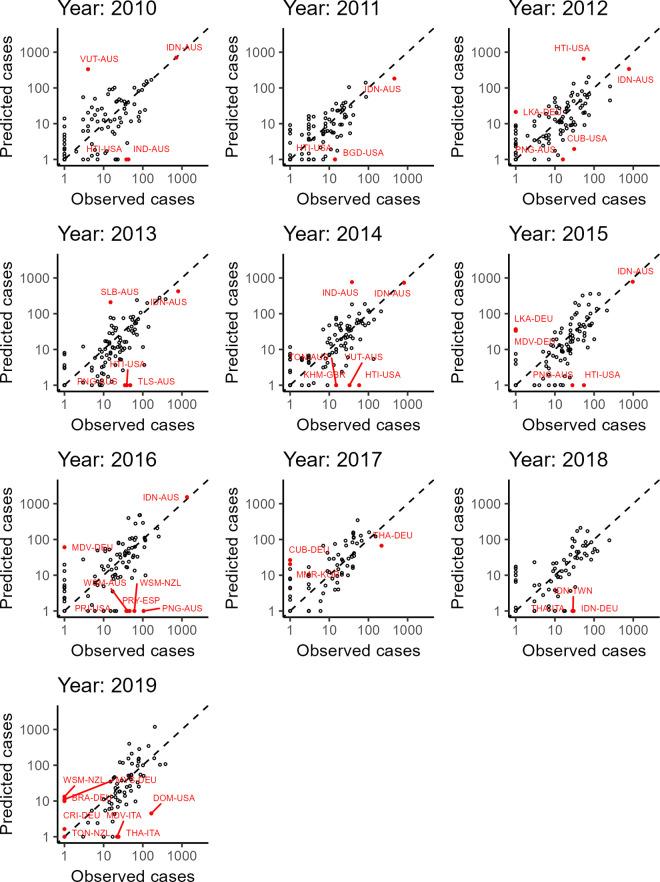
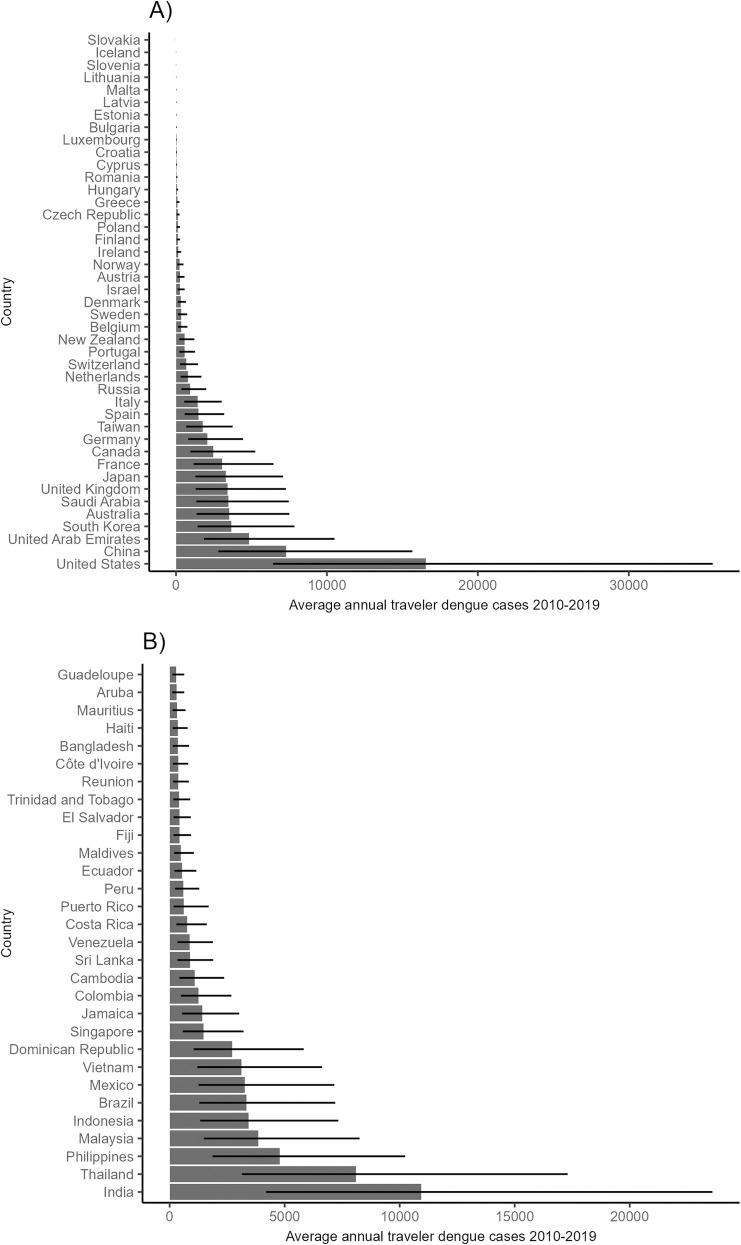
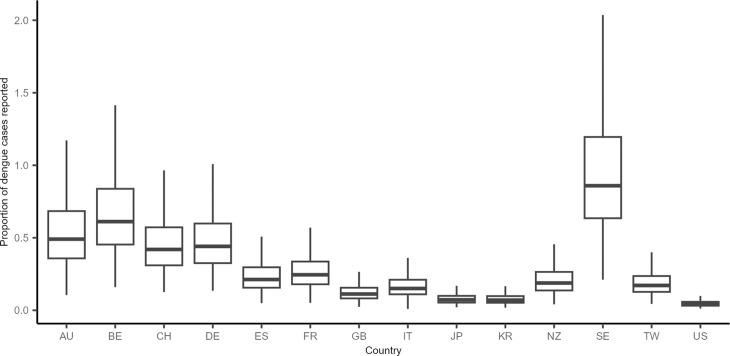
METHODOLOGY/PRINCIPAL FINDINGS: We obtained data on numbers of international air passengers from 43 non-endemic "origin" countries, risks of infection while in 119 dengue-endemic locations ("destinations"), and average durations of stay. We estimated travel-associated infections by multiplying the time spent by travelers in endemic countries by the risk of dengue infection and used data on reported cases to infer the fraction of cases that are included in surveillance systems. Our model estimated there were an average of 64,623 (95% CI: 25,068-138,283) symptomatic dengue cases ("cases") and 303,870 (95% CI: 292,841-315,240) total dengue infections (i.e., including symptomatic and asymptomatic infections) across 43 origin countries annually between 2010-19. The USA had the highest number of estimated cases followed by China. Among 34 origin countries that reported dengue cases, the fraction of cases reported varied widely (median 24.9%, range 2.5%-100%). The destination countries where most cases were infected were India, followed by Thailand.
CONCLUSIONS/SIGNIFICANCE: We estimated a substantial burden of dengue among international air travelers from 43 non-endemic origin countries. The fraction of cases reported varied widely across origin countries and was also influenced by the specific origin-destination country pair examined.
背景
报告的与旅行相关的登革热病例数量不断增加,但实际负担尚不清楚。非流行国家现有的监测仅捕获了回国旅行者中一部分有症状的病例,原因是报告不足。因此,我们使用数学建模方法来考虑报告不足的情况,并估计国际旅行期间发生的登革热病例数量。
方法/主要发现:我们获取了来自43个非流行“出发”国家的国际航空乘客数量、在119个登革热流行地区(“目的地”)感染的风险以及平均停留时间的数据。我们通过将旅行者在流行国家花费的时间乘以登革热感染风险来估计与旅行相关的感染,并使用报告病例的数据来推断监测系统涵盖的病例比例。我们的模型估计,2010年至2019年期间,43个出发国家每年平均有64,623例(95%置信区间:25,068 - 138,283)有症状的登革热病例(“病例”)和303,870例(95%置信区间:292,841 - 315,240)总的登革热感染(即包括有症状和无症状感染)。美国估计的病例数最多,其次是中国。在报告登革热病例的34个出发国家中,报告的病例比例差异很大(中位数为24.9%,范围为2.5% - 100%)。感染病例最多的目的地国家是印度,其次是泰国。
结论/意义:我们估计来自43个非流行出发国家的国际航空旅行者中登革热负担很重。报告的病例比例在不同出发国家差异很大,并且还受到所研究的具体出发 - 目的地国家对的影响。
 Zotero 插件