Sehgal Pravin B, Yuan Huijuan, DiSenso-Browne Susan V
Department of Cell Biology and Anatomy, New York Medical College, Valhalla, NY 10595, USA.
Department of Medicine, New York Medical College, Valhalla, NY 10595, USA.
Cells. 2025 Jun 20;14(13):947. doi: 10.3390/cells14130947.
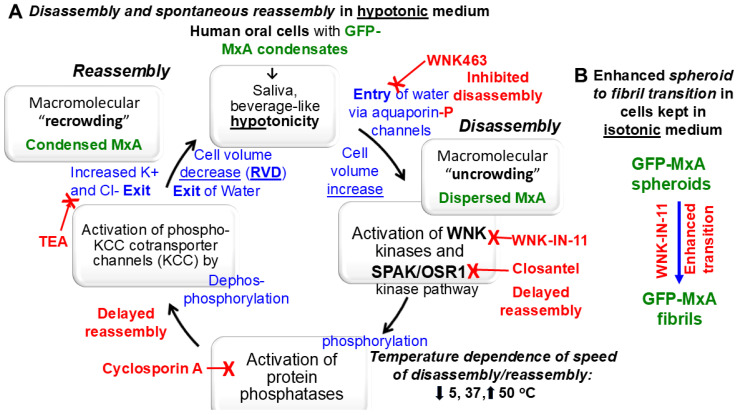
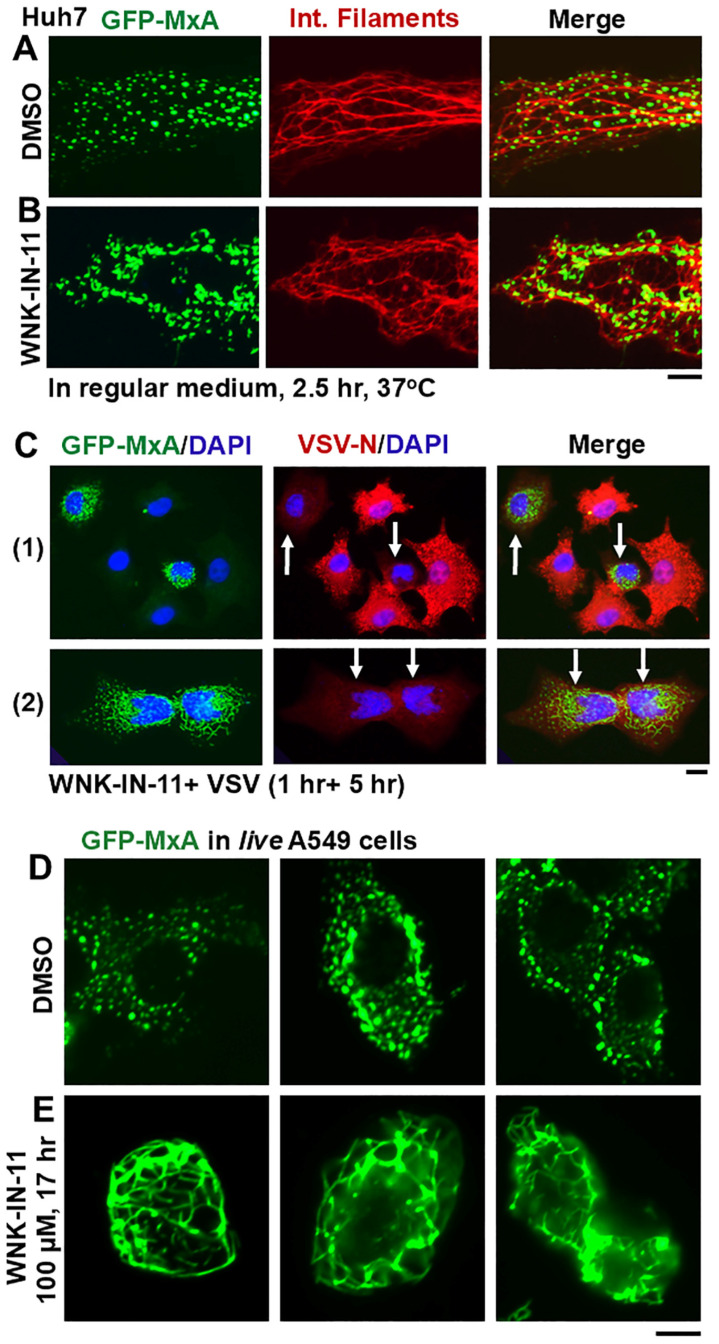
Phase-separated membraneless biomolecular condensates in the cytoplasm and nucleus are now recognized to play a major role in modulating diverse functions in mammalian cells, and contribute to cancer pathogenesis through dysregulated function of condensates of transcription factors such as STAT3 and fusion oncoproteins. Oral cancer, the sixth most prevalent malignancy worldwide, in the absence of overt causes such as tobacco or alcohol, most frequently occurs in a U-shaped zone (floor of mouth, side of tongue, anterior fauces and retromolar region) reflecting the path of liquid transit through the mouth. The cellular basis for this "high-risk" zone and the biochemical mechanisms used by oral cells to combat repetitive tonicity and temperature stresses are incompletely understood. We had previously observed that at 37 °C, in OECM1 oral carcinoma cells, cytoplasmic condensates of antiviral human GFP-MxA GTPase disassembled within 1-2 min of exposure of cells to saliva-like one-third hypotonicity, and underwent "spontaneous" reassembly in the next 5-7 min. Moreover, hypotonic beverages (water, tea, coffee), investigated at 37 °C, triggered this condensate cycling. In the present studies we investigated whether this process was temperature sensitive, representative of cold vs. warm drinks. We observed a slowing of this cycle at 5 °C, and speeding up at 50 °C. The involvement in this disassembly/reassembly process of WNK-SPAK/OSR1 serine-threonine kinase pathway, best studied for regulation of water and Na, K and Cl influx and efflux in kidney tubule cells, was evaluated by us in cells using pathway inhibitors WNK463, WNK-IN-11 and closantel. The pan-WNK inhibitor WNK463 inhibited hypotonicity-driven condensate disassembly, while the SPAK/OSR1 inhibitor closantel markedly slowed reassembly. Unexpectedly, the WNK1-selective inhibitor (WNK-IN-11), triggered a dramatic and rapid (within 1 h) spheroid to fibril transition of GFP-MxA condensates in live cells, but without affecting MxA antiviral function. The new data suggest a novel hypothesis for the anatomic localization of oral cancer in the U-shaped "high-risk" zone in the mouth: dysfunction of biomolecular condensates in oral cells along the beverage transit pathway through the mouth due to repetitive tonicity and temperature stresses that might underlie a prooncogenic progression.
细胞质和细胞核中相分离的无膜生物分子凝聚物现在被认为在调节哺乳动物细胞的多种功能中起主要作用,并通过转录因子(如STAT3)凝聚物和融合癌蛋白的功能失调促进癌症发病机制。口腔癌是全球第六大常见恶性肿瘤,在没有烟草或酒精等明显病因的情况下,最常发生在一个U形区域(口腔底部、舌侧、咽前和磨牙后区域),这反映了液体通过口腔的路径。这个“高危”区域的细胞基础以及口腔细胞对抗重复性张力和温度应激所使用的生化机制尚未完全了解。我们之前观察到,在37°C时,在OECM1口腔癌细胞中,抗病毒人GFP-MxA GTP酶的细胞质凝聚物在细胞暴露于类似唾液的三分之一低渗环境后的1-2分钟内解体,并在接下来的5-7分钟内进行“自发”重新组装。此外,在37°C下研究的低渗饮料(水、茶、咖啡)引发了这种凝聚物循环。在本研究中,我们研究了这个过程是否对温度敏感,这代表了冷饮与热饮的情况。我们观察到在5°C时这个循环变慢,在50°C时加速。我们使用途径抑制剂WNK463、WNK-IN-11和氯氰碘柳胺评估了WNK-SPAK/OSR1丝氨酸-苏氨酸激酶途径在这种解体/重新组装过程中的参与情况,该途径在肾小管细胞中水和钠、钾、氯的流入和流出调节方面研究得最为充分。泛WNK抑制剂WNK463抑制低渗驱动的凝聚物解体,而SPAK/OSR1抑制剂氯氰碘柳胺显著减缓重新组装。出乎意料的是,WNK1选择性抑制剂(WNK-IN-11)在活细胞中引发了GFP-MxA凝聚物从球体到纤维的戏剧性快速转变(在1小时内),但不影响MxA的抗病毒功能。新数据为口腔癌在口腔U形“高危”区域的解剖定位提出了一个新假设:由于重复性张力和温度应激,口腔细胞中生物分子凝聚物的功能障碍可能是致癌进展的基础,这些应激可能沿着饮料通过口腔的路径发生。