Haaser Thibaud, Clair S, Marty S, Berdai D, Hoarau H, Saux M C, Dreyfuss D, Maternowski P J
Health and Research Ethics Centre of Bordeaux, Bordeaux, France.
University Hospital Centre of Bordeaux, Bordeaux, France.
BMC Med Ethics. 2025 Jul 11;26(1):94. doi: 10.1186/s12910-025-01260-y.
Therapeutic misconception (TM) among research participants refers to the conflation of research goals (generating generalisable knowledge) with clinical care goals (making the best decisions for the participants). Considering the high volume of oncology research, oncologists frequently encounter TM.
To evaluate the knowledge, practices, and ethical concerns of French oncologists regarding TM.
A questionnaire was developed to assess oncologists' knowledge and practices concerning TM, then utilised in a national survey of French oncologists from 1 June to 14 July 2023. A descriptive statistical analysis of the responses (according to a Likert scale) was carried out.
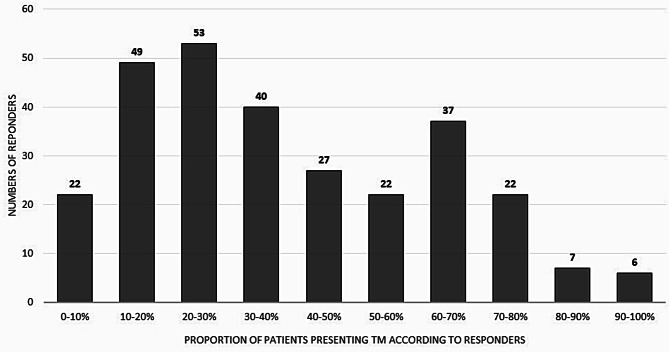
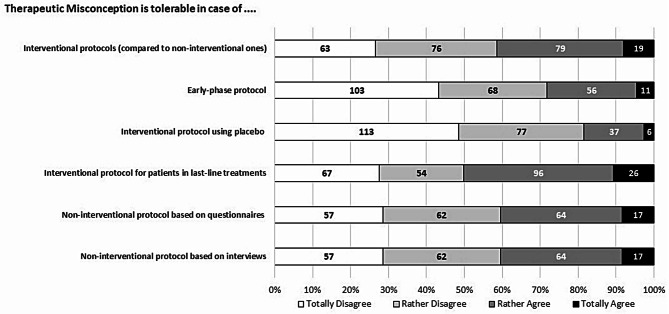
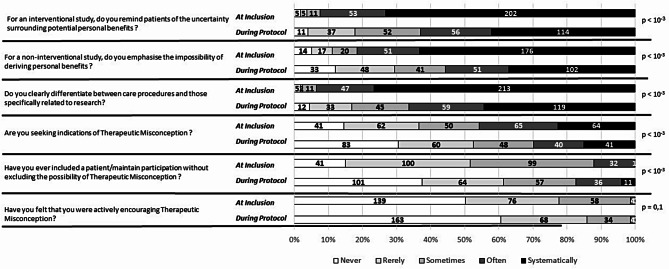
In total, 288 oncologists from various specialties responded to the survey. Initial knowledge of TM was low (16%), but after the definition was provided, 84% reported having encountered TM. Respondents indicated that they paid attention to the information given during participant inclusion; however, approximately half (46%) actively investigated the presence of TM, and 22% admitted to having encouraged TM at least occasionally. Attention to TM significantly declined over the course of study protocols. Awareness of TM, along with ethics education or participation in a research ethics committee, were identified as significant factors influencing responses. The acceptability of TM was nuanced, particularly in protocols recommended to patients receiving last-line treatments. Although 64% of respondents acknowledged a link between TM and dual roles as both investigator and physician, 78% opposed transferring investigative responsibilities to a non-referent oncologist.
TM is a widespread but still mostly unknown phenomenon which could easily be tackled for better outcomes for patients. This study revealed considerable variability in knowledge, practices, and ethical considerations related to TM among French oncologists. Enhanced education and ethical support are needed to improve awareness and foster appropriate behaviours concerning TM.
Not applicable.
研究参与者中的治疗性误解(TM)是指将研究目标(生成可推广的知识)与临床护理目标(为参与者做出最佳决策)混为一谈。鉴于肿瘤学研究数量众多,肿瘤学家经常遇到治疗性误解。
评估法国肿瘤学家对治疗性误解的认知、做法及伦理关注。
设计了一份问卷来评估肿瘤学家对治疗性误解的认知和做法,然后于2023年6月1日至7月14日在法国肿瘤学家的全国性调查中使用。对回答(根据李克特量表)进行了描述性统计分析。
共有来自各个专业的288名肿瘤学家回复了调查。对治疗性误解的初始认知较低(16%),但在给出定义后,84%的人报告遇到过治疗性误解。受访者表示他们在纳入参与者时会关注所提供的信息;然而,约一半(46%)的人会积极调查治疗性误解的存在情况,22%的人承认至少偶尔会鼓励治疗性误解。在研究方案过程中,对治疗性误解的关注显著下降。治疗性误解的认知以及伦理教育或参与研究伦理委员会被确定为影响回答的重要因素。治疗性误解的可接受性存在细微差别,尤其是在推荐给接受一线治疗患者的方案中。虽然64%的受访者承认治疗性误解与作为研究者和医生的双重角色之间存在联系,但78%的人反对将调查职责转移给非主诊肿瘤学家。
治疗性误解是一种普遍存在但仍大多不为人知的现象,通过采取措施可以轻松解决,从而为患者带来更好的结果。本研究揭示了法国肿瘤学家在与治疗性误解相关的知识、做法和伦理考量方面存在相当大的差异。需要加强教育和伦理支持,以提高对治疗性误解的认识并培养适当的行为。
不适用。