Wu Yan, Huang Junshi, Tong Ni, Chen Qi, Peng Fang, Liu Muhua, Zhao Jinhui, Huang Shuanggen
Key Laboratory of Modern Agricultural Equipment in Jiangxi Province, Jiangxi Agricultural University, Nanchang 330045, China.
School of Computer Science & Engineering, Jiangxi Agricultural University, Nanchang 330045, China.
Sensors (Basel). 2025 Jun 24;25(13):3920. doi: 10.3390/s25133920.
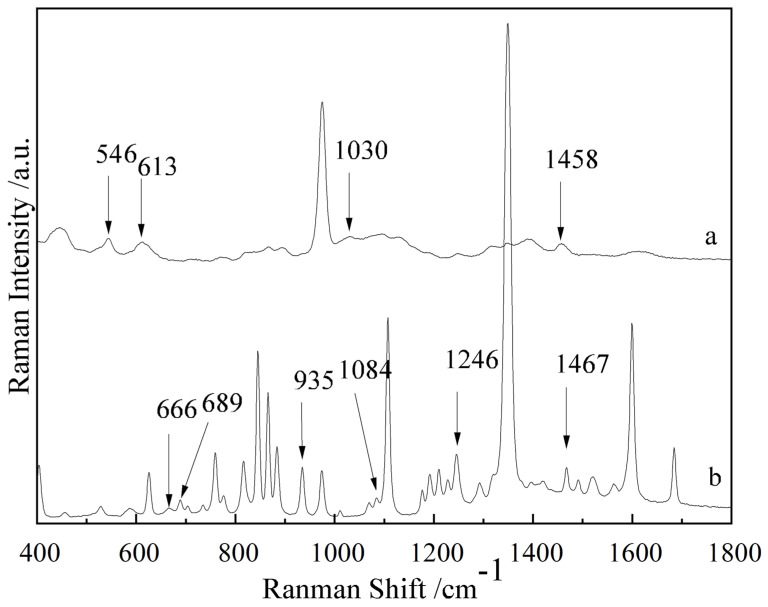
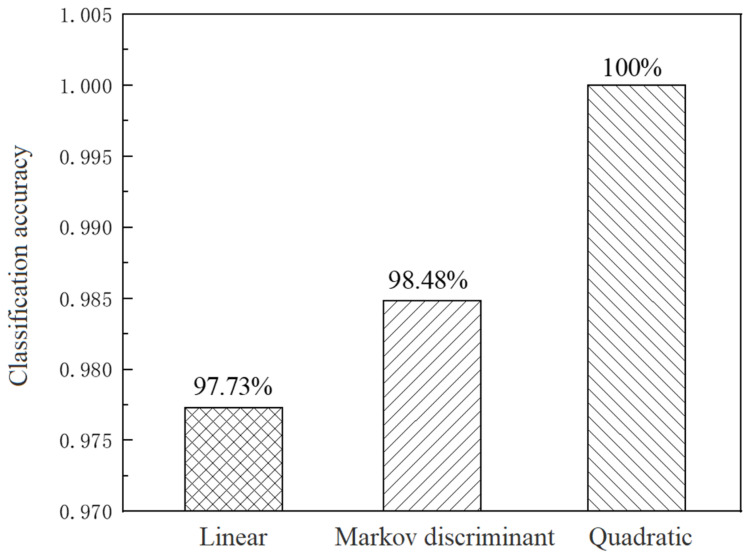
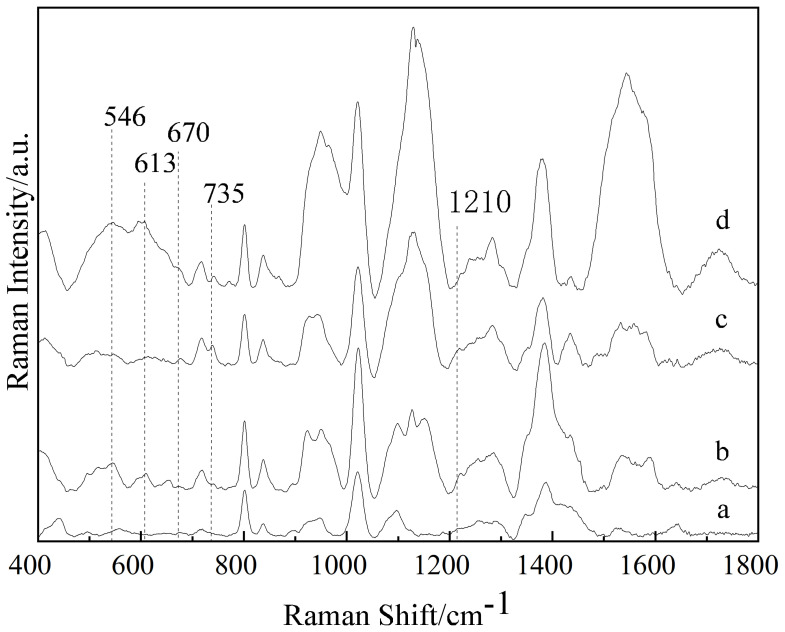
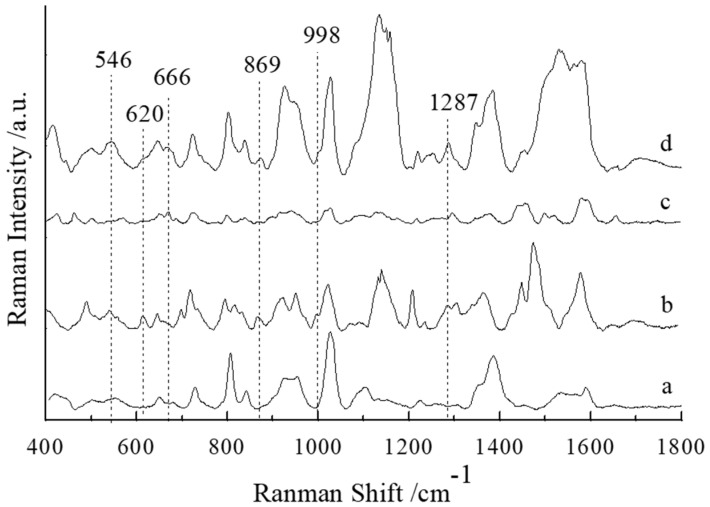
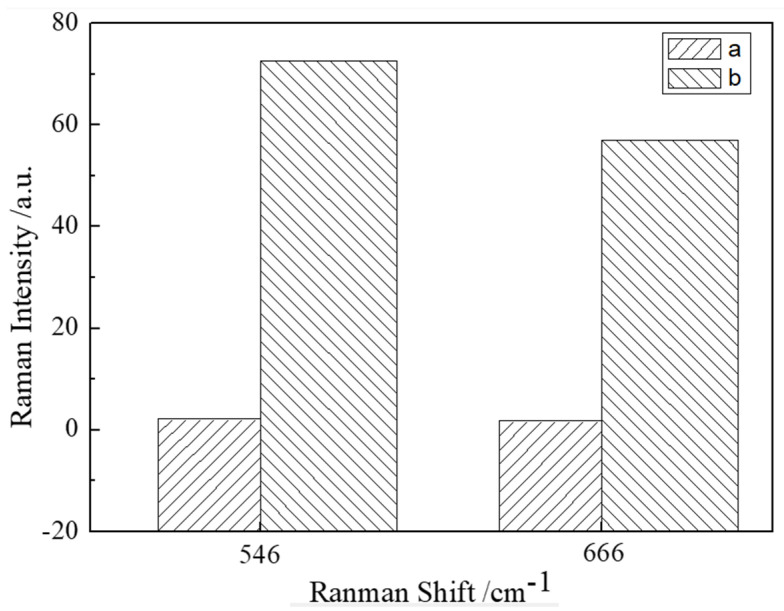
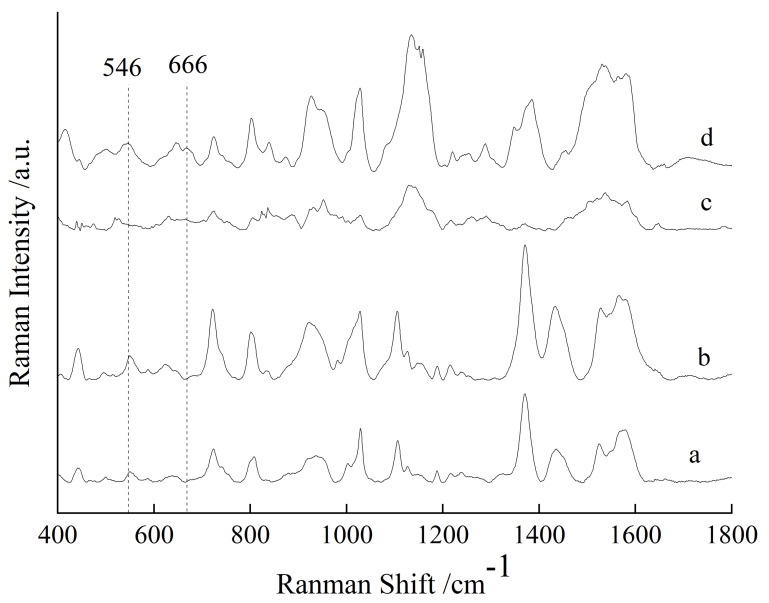
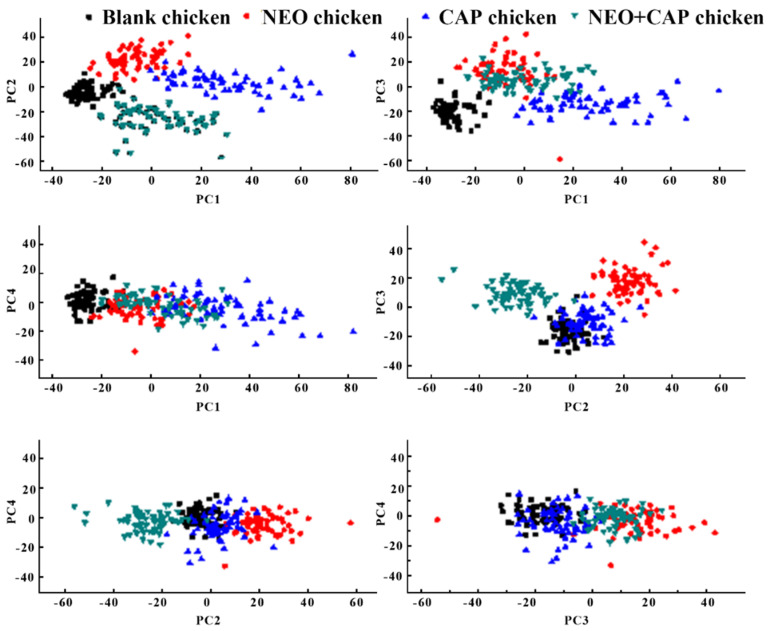
In the process of chicken breeding, there has been a great deal of abuse of antibiotics. Antibiotics can enter the human body along with the chicken meat, comprising a possible risk to human health. In this paper, principal component analysis (PCA)-linear discriminant analysis (LDA) was chosen to classify neomycin (NEO) and chloramphenicol (CAP) residues in chicken meat. A total of 400 chicken meat samples were used for the classification, of which 268 samples and 132 samples were used as the training sets and the test sets, respectively. The experimental condition of SERS spectrum collection was optimized, including the use of a gold colloid and active agent, and an improvement in the adsorption time. The optimal measurement conditions for the SERS spectra were an adsorption time of 4 min and the use of a 14th-generation gold colloid as the enhanced substrate without a surfactant. For three groups of different spectral preprocessing methods, the classification accuracies of PCA-LDA models for test sets were 78.79% for baseline correction, 84.85% for the second derivative and 100% for the second derivative combined with baseline correction. LDA was used to establish a classification model to realize the quick determination of NEO and CAP residues in chicken meat by SERS. The results showed that the characteristic peaks at 546 and 666 cm could be used to distinguish NEO and CAP residues in chicken meat. The classification model based on PCA-LDA had higher classification accuracy, sensitivity and specificity using a second derivative combined with baseline correction as the spectral preprocessing method, which shows that the SERS method based on PCA-LDA could be used to perform the classification of NEO and CAP residues in chicken meat quickly and effectively. It also verified the feasibility of PCA-LDA to effectively classify chicken meat samples into four types. This research method could provide a reference for the measurement of such antibiotic residues in chicken meat in the future.
在鸡肉养殖过程中,存在大量滥用抗生素的现象。抗生素可随鸡肉进入人体,对人类健康构成潜在风险。本文选用主成分分析(PCA)-线性判别分析(LDA)对鸡肉中的新霉素(NEO)和氯霉素(CAP)残留进行分类。共使用400份鸡肉样本进行分类,其中268份样本和132份样本分别用作训练集和测试集。优化了表面增强拉曼光谱(SERS)采集的实验条件,包括金胶体和活性剂的使用以及吸附时间的改进。SERS光谱的最佳测量条件为吸附时间4分钟,使用第14代金胶体作为增强基底且不使用表面活性剂。对于三组不同的光谱预处理方法,测试集的PCA-LDA模型分类准确率分别为:基线校正为78.79%,二阶导数为84.85%,二阶导数结合基线校正为100%。采用LDA建立分类模型,以实现通过SERS快速测定鸡肉中的NEO和CAP残留。结果表明,546和666 cm处的特征峰可用于区分鸡肉中的NEO和CAP残留。以二阶导数结合基线校正作为光谱预处理方法时,基于PCA-LDA的分类模型具有更高的分类准确率、灵敏度和特异性,这表明基于PCA-LDA的SERS方法可用于快速、有效地对鸡肉中的NEO和CAP残留进行分类。同时也验证了PCA-LDA将鸡肉样本有效分类为四种类型的可行性。该研究方法可为今后鸡肉中此类抗生素残留的检测提供参考。