Ruger-Herreros Carmen, Svoboda Lucia, Male Gurranna, Shrivastava Aseem, Höpfler Markus, Koubek Jiri, Kramer Günter, den Brave Fabian, Mogk Axel, Gross David S, Bukau Bernd
Center for Molecular Biology of Heidelberg University (ZMBH), DKFZ-ZMBH Alliance, Im Neuenheimer Feld 282, 69120 Heidelberg, Germany.
Instituto de Biomedicina de Sevilla (IBiS), Hospital Universitario Virgen del Rocío/CSIC/Universidad de Sevilla, Avda. Manuel Siurot, s/n, E-41013, Sevilla, Spain.
bioRxiv. 2025 Jul 8:2025.04.14.648540. doi: 10.1101/2025.04.14.648540.
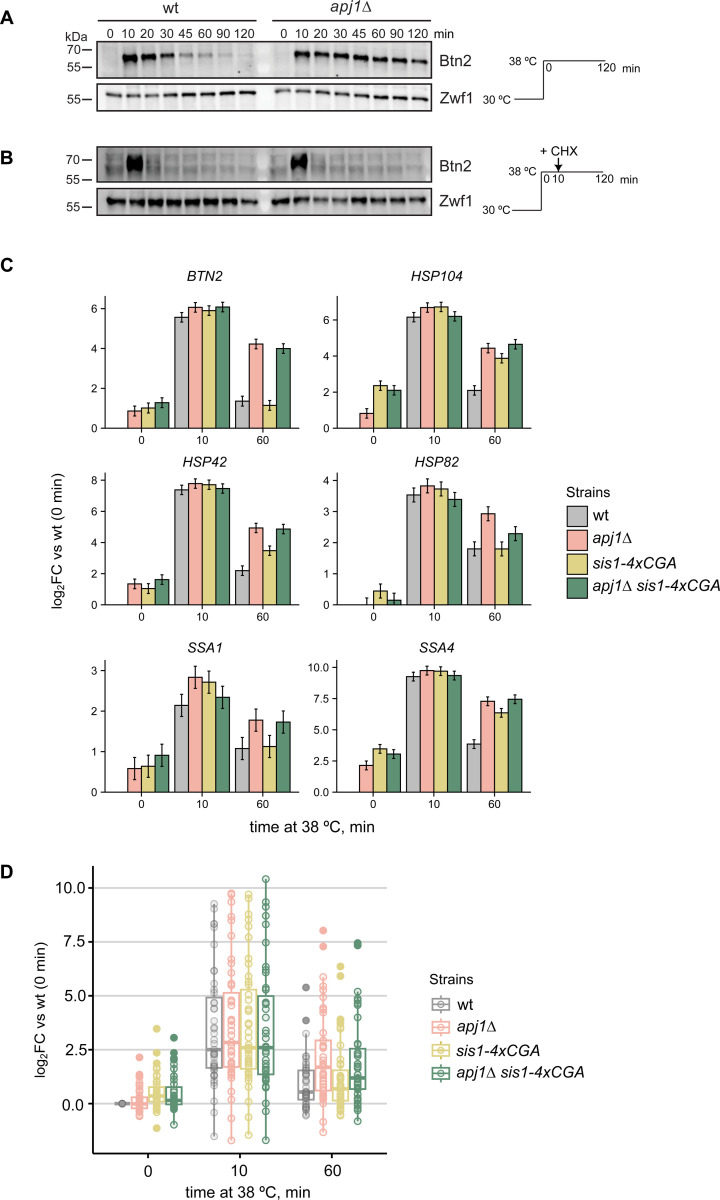
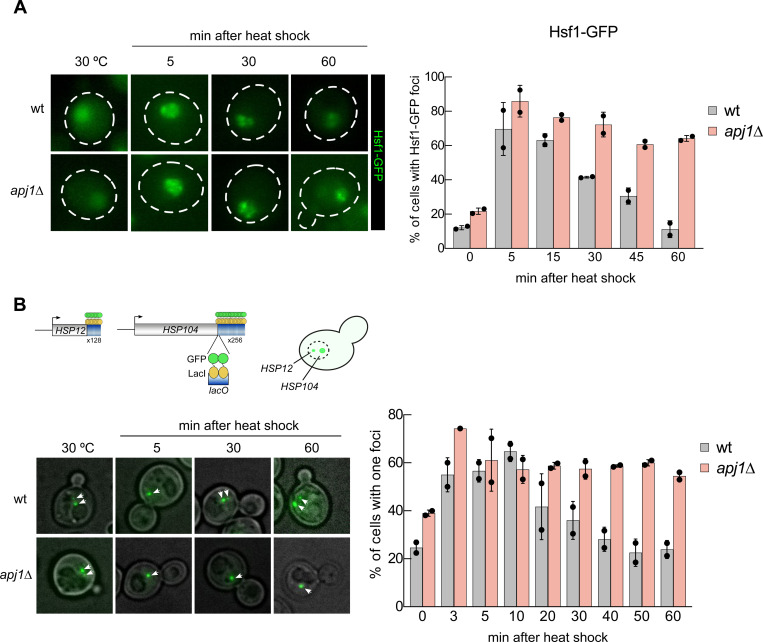
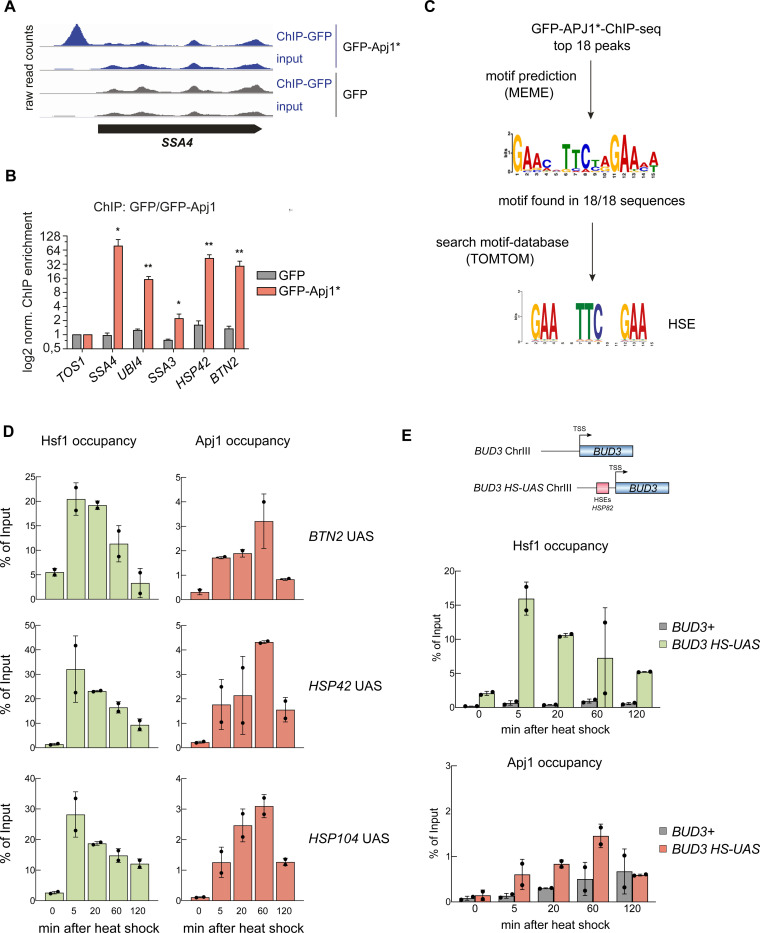
The heat shock response (HSR) is the major defense mechanism against proteotoxic stress in the cytosol and nucleus of eukaryotic cells. Initiation and attenuation of the response are mediated by stress-dependent regulation of heat shock transcription factors (HSFs). encodes a single HSF (Hsf1), facilitating the analysis of HSR regulation. Hsf1 is repressed by Hsp70 chaperones under non-stress conditions, and becomes activated under proteotoxic stress, directly linking protein damage and its repair to the HSR. J-domain proteins (JDPs) are essential for targeting of Hsp70s to their substrates, yet the specific JDP(s) regulating Hsf1 and connecting protein damage to HSR activation remain unclear. Here we show that the yeast nuclear JDP Apj1 primarily controls the attenuation phase of the HSR by promoting Hsf1's displacement from heat shock elements in target DNA. In cells, HSR attenuation is significantly impaired. Additionally, yeast cells lacking both Apj1 and the major JDP Ydj1 exhibit increased HSR activation even in non-stress conditions, indicating their distinct regulatory roles. Apj1's role in both nuclear protein quality control and Hsf1 regulation underscores its role in directly linking nuclear proteostasis to HSR regulation. Together these findings establish the nucleus as key stress-sensing signaling hub.
热休克反应(HSR)是真核细胞胞质溶胶和细胞核中抵御蛋白毒性应激的主要防御机制。该反应的启动和减弱由热休克转录因子(HSF)的应激依赖性调节介导。 编码单个HSF(Hsf1),便于对HSR调节进行分析。在非应激条件下,Hsf1被Hsp70分子伴侣抑制,在蛋白毒性应激下被激活,将蛋白质损伤及其修复与HSR直接联系起来。J结构域蛋白(JDP)对于将Hsp70靶向其底物至关重要,但调节Hsf1并将蛋白质损伤与HSR激活联系起来的特定JDP仍不清楚。在这里,我们表明酵母核JDP Apj1主要通过促进Hsf1从靶DNA中的热休克元件上移位来控制HSR的减弱阶段。在 细胞中,HSR减弱明显受损。此外,同时缺乏Apj1和主要JDP Ydj1的酵母细胞即使在非应激条件下也表现出增强的HSR激活,表明它们具有不同的调节作用。Apj1在核蛋白质量控制和Hsf1调节中的作用强调了其在将核蛋白稳态与HSR调节直接联系起来的作用。这些发现共同确立了细胞核作为关键的应激感应信号枢纽。