He Yunfan, Xie Jun, Weng Zheyang, Yang Fangyu, Wei Yutao, Liang Jun, Lei Jianbo
School of International Relations and Public Affairs, Fudan University, Shanghai, China.
National Institute of Intelligent Evaluation and Governance, Fudan University, Shanghai, China.
Medicine (Baltimore). 2025 Jul 18;104(29):e43310. doi: 10.1097/MD.0000000000043310.
The online diagnosis and treatment model based on 5th generation mobile communication (5G) technology is one of the important ways to solve the imbalance between supply and demand of medical services.
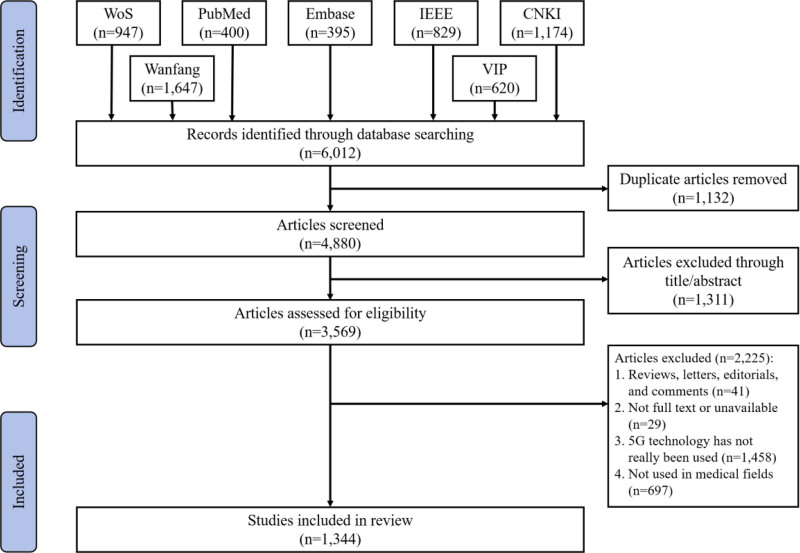
We systematically summarized Chinese and English literature on the application of 5G technology in the field of wireless medical and conducted a literature feature analysis.
We used bibliometrics to quantitatively analyze the research trends and hot topics and comparatively analyzed the differences between research in China and other countries.
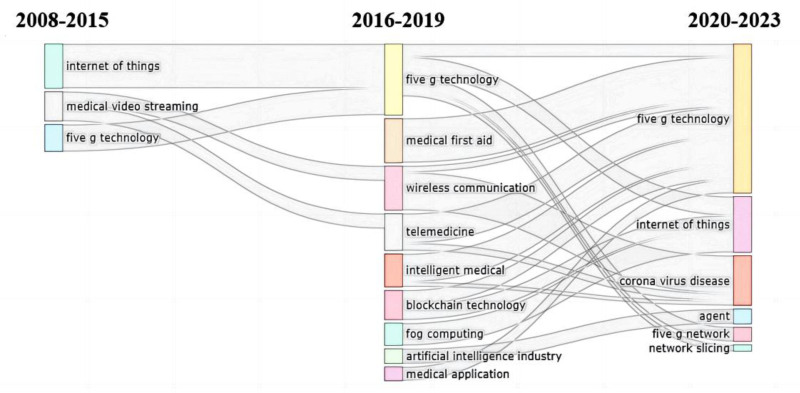
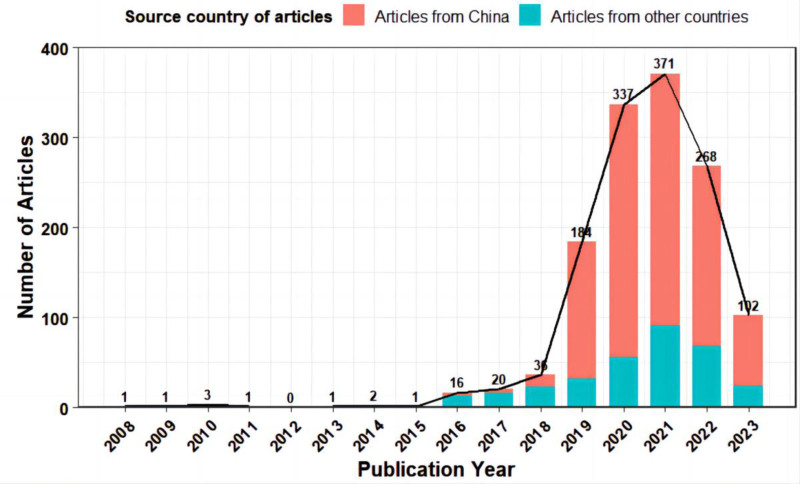
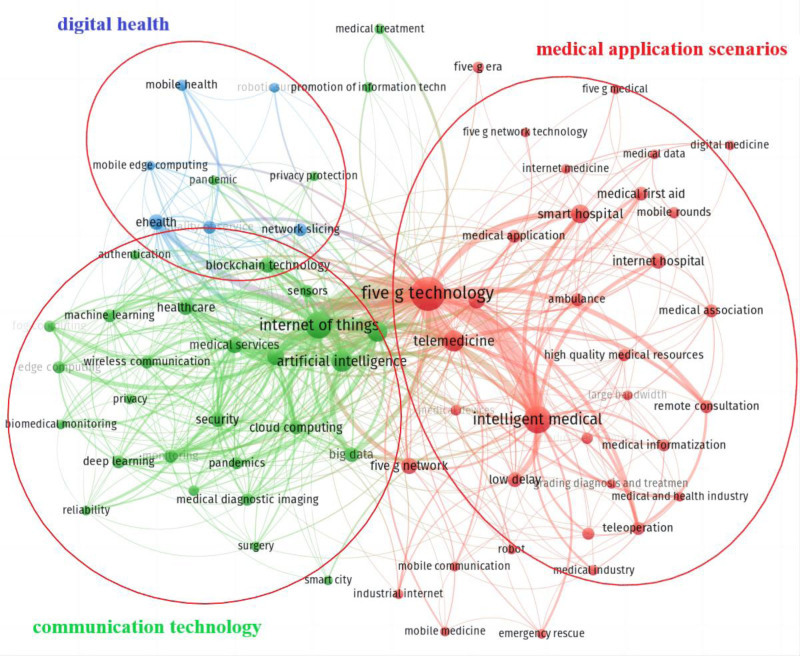
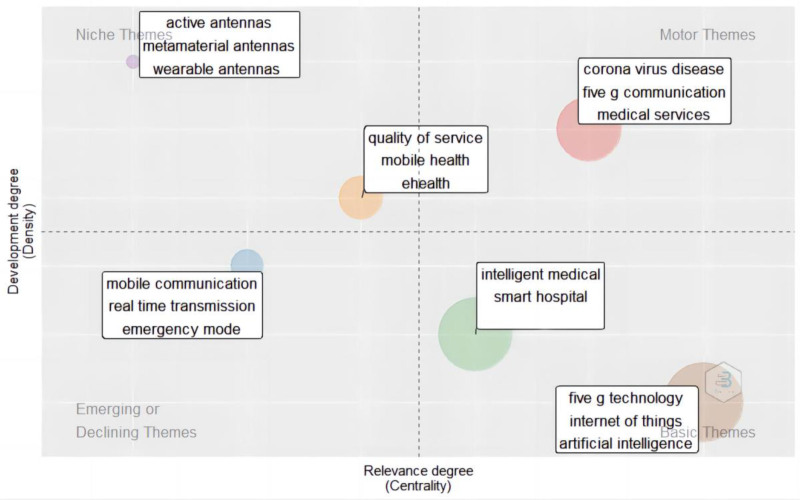
This study analyzed 1344 articles and found that China provided the most funding (531 [75.32%]) and far outnumbered other countries in this field (1014 vs 330), but the quality of articles and effective collaboration between authors need to be improved. The hot topics in this field have gradually shifted from the construction of 5G internet hospitals during the COVID-19 to the construction of smart hospitals based on the Internet of Medical Things, and the research focus has gradually shifted from the data transmission layer such as wearable devices to the application layer of smart medical services.
Researchers can further refine the specific application of 5G technology in the field of wireless medical from the 3 major areas of the smart hospital system.
基于第五代移动通信(5G)技术的在线诊疗模式是解决医疗服务供需不平衡的重要途径之一。
系统总结5G技术在无线医疗领域应用的中英文文献,并进行文献特征分析。
采用文献计量学方法对研究趋势和热点话题进行定量分析,并比较分析中国与其他国家研究的差异。
本研究分析了1344篇文章,发现中国提供的资金最多(531篇[75.32%]),在该领域远远超过其他国家(1014篇对330篇),但文章质量和作者之间的有效合作有待提高。该领域的热点话题已从新冠疫情期间的5G互联网医院建设逐渐转向基于医疗物联网的智慧医院建设,研究重点也从可穿戴设备等数据传输层逐渐转向智慧医疗服务应用层。
研究人员可从智慧医院系统的3个主要领域进一步细化5G技术在无线医疗领域的具体应用。