Robey Claire, Grillakis Antigone, Fan Anya, Liu Jiong, Tucker Laura B, Fu Amanda H, Kim Yeonho, McCabe Joseph T
Department of Anatomy, Physiology, and Genetics, Uniformed Services University of the Health Sciences, Bethesda, Maryland, USA.
Henry M. Jackson Foundation for the Advancement of Military Medicine, Inc., Bethesda, Maryland, USA.
Neurotrauma Rep. 2025 Apr 29;6(1):374-390. doi: 10.1089/neur.2024.0168. eCollection 2025.
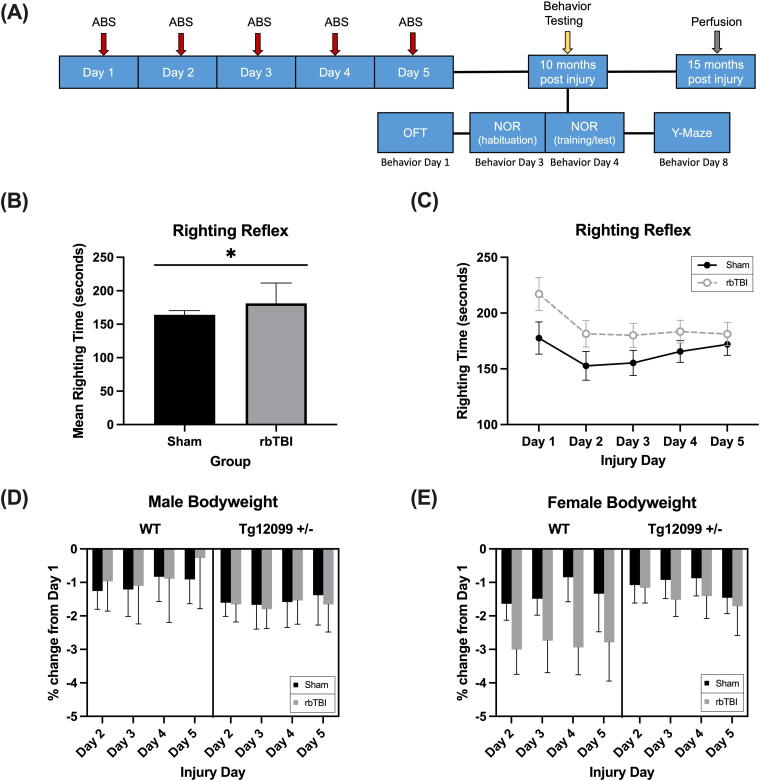
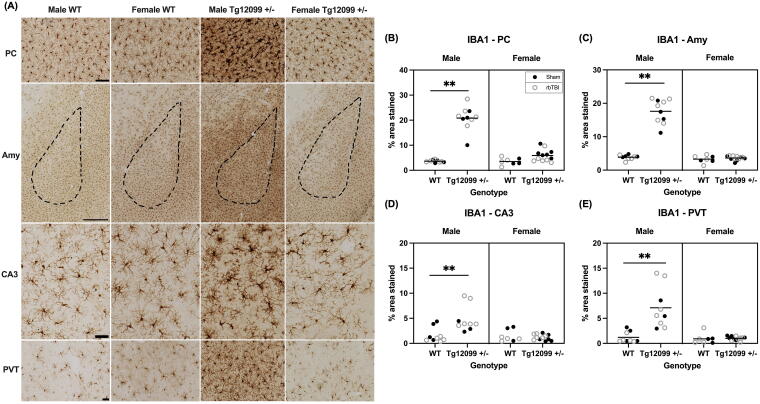
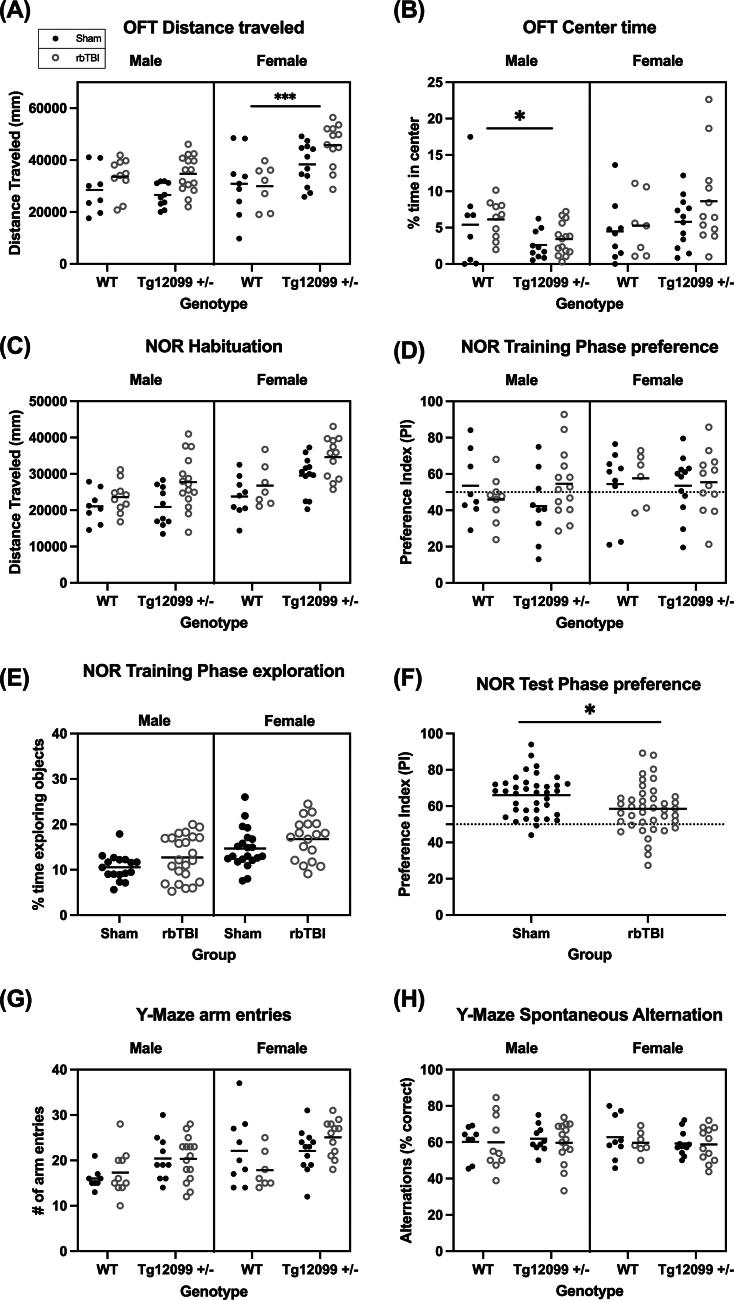
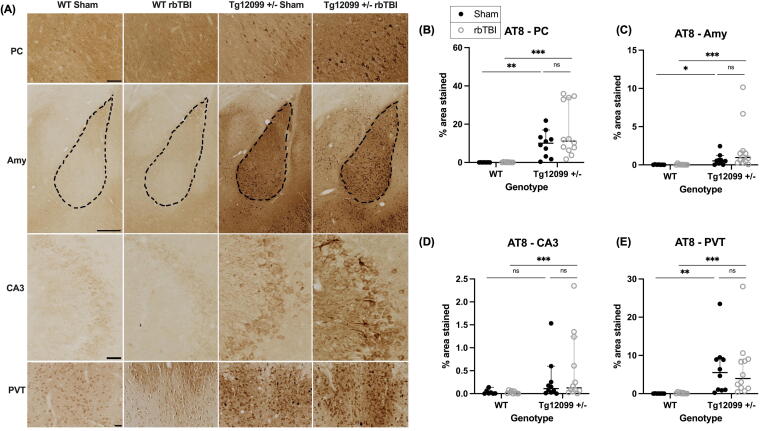
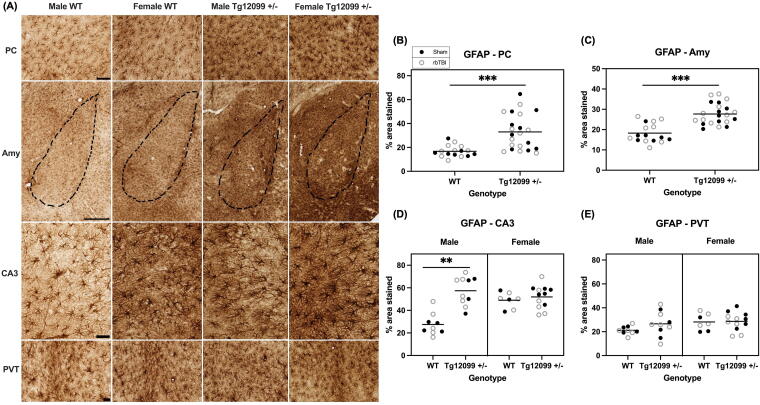
Repeated blast traumatic brain injury (rbTBI) is linked to dementia risk, potentially due to abnormal tau accumulation, although a definitive causal relationship remains elusive. This study aims to develop a model of rbTBI-induced tauopathy. We utilized wild-type (WT) rats and rats that are heterozygous for the mutated P301S human tau gene (Tg12099 +/-), the presence of which increases the propensity to develop tau neuropathology. At 2-3 months of age, rats were exposed to five blasts using the Advanced Blast Simulator or sham procedures. Behavioral and histological outcomes were evaluated at 10 and 15 months post-injury, respectively. The open field test revealed increased activity in blast-injured animals compared with sham. Tg12099 +/- females exhibited greater travel distances than WT females, while male activity levels did not differ by genotype. The novel object recognition test indicated impaired recognition memory in blast-injured animals, which was unrelated to genotype. There was a greater accumulation of phosphorylated tau in several brain regions of Tg12099 +/- rats compared with WT rats, yet no observable blast injury effect. Blast did not alter astro- and microgliosis, but increased astrogliosis was observed in Tg12099 +/- rats compared with WT rats in a region-dependent manner. We observed sex-dependent changes in microgliosis within the Tg12099 +/- group, with male Tg12099 +/- rats exhibiting increased IBA1 immunostaining compared with females. No such sex difference was observed in WT rats. Our findings suggest that while rbTBI can induce persistent behavioral deficits in rats, it does not exacerbate neuropathology in Tg12099 rats.
重复性爆炸创伤性脑损伤(rbTBI)与痴呆风险相关,可能是由于异常的tau蛋白积累,尽管明确的因果关系仍不明确。本研究旨在建立rbTBI诱导的tau蛋白病模型。我们使用了野生型(WT)大鼠和携带突变型P301S人tau基因杂合子的大鼠(Tg12099+/-),该基因的存在增加了发生tau蛋白神经病理学的倾向。在2至3个月大时,使用先进爆炸模拟器或假手术程序让大鼠暴露于五次爆炸中。分别在损伤后10个月和15个月评估行为和组织学结果。旷场试验显示,与假手术组相比,爆炸损伤动物的活动增加。Tg12099+/-雌性大鼠的移动距离比WT雌性大鼠更长,而雄性的活动水平在基因型上没有差异。新物体识别试验表明,爆炸损伤动物的识别记忆受损,这与基因型无关。与WT大鼠相比,Tg12099+/-大鼠的几个脑区中磷酸化tau蛋白的积累更多,但未观察到明显的爆炸损伤效应。爆炸未改变星形胶质细胞和小胶质细胞增生,但与WT大鼠相比,Tg12099+/-大鼠在区域依赖性方面观察到星形胶质细胞增生增加。我们在Tg12099+/-组中观察到小胶质细胞增生的性别依赖性变化,雄性Tg12099+/-大鼠的IBA1免疫染色比雌性大鼠增加。在WT大鼠中未观察到这种性别差异。我们的研究结果表明,虽然rbTBI可在大鼠中诱导持续的行为缺陷,但它不会加剧Tg12099大鼠的神经病理学变化。