
气候变化对室内氡浓度的影响:当前的公共卫生挑战
Impact of Climate Change on Indoor Radon Concentrations as a Current Public Health Challenge.
作者信息
Overcenco Ala V, Coreţchi Liuba Ş
机构信息
Laboratory of Radiation Hygiene and Radiobiology, National Agency for Public Health, Gh. Asachi str. 67A, Chişinău MD 2028, Republic of Moldova.
出版信息
Environ Health (Wash). 2025 May 2;3(7):705-713. doi: 10.1021/envhealth.4c00269. eCollection 2025 Jul 18.
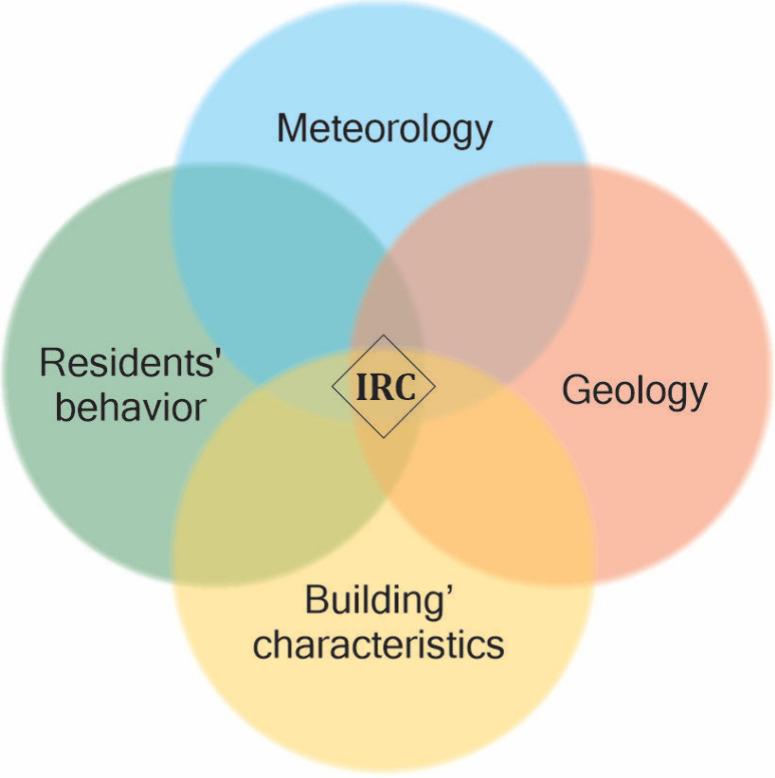
Climate change is considered to intensify radon migration into houses, increasing health risks. Energy efficiency strategies can contribute to indoor radon accumulation, particularly in the winter and summer seasons, when buildings are sealed to maintain thermal comfort. Studies in various regions of the world have shown that meteorological factors influence indoor radon concentration either directly or indirectly. Seasonal variations in radon levels have been observed, with winter concentrations exceeding summer levels by 2-5 times, while extreme weather events further impact radon exhalation. Epidemiological data indicate that the increase of indoor radon concentration by 100 Bq/m raises lung cancer risk by 16%, with 35-40% of radon-related lung cancers potentially preventable through exposure reduction. Additionally, recent studies suggest a correlation between radon exposure and cardiovascular diseases, contributing to its significance for public health. Collecting meteorological data alongside indoor radon measurements and analyzing their relationship are essential for understanding such interactions as well as developing public health strategies for prevention and adaptation to future climate conditions. Based on international experience, methodological approaches to the study of the assessment of the influence of meteorological factors on the risk of radon exposure in a regional context have been formulated.
气候变化被认为会加剧氡气向房屋内的迁移,增加健康风险。能源效率策略可能会导致室内氡气积聚,尤其是在冬季和夏季,此时建筑物为保持热舒适度而封闭。世界各地区的研究表明,气象因素直接或间接影响室内氡浓度。已观察到氡水平的季节性变化,冬季浓度比夏季浓度高出2至5倍,而极端天气事件会进一步影响氡的析出。流行病学数据表明,室内氡浓度每增加100 Bq/m,肺癌风险就会增加16%,通过减少暴露,35%至40%与氡相关的肺癌有可能得到预防。此外,最近的研究表明氡暴露与心血管疾病之间存在关联,这凸显了其对公众健康的重要性。在进行室内氡测量的同时收集气象数据并分析它们之间的关系,对于理解此类相互作用以及制定预防和适应未来气候条件的公共卫生策略至关重要。基于国际经验,已经制定了在区域背景下研究气象因素对氡暴露风险影响评估的方法。


 Zotero 插件