Bin Omar Muhammad Hanif, Binti Hamdan Nurul'Ain, Bin Mohd Amirruddin Afif, Binti Azmi Nor Nabilah
Family Medicine, Klinik Kesihatan Karak, Karak, MYS.
Family Medicine, Klinik Kesihatan Dato' Keramat, Kuala Lumpur, MYS.
Cureus. 2025 Jun 22;17(6):e86553. doi: 10.7759/cureus.86553. eCollection 2025 Jun.
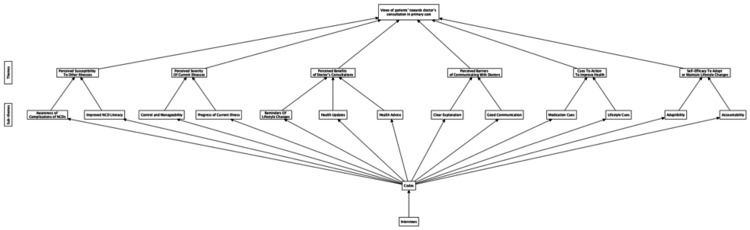
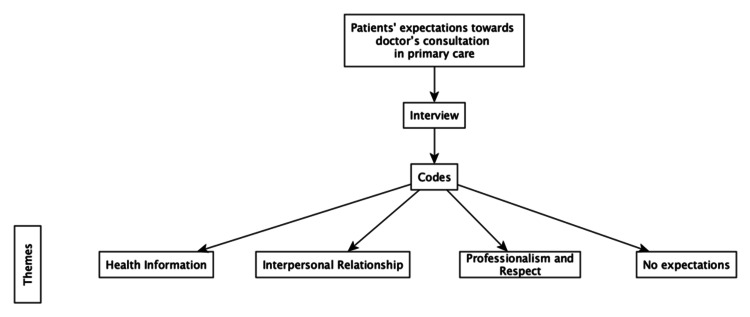
The increased prevalence of noncommunicable diseases (NCDs) in Malaysia has strained its public health services. Lifestyle changes remain a critical part of the management of NCDs. Primary care doctors are expected to provide lifestyle advice during consultations. Perception and expectations of these consultations directly affect the health-modifying behaviours of patients and the outcome. Understanding patients' expectations in various contexts helps in tailoring good and effective consultations. The Health Belief Model (HBM) is a theoretical framework widely used to predict health behaviours. The authors hypothesise that a good doctor's consultation should cover all six domains of HBM to trigger patients to change their health behaviour. Methods: This was an exploratory qualitative study using semi-structured interviews with patients recruited using purposive sampling, at three different government health clinics in the Hulu Langat district of Selangor, Malaysia. Data were analysed deductively utilising HBM as the theme for patients' views, and an inductive approach for patients' expectations. Results: Consultations positively influenced participants' health behaviour. However, the perception of their NCD severity was found to be superficial. Self-efficacy in sustaining changes was a notable barrier. Expectations included comprehensive health advice, empathy, and professionalism. There is a subset of patients who had no expectations coming into these consultations.
Consultations were perceived to improve health behaviour but lack depth in understanding severity and self-efficacy. Patients expect comprehensive, empathetic, and professional consultations. Some had no expectations, which may reflect passivity or trust.
马来西亚非传染性疾病(NCDs)患病率的上升给其公共卫生服务带来了压力。生活方式的改变仍然是管理非传染性疾病的关键部分。初级保健医生预计在会诊期间提供生活方式建议。对这些会诊的认知和期望直接影响患者的健康改善行为和结果。了解患者在各种情况下的期望有助于进行良好且有效的会诊。健康信念模型(HBM)是一个广泛用于预测健康行为的理论框架。作者假设,一次良好的医生会诊应涵盖健康信念模型的所有六个领域,以促使患者改变其健康行为。
这是一项探索性定性研究,采用半结构化访谈,通过目的抽样在马来西亚雪兰莪州 Hulu Langat 区的三家不同政府健康诊所招募患者。数据采用演绎法进行分析,以健康信念模型作为患者观点的主题,采用归纳法分析患者的期望。
会诊对参与者的健康行为产生了积极影响。然而,发现他们对非传染性疾病严重程度的认知较为肤浅。维持改变的自我效能是一个显著障碍。期望包括全面的健康建议、同理心和专业精神。有一部分患者在参加这些会诊时没有期望。
会诊被认为能改善健康行为,但在理解严重程度和自我效能方面缺乏深度。患者期望得到全面、有同理心且专业的会诊。一些患者没有期望,这可能反映出他们的被动性或信任。