Feng Qijia, Ma Yufei
Department of Intensive Care Unit, The First People's Hospital of Lin'an District, Hangzhou, No. 360 Yikang Road, Hangzhou, 311301, Zhejiang Province, China.
Sci Rep. 2025 Jul 25;15(1):27099. doi: 10.1038/s41598-025-12453-1.
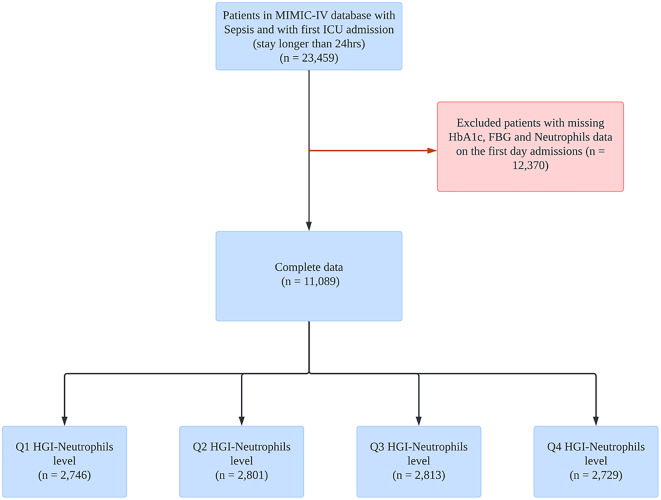
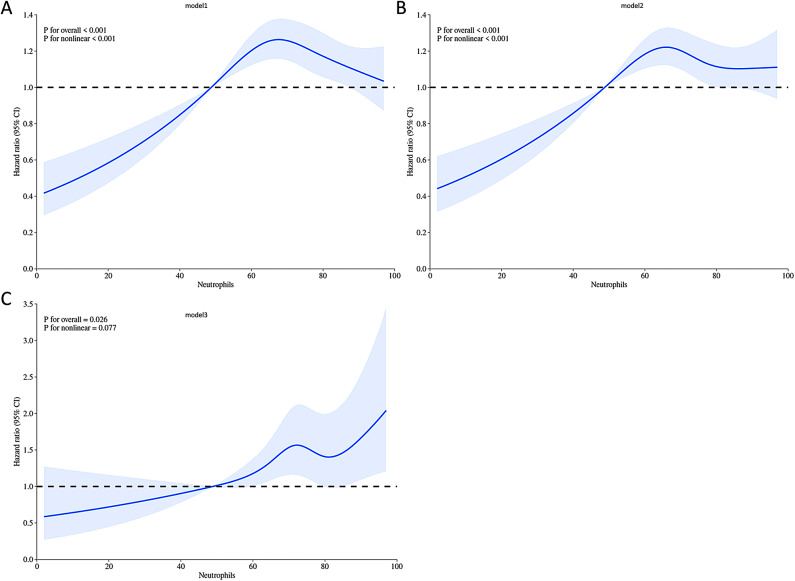
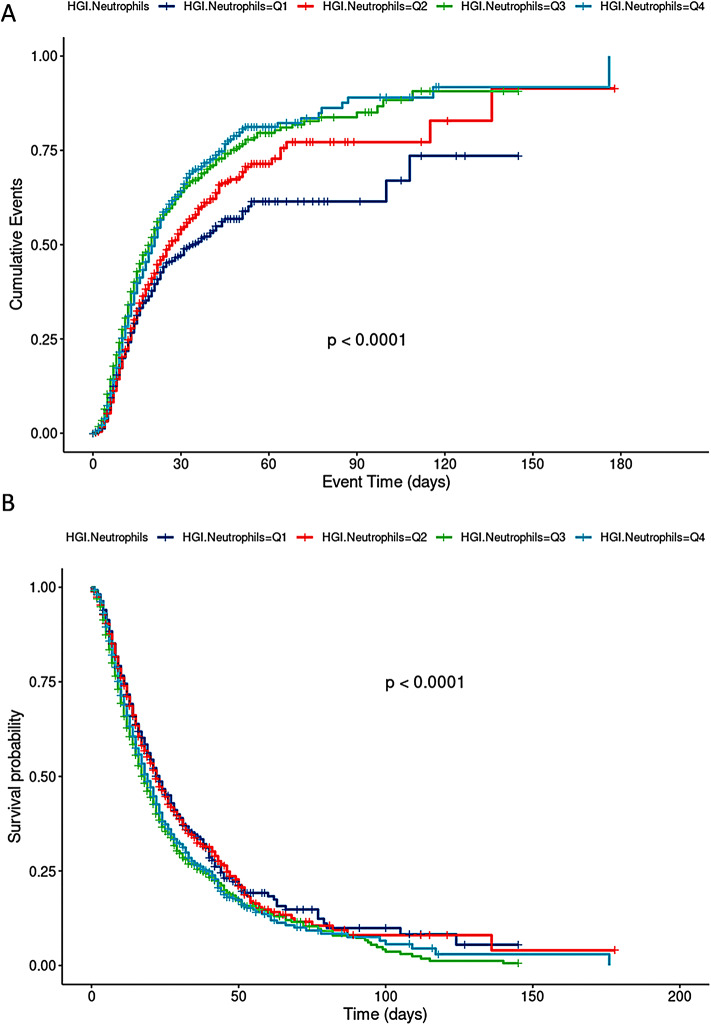
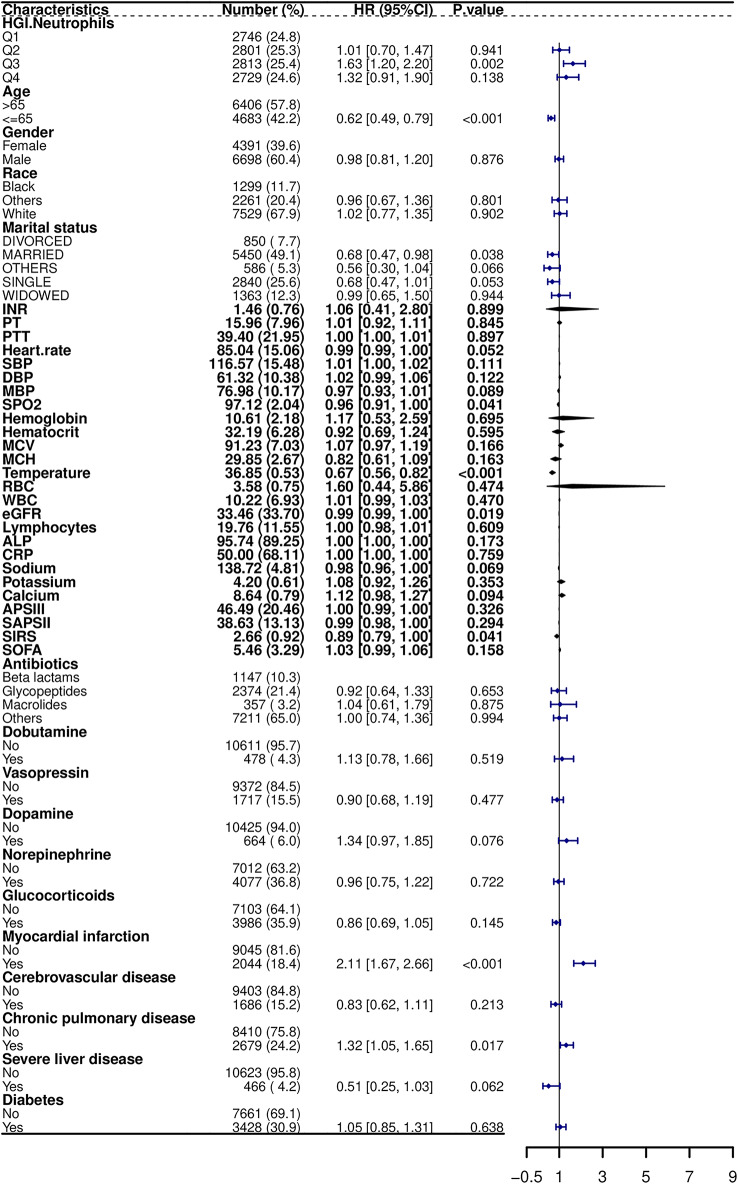
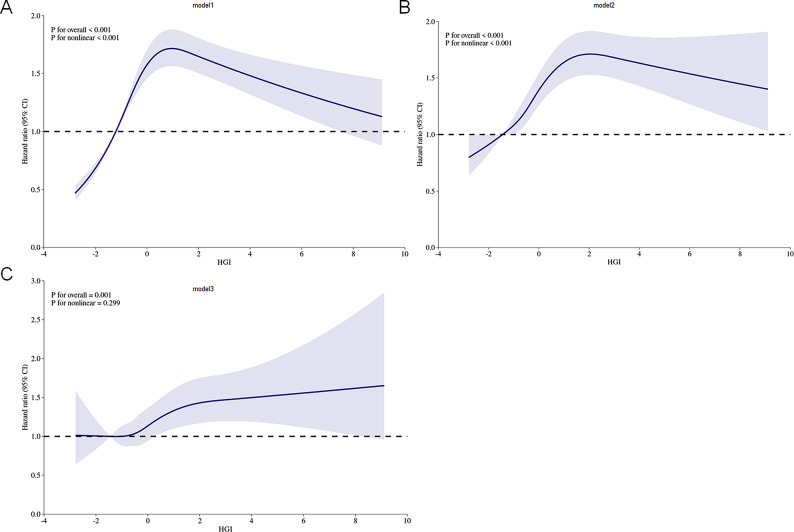
This study aimed to investigate the link between a combined indicator-hemoglobin glycation index (HGI) coupled with neutrophil percentage-and the risk of congestive heart failure (CHF) among patients suffering from sepsis. Adult individuals (aged 18 or older) diagnosed with sepsis and undergoing their initial intensive care unit stay lasting over one day were identified from the Medical Information Mart for Intensive Care IV (MIMIC-IV) database for analysis. The combined indicator-integrating HGI and neutrophil percentage-was grouped into quartiles, labeled Q1 to Q4. The cumulative incidence curves were employed to evaluate the association between this combined indicator and the risk of developing CHF. We carried out Kaplan-Meier (KM) analysis, constructed multivariable Cox regression models, and conducted restricted cubic spline (RCS) analysis for elucidating the association between HGI/neutrophil percentage/the combined indicator and the risk of in-hospital mortality, examining the potential association between HGI/the combined indicator and the risk of CHF, and determining the link between HGI and CHF risk, respectively. 11,089 patients were included, with a CHF incidence of 30.43% in the sepsis cohort. Cumulative incidence analysis indicated that patients with higher levels of the combined indicator exhibited a notably elevated risk of CHF versus those with lower levels (P < 0.0001). KM survival curves demonstrated that elevated levels of the combined indicator or HGI were linked to an elevated in-hospital mortality risk (P < 0.0001). Relative to patients in the combined indicator-Q1, those in Q2, Q3, and Q4 demonstrated an increased risk of CHF, as determined by Cox proportional hazards regression analysis. Higher HGI levels remained significantly linked to elevated CHF risk, as confirmed by multivariable Cox regression analysis. According to the multivariable Cox regression forest plot, patients classified in Q3 of the combined indicator was associated with a higher risk of developing CHF, whereas lower risk was observed among individuals aged ≤ 65 and those who were married. RCS analysis suggested that although the relationship between HGI (ranging from - 3 to 3) and CHF was not strictly linear, higher HGI was associated with an elevated risk of CHF (HR > 1). In critically ill patients with sepsis, the combined indicator (comprising HGI and neutrophil percentage) is an independent risk factor for CHF, showing a significant association with elevated CHF risk.
本研究旨在调查糖化血红蛋白指数(HGI)与中性粒细胞百分比相结合的综合指标与脓毒症患者充血性心力衰竭(CHF)风险之间的联系。从重症监护医学信息数据库IV(MIMIC-IV)中识别出诊断为脓毒症且初次入住重症监护病房超过一天的成年个体(年龄18岁及以上)进行分析。将整合HGI和中性粒细胞百分比的综合指标分为四分位数,标记为Q1至Q4。采用累积发病率曲线评估该综合指标与发生CHF风险之间的关联。我们进行了Kaplan-Meier(KM)分析,构建了多变量Cox回归模型,并进行了限制性立方样条(RCS)分析,以分别阐明HGI/中性粒细胞百分比/综合指标与院内死亡风险之间的关联,检验HGI/综合指标与CHF风险之间的潜在关联,以及确定HGI与CHF风险之间的联系。纳入11,089例患者,脓毒症队列中CHF发病率为30.43%。累积发病率分析表明,综合指标水平较高的患者与水平较低的患者相比,CHF风险显著升高(P < 0.0001)。KM生存曲线表明,综合指标或HGI水平升高与院内死亡风险升高相关(P < 0.0001)。通过Cox比例风险回归分析确定,相对于综合指标-Q1中的患者,Q2、Q3和Q4中的患者发生CHF的风险增加。多变量Cox回归分析证实,较高的HGI水平仍与CHF风险升高显著相关。根据多变量Cox回归森林图,综合指标Q3分类的患者发生CHF的风险较高,而年龄≤65岁和已婚个体的风险较低。RCS分析表明,尽管HGI(范围为-3至3)与CHF之间的关系并非严格线性,但较高的HGI与CHF风险升高相关(HR > 1)。在患有脓毒症的重症患者中,综合指标(包括HGI和中性粒细胞百分比)是CHF的独立危险因素,与CHF风险升高显著相关。