Nimo Frederick Acheampong, Gyamfi-Samakome Abigail, Gyan Esther Naana, Argoh Richard, Ofori Godson Obeng, Doe Patience Fakornam, Boso Christian Makafui
Department of Adult Health, School of Nursing and Midwifery, University of Cape Coast, Cape Coast, Ghana.
Department of Public Health, School of Nursing and Midwifery, University of Cape Coast, Cape Coast, Ghana.
BMC Med Ethics. 2025 Jul 28;26(1):108. doi: 10.1186/s12910-025-01264-8.
Bioethics is fundamental in healthcare, guiding ethical decision-making and patient care. Translational bioethics (TB) aims to bridge the gap between ethical theories and real-world practice, including nursing. However, the concept of TB has not been clearly examined yet. Therefore, this concept analysis was done to provide clarity and practical meaning to the concept of translational bioethics within the context of nursing.
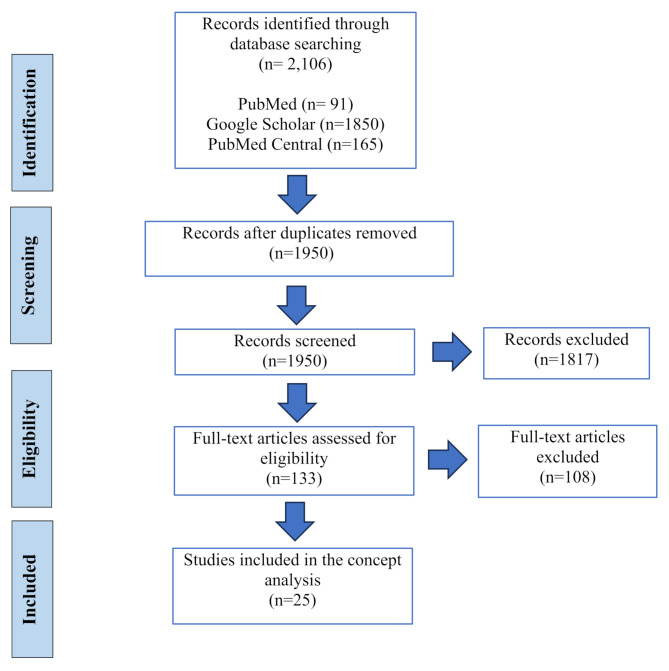
Walker and Avant's concept analysis framework was employed to examine TB and apply it to nursing practice. A systematic search of electronic databases, including PubMed, Google Scholar, and PubMed Central, was conducted. Papers were screened and twenty-five eligible full-text records included in analysis.
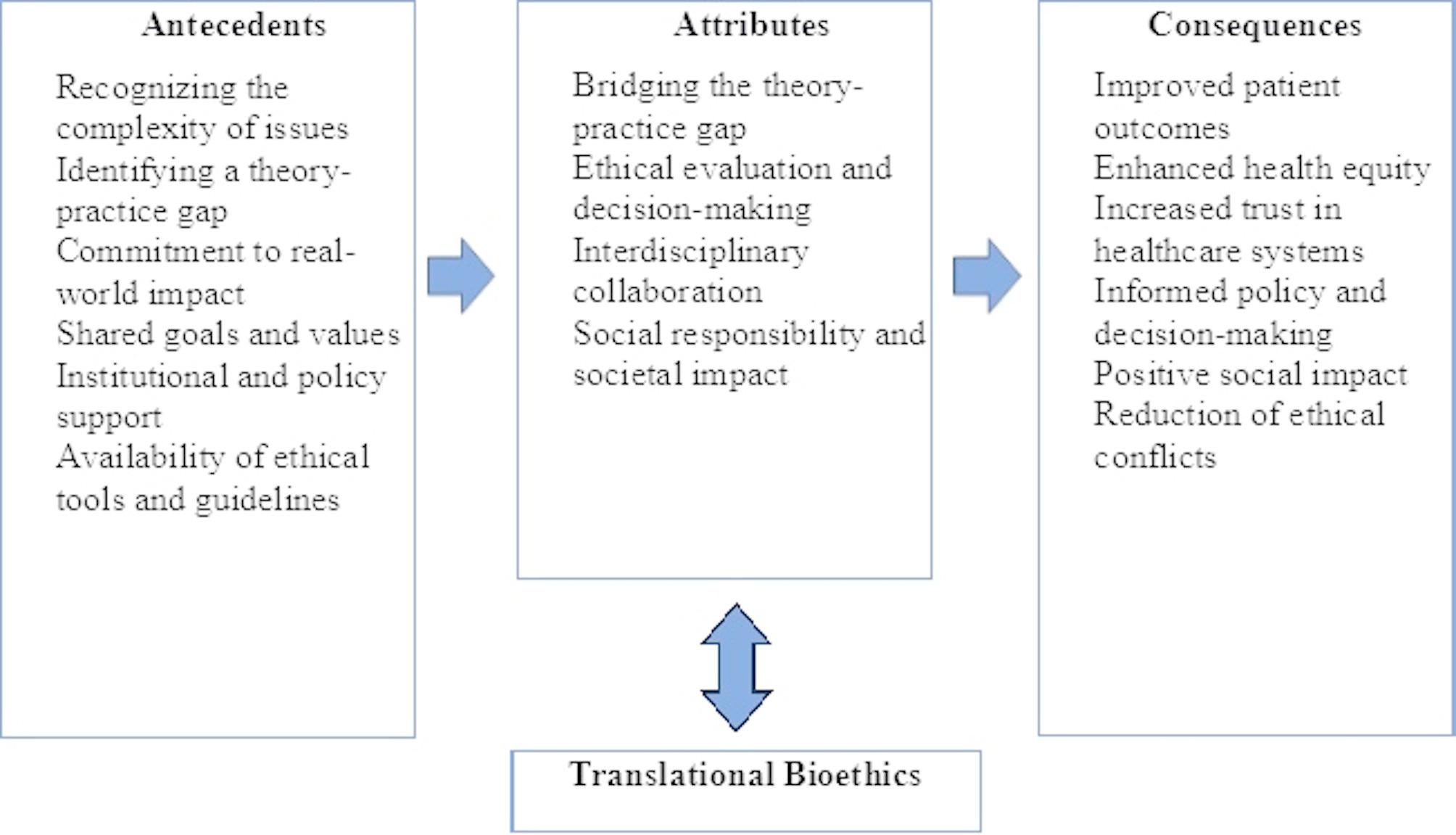
The analysis identified four key defining attributes of TB, including bridging the theory-practice gap, ethical evaluation and decision making, interdisciplinary collaboration, social responsibility and societal impact. Antecedents included ethical dilemmas, identifying theory-practice gaps, and commitment to real-world impact. The consequences of TB encompassed improved patient care, reduction of ethical conflicts, positive social impact, and informed policy and decision making.
This study provided a clear conceptual model of TB, offering insights into its antecedents, attributes, and consequences. Translational bioethics can be defined as an approach that bridges ethical theory and practice through research, interdisciplinary collaboration, and a focus on contextual ethical evaluation and decision making, aiming for socially responsible and impactful outcomes.
生物伦理学在医疗保健中至关重要,指导着伦理决策和患者护理。转化性生物伦理学(TB)旨在弥合伦理理论与包括护理在内的现实世界实践之间的差距。然而,TB的概念尚未得到明确审视。因此,进行了这项概念分析,以在护理背景下为转化性生物伦理学的概念提供清晰性和实际意义。
采用沃克和阿凡特的概念分析框架来审视TB并将其应用于护理实践。对包括PubMed、谷歌学术和PubMed Central在内的电子数据库进行了系统检索。对论文进行筛选,25篇符合条件的全文记录纳入分析。
分析确定了TB的四个关键定义属性,包括弥合理论与实践的差距、伦理评估和决策、跨学科合作、社会责任和社会影响。前因包括伦理困境、识别理论与实践的差距以及对现实世界影响的承诺。TB的后果包括改善患者护理、减少伦理冲突、产生积极的社会影响以及为政策和决策提供信息。
本研究提供了一个清晰的TB概念模型,深入了解了其前因、属性和后果。转化性生物伦理学可被定义为一种通过研究、跨学科合作以及关注情境伦理评估和决策来弥合伦理理论与实践之间差距的方法,旨在实现对社会负责且有影响力的结果。