Brokopp C D, Gomez-Lus R, Farmer J J
J Clin Microbiol. 1977 Jun;5(6):640-9. doi: 10.1128/jcm.5.6.640-649.1977.
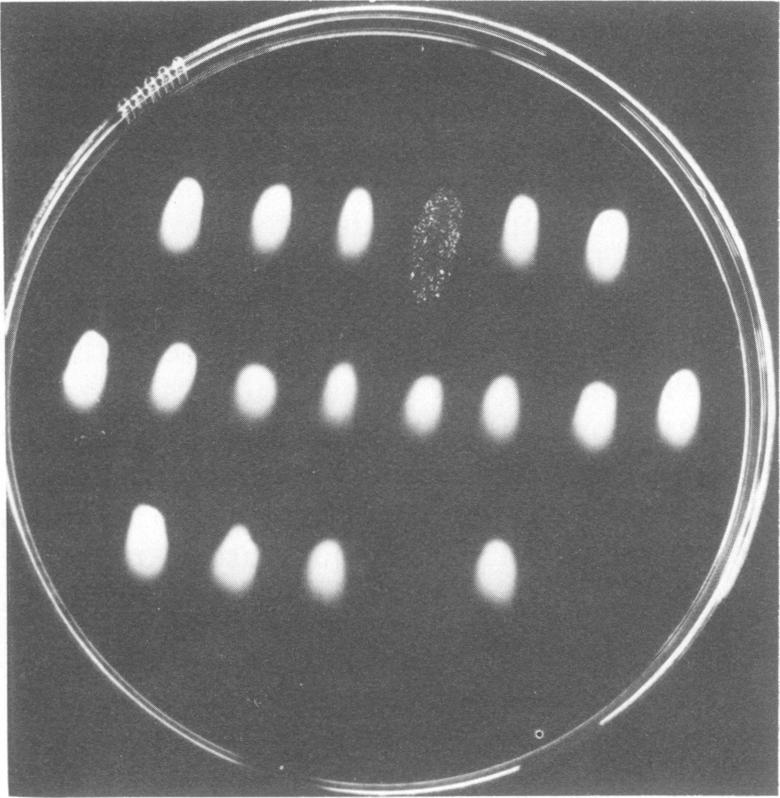
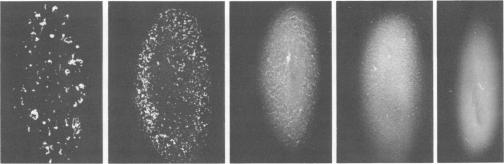
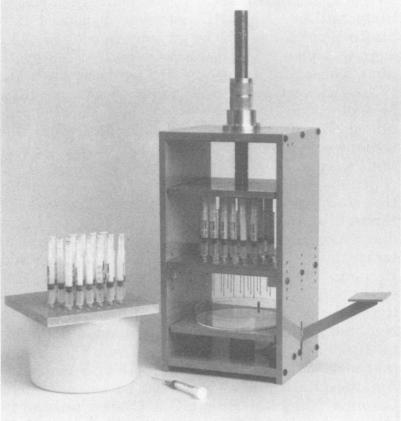
A practical slide agglutination test, with commercial antisera (Difco) and live antigens (antigens of live bacteria) taken directly from 24-h antimicrobial susceptibility plates, has been established for serotyping Pseudomonas aeruginosa. Until recently, the lack of both a standard antigenic scheme and a source of commercial antisera has made serological typing of this organism impractical. A simplified procedure with 17 unabsorbed antisera and live antigens prepared from materials readily available in most clinical microbiology laboratories makes epidemiological typing of this organism possible in hospital laboratories. The distribution of each serotype examined in this study was determined by using 425 consecutive patient isolates from six different hospitals. The distribution of O antigen groups (live antigen) was as follows: O1, 11.5%; O2, 1.6%; O3, 3.8%; O4, 7.8%; O5, 4.2% O6, 27.1%; O7,8, 5.9%; O9, 6.8%; O10, 2.4%; O11, 8.2%; O12 through O17, each less than 1%. Ten and six-tenths percent of the above agglutinated in two antisera, 3.3% agglutinated in more than two antisera, and 5.2% did not agglutinate in any antisera. A comparison of live and heated antigens shows that 93.2% were typable with the live antigen, and 94.5% were typable with the heated antigen. When both antigens were used, we typed 96.3% of 725 isolates. The reproductibility and specificity of the serological procedure were examined. We recommend using the live antigen for routine serological typing in clinical microbiology laboratories for "in house" epidemiology and reserving the heated antigen for reference and research typing (and for those few cases where results cannot be obtained using the live antigen). The application of serotyping in the study of outbreaks of P. aeruginosa is also presented.
已建立一种实用的玻片凝集试验,使用市售抗血清(Difco)和直接取自24小时抗菌药敏平板的活抗原(活菌抗原)对铜绿假单胞菌进行血清分型。直到最近,由于缺乏标准抗原方案和市售抗血清来源,对该菌进行血清学分型一直不切实际。采用一种简化程序,使用17种未吸收的抗血清和由大多数临床微生物实验室易于获得的材料制备的活抗原,使得医院实验室对该菌进行流行病学分型成为可能。本研究中对425株来自六家不同医院的连续患者分离株进行检测,确定了每种检测血清型的分布情况。O抗原组(活抗原)的分布如下:O1型,11.5%;O2型,1.6%;O3型,3.8%;O4型,7.8%;O5型,4.2%;O6型,27.1%;O7、8型,5.9%;O9型,6.8%;O10型,2.4%;O11型,8.2%;O12至O17型,每种均低于1%。上述菌株中有10.6%在两种抗血清中凝集,3.3%在两种以上抗血清中凝集,5.2%在任何抗血清中均不凝集。活抗原和加热抗原的比较表明,93.2%的菌株可用活抗原分型,94.5%的菌株可用加热抗原分型。当同时使用两种抗原时,我们对725株分离株中的96.3%进行了分型。检测了血清学方法的可重复性和特异性。我们建议在临床微生物实验室进行常规血清学分型以用于“内部”流行病学研究时使用活抗原,而将加热抗原留作参考和研究分型(以及用于那些使用活抗原无法获得结果的少数情况)。还介绍了血清分型在铜绿假单胞菌暴发研究中的应用。