Zhu Jia-Liang, Chen Mei-Lin
Department of Chemistry, National Dong Hwa University, Hualien 97401, Taiwan.
Molecules. 2025 Jul 14;30(14):2959. doi: 10.3390/molecules30142959.
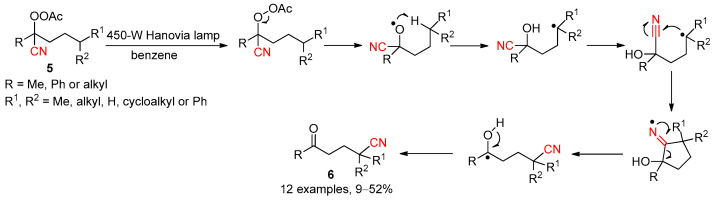
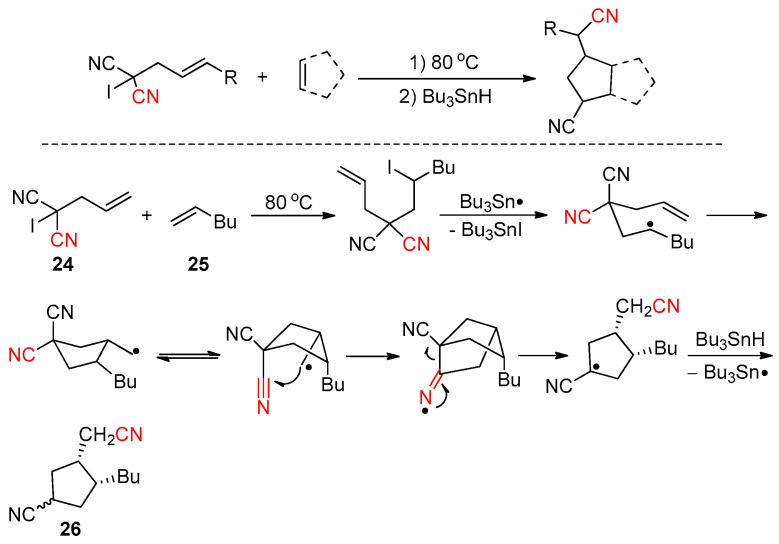
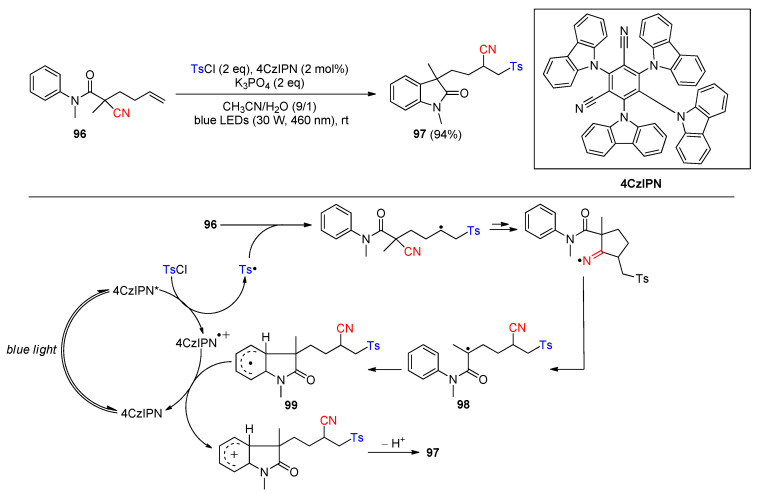
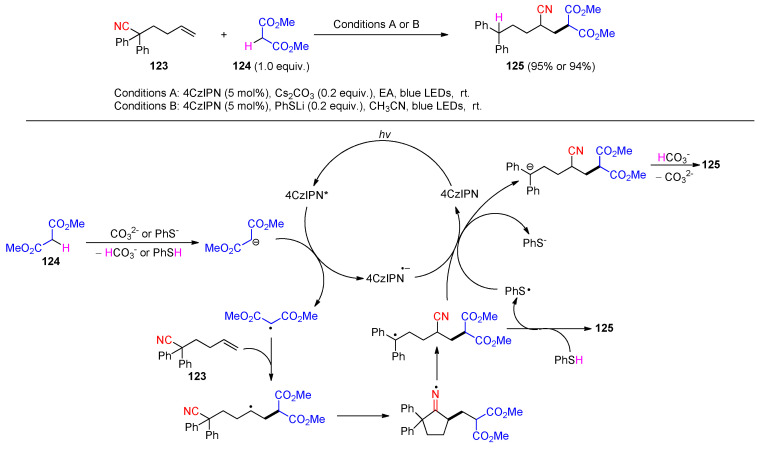
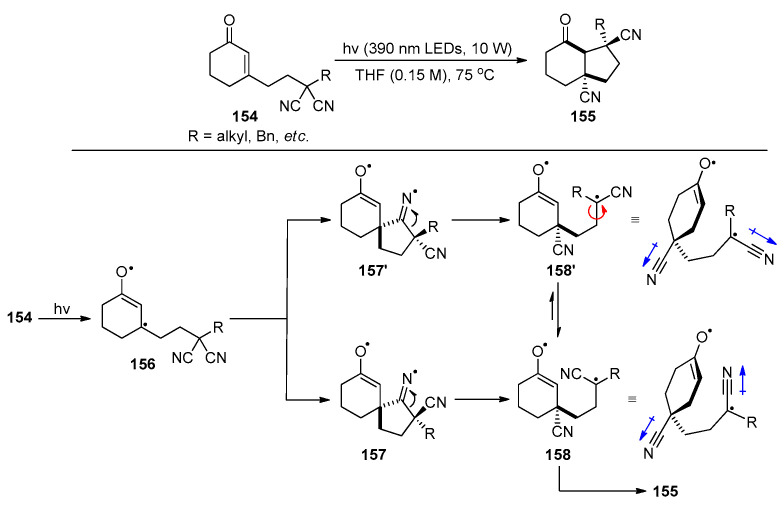
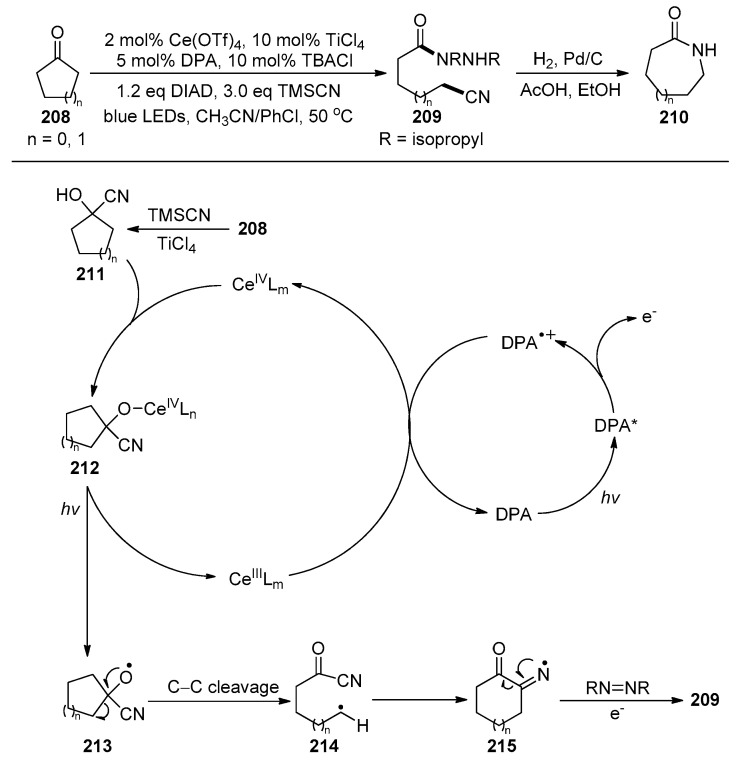
The radical-mediated intramolecular translocation of cyano groups has been recognized as a useful tool for the site-selective functionalization of organic molecules. The process is believed to proceed through the addition of an in situ-generated carbon-centered radical to the nitrile triple bond, followed by the β-scission of the resulting cyclic iminyl radical intermediate to relocate the cyano group and produce a more stable carbon radical for further elaboration. Beginning in the early 1960s and continuing for the next forty years, the research in this particular area has seen a surge of growth during the past two decades with advancements in radical chemistry and photocatalysis. The present article attempts to conduct a comprehensive review of existing studies on this topic by covering the literature from 1961 to 2025. The procedures developed for the purpose are grouped and discussed in four sections according to the strategies used to generate the initial carbon radicals, which include (i) hydrogen-atom transfer (HAT), (ii) radical addition to the π system, (iii) halogen-atom transfer (XAT), and (iv) the homolytic fission of a C-C single bond. In each section, a specific emphasis will be placed on reaction conditions, substrate scopes, and mechanisms.
自由基介导的氰基分子内迁移已被认为是有机分子位点选择性官能团化的一种有用工具。该过程被认为是通过将原位生成的碳中心自由基加成到腈的三键上,随后所得环状亚胺基自由基中间体发生β-断裂,使氰基重新定位并产生更稳定的碳自由基以进一步转化。从20世纪60年代初开始并持续了接下来的四十年,在过去二十年中,随着自由基化学和光催化的进展,这一特定领域的研究出现了激增。本文试图通过涵盖1961年至2025年的文献,对关于该主题的现有研究进行全面综述。为此目的开发的程序根据用于产生初始碳自由基的策略分为四个部分进行讨论,这些策略包括:(i) 氢原子转移 (HAT),(ii) 自由基加成到π体系,(iii) 卤原子转移 (XAT),以及 (iv) C-C单键的均裂。在每个部分中,将特别强调反应条件、底物范围和反应机理。