Mulualem Daniel Mehabie, Dwan Orla, Kilcoyne Michelle, O'Byrne Conor, Boyd Aoife
Pathogenic Mechanisms Research Group, School of Natural Sciences, University of Galway, Galway, Ireland.
Department of Biology (Microbiology Stream), College of Natural & Computational Sciences, University of Gondar, Gondar, Ethiopia.
Appl Microbiol Biotechnol. 2025 Jul 30;109(1):174. doi: 10.1007/s00253-025-13564-5.
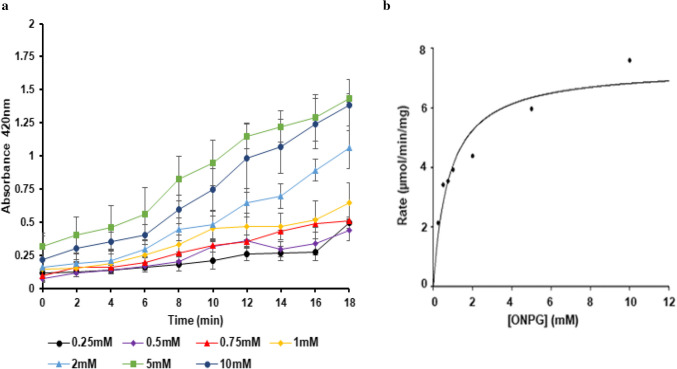
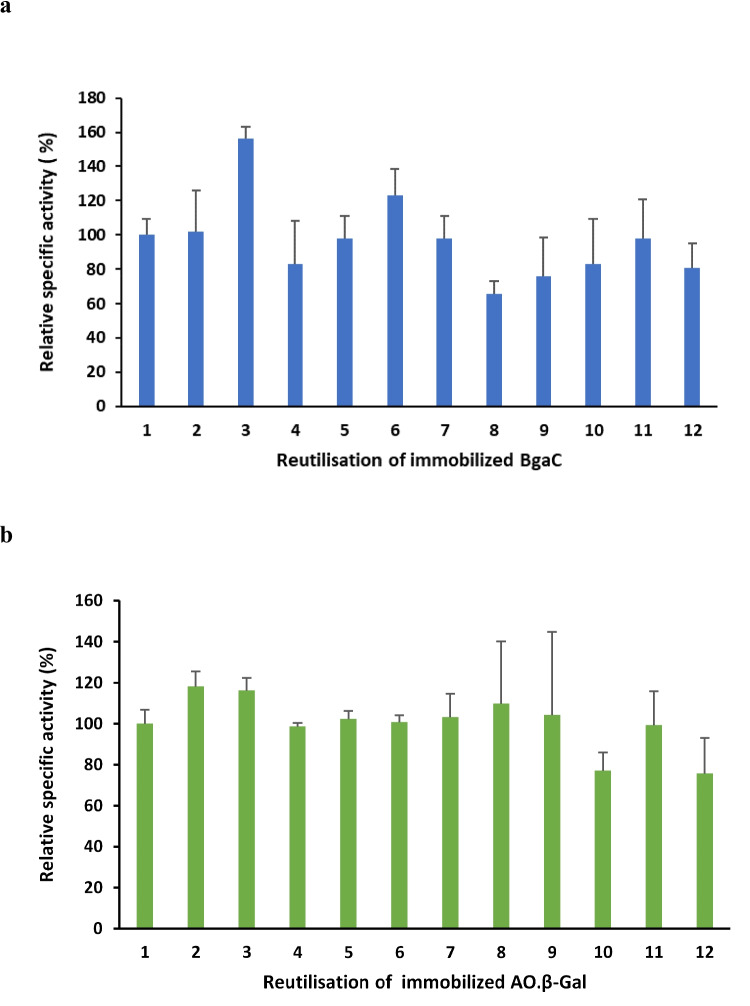
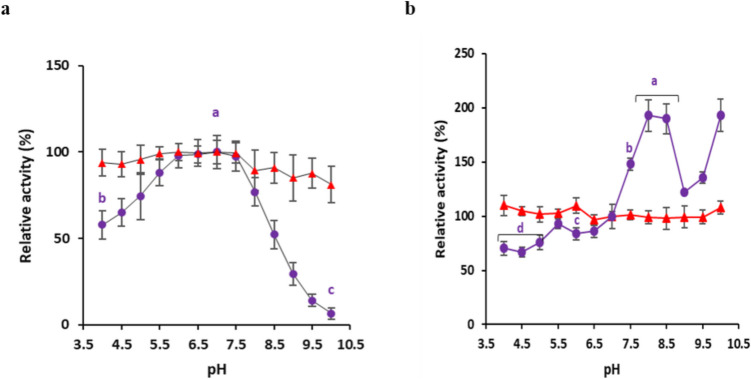
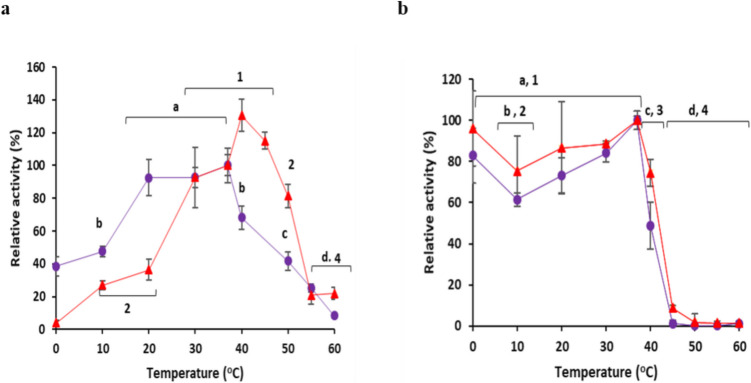
β-Galactosidase enzymes catalyze the hydrolysis of terminal non-reducing β-D-galactose residues in β-galactosides. These enzymes are important in producing lactose-free dairy products, reducing the lactose content of whey in dairy products, and for production of galactooligosaccharides (GOS) as prebiotic additives to infant formula. To use β-galactosidases in industrial settings, enzyme immobilization procedures are used to enhance their activity and stability and to minimize enzyme quantities and cost. In this study, recombinant Bifidobacterium adolescentis β-galactosidase BgaC was immobilized in calcium alginate and gelatin cross-linked with glutaraldehyde. The kinetic parameters and stability properties of immobilized BgaC were characterized in comparison with free soluble enzyme. The K for immobilized BgaC using ortho-nitrophenyl-β-galactoside (ONPG) was 810 ± 220 μM and the K of free BgaC was 2500 ± 3 μM. The k and kK of immobilized BgaC were 802 s and 990 s mM, respectively, compared to k and kK values of 209 s and 84 s mM, respectively, for free BgaC. Immobilized BgaC β-galactosidase was active at all tested pH (pH 4-10), while the free enzyme had decreased activity at pH < 5.5 and > 8.0. The immobilized enzyme had optimum activity at 40 °C, while the free enzyme was most active at 37 °C. In addition, immobilization enhanced acidic pH and temperature stability compared to the free enzyme. Reutilization of the BgaC beads was assessed and the enzyme maintained 69% activity after 12 rounds of reutilization. Therefore, the enhanced performance properties of immobilized BgaC make it a promising candidate for industrial applications. KEY POINTS: • Bifidobacterium adolescentis β-galactosidase BgaC was successfully immobilized • Immobilized BgaC has enhanced enzymatic activity and stability and allows recycling • Sustained activity of immobilized BgaC is advantageous for industrial applications.
β-半乳糖苷酶催化β-半乳糖苷中末端非还原性β-D-半乳糖残基的水解。这些酶在生产无乳糖乳制品、降低乳制品中乳清的乳糖含量以及生产低聚半乳糖(GOS)作为婴儿配方奶粉的益生元添加剂方面具有重要作用。为了在工业环境中使用β-半乳糖苷酶,采用酶固定化程序来提高其活性和稳定性,并尽量减少酶的用量和成本。在本研究中,将重组青春双歧杆菌β-半乳糖苷酶BgaC固定在海藻酸钙和与戊二醛交联的明胶中。与游离可溶性酶相比,对固定化BgaC的动力学参数和稳定性特性进行了表征。使用邻硝基苯基-β-半乳糖苷(ONPG)时,固定化BgaC的Km为810±220μM,游离BgaC的Km为2500±3μM。固定化BgaC的kcat和kcat/Km分别为802 s-1和990 s-1 mM-1,而游离BgaC的kcat和kcat/Km值分别为209 s-1和84 s-1 mM-1。固定化BgaCβ-半乳糖苷酶在所有测试的pH值(pH 4-10)下均有活性,而游离酶在pH<5.5和>8.0时活性降低。固定化酶在40℃时具有最佳活性,而游离酶在37℃时活性最高。此外,与游离酶相比,固定化提高了酸性pH值和温度稳定性。对BgaC珠的重复利用进行了评估,在12轮重复利用后,该酶仍保持69%的活性。因此,固定化BgaC增强的性能使其成为工业应用的有前途的候选者。要点:• 青春双歧杆菌β-半乳糖苷酶BgaC成功固定化• 固定化BgaC具有增强的酶活性和稳定性,并允许循环利用• 固定化BgaC的持续活性对工业应用有利。