Bottosso Michele, Zurlo Christian, Miglietta Federica, Cattelan Anna Chiara, Iannaccone Daniela, Dieci Maria Vittoria, Griguolo Gaia, Girardi Fabio, Guarneri Valentina
Department of Surgery, Oncology and Gastroenterology, University of Padova, Padova, Italy; Division of Oncology 2, Istituto Oncologico Veneto IRCCS, Padova, Italy.
Department of Surgery, Oncology and Gastroenterology, University of Padova, Padova, Italy; Division of Oncology 2, Istituto Oncologico Veneto IRCCS, Padova, Italy.
Breast. 2025 Jul 22;83:104544. doi: 10.1016/j.breast.2025.104544.
Almost 60 % of breast cancers (BCs) diagnosed in germline BRCA1/2 mutation (gBRCAm) carriers are HR+/HER2-. Sparse data suggest limited CDK4/6 inhibitors benefit among gBRCAm carriers. However, prespecified subgroup analyses from pivotal trials are lacking, and current data quality is poor given the small patient populations.
We conducted a systematic review and meta-analysis of studies evaluating CDK4/6 inhibitors outcomes in patients with HR+/HER2-metastatic BC according to gBRCA status. Progression free survival (PFS) and overall survival (OS) were compared between gBRCAm patients and those with wild type (wt) or unknown (wt/unk) gBRCA status.
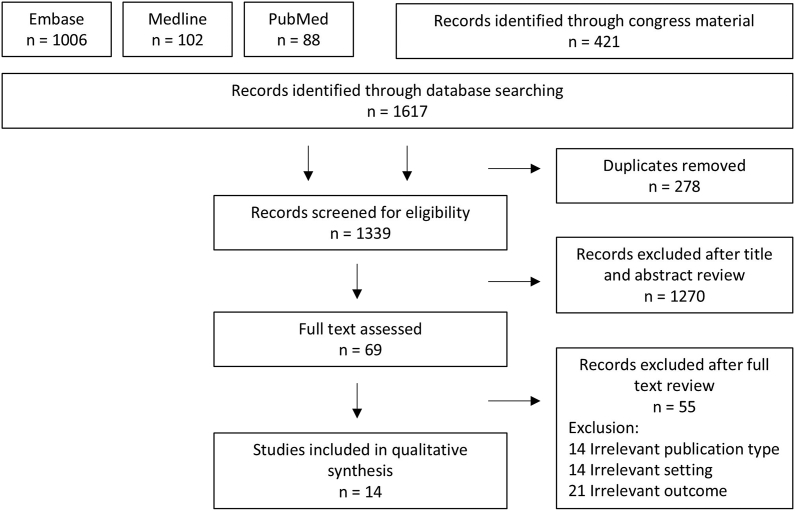
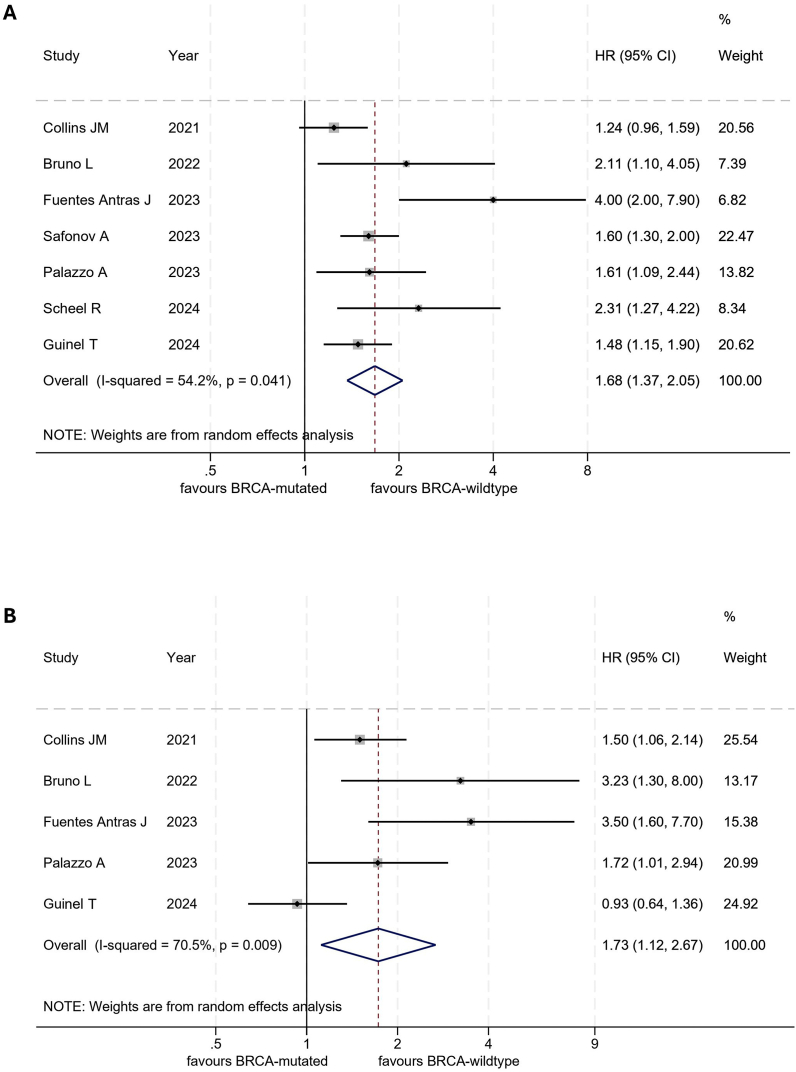
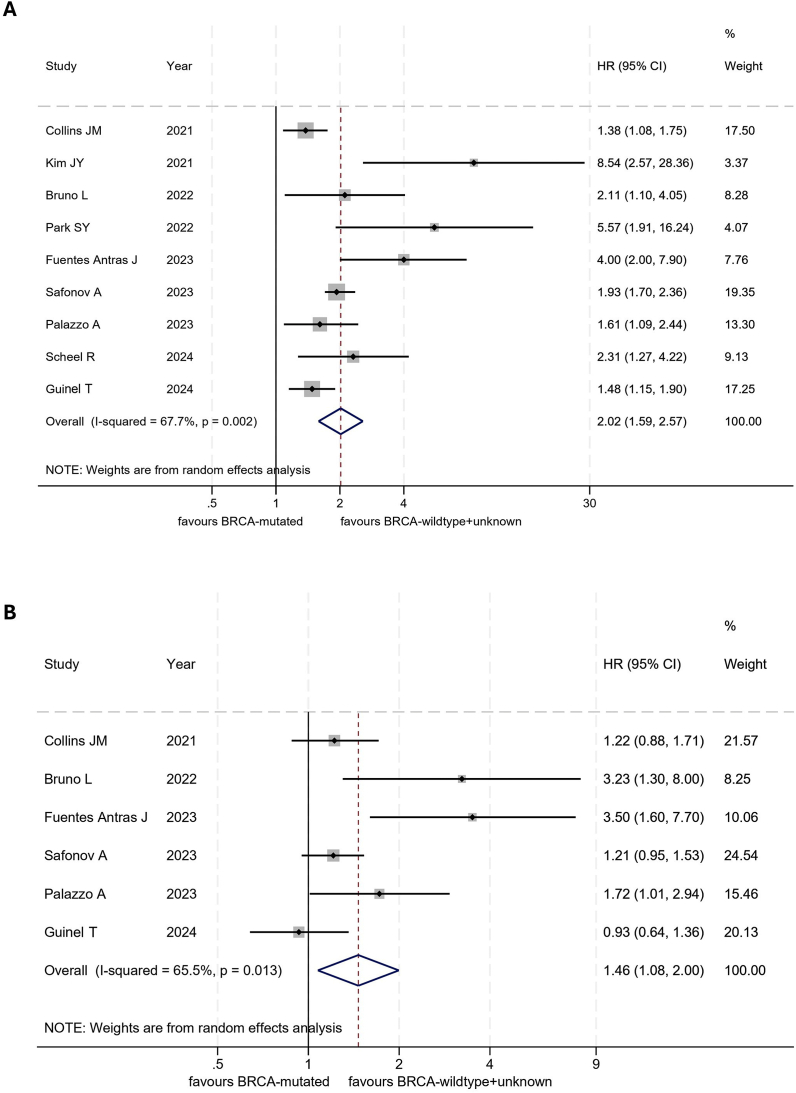
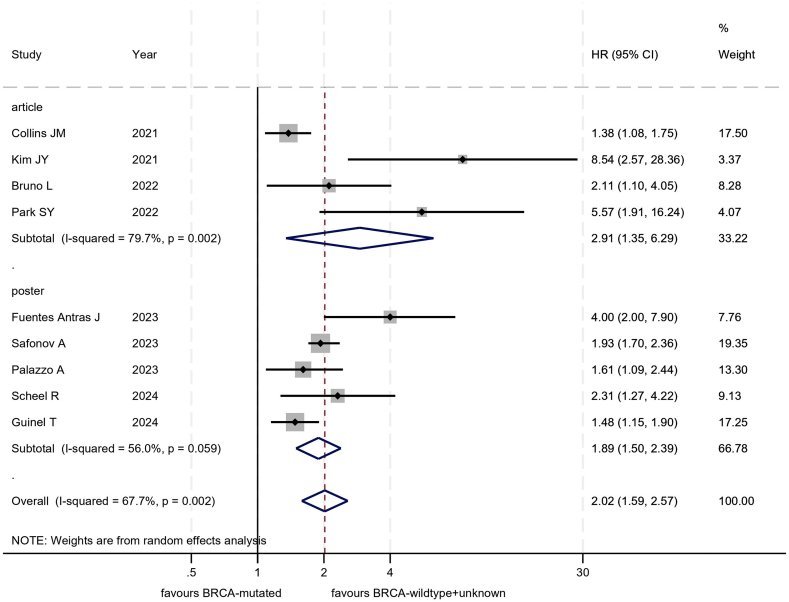
Of 1339 potentially eligible records, 14 studies were included, covering a population of 618 gBRCAm patients. Studies were mostly retrospective, with moderate-to-high risk of bias according to ROBINS-E algorithm. Three studies included only gBRCA tested patients; all others also allowed gBRCA untested patients. Meta-analysis of studies with available data for gBRCAm vs. gBRCAwt patients resulted in an HR for PFS of 1.68 (95 %CI 1.37-2.05) and an HR for OS of 1.73 (95 %CI 1.12-2.67). Inclusion of patients with unknown gBRCA status led to similar results (gBRCAm vs. gBRCAwt/unk), with an HR for PFS of 2.02 (95 %CI 1.59-2.57) and for OS of 1.46 (95 %CI 1.08-2.00).
Emerging data suggest that gBRCAm patients with advanced HR+/HER2- BC may experience shorter PFS and OS with CDK4/6 inhibitor compared to gBRCAwt. Given the low level of evidence and the high risk of bias in available studies, further research is needed to understand molecular mechanisms and identify the optimal treatment sequence.
在胚系BRCA1/2突变(gBRCAm)携带者中诊断出的乳腺癌(BC),近60%为激素受体阳性/人表皮生长因子受体2阴性(HR+/HER2-)。稀疏的数据表明gBRCAm携带者中细胞周期蛋白依赖性激酶4/6(CDK4/6)抑制剂的获益有限。然而,关键试验中缺乏预先设定的亚组分析,且由于患者群体较小,目前的数据质量较差。
我们对根据gBRCA状态评估CDK4/6抑制剂在HR+/HER2-转移性乳腺癌患者中的疗效的研究进行了系统评价和荟萃分析。比较了gBRCAm患者与野生型(wt)或gBRCA状态未知(wt/unk)患者的无进展生存期(PFS)和总生存期(OS)。
在1339条可能符合条件的记录中,纳入了14项研究,涵盖618例gBRCAm患者。研究大多为回顾性研究,根据ROBINS-E算法,存在中度至高度偏倚风险。三项研究仅纳入了检测gBRCA的患者;其他所有研究也纳入了未检测gBRCA的患者。对有gBRCAm与gBRCAwt患者可用数据的研究进行荟萃分析,得出PFS的风险比(HR)为1.68(95%置信区间[CI] 1.37 - 2.05),OS的HR为1.73(95%CI 1.12 - 2.67)。纳入gBRCA状态未知的患者导致了类似的结果(gBRCAm与gBRCAwt/unk),PFS的HR为2.02(95%CI 1.59 - 2.57),OS的HR为1.46(95%CI 1.08 - 2.00)。
新出现的数据表明,与gBRCAwt患者相比,晚期HR+/HER2- BC的gBRCAm患者使用CDK4/6抑制剂时可能经历更短的PFS和OS。鉴于现有研究的证据水平较低且偏倚风险较高,需要进一步研究以了解分子机制并确定最佳治疗顺序。