Qiu Yu, Guo Pengbo, Tian Hui, Zhou Ye, Wen Hongling, Liang Hao
Department of Health Inspection and Quarantine, School of Public Health, Shandong University, Jinan, China.
Department of Pathogen Biology, School of Clinical and Basic Medical Sciences, Shandong First Medical University and Shandong Academy of Medical Sciences, Jinan, China.
Front Microbiol. 2025 Jul 17;16:1496275. doi: 10.3389/fmicb.2025.1496275. eCollection 2025.
The spread of antibiotic resistance genes among () is a serious problem, and the effects of the restriction-modification (R-M) system on the transmission dynamics of these genes in remain poorly understood.
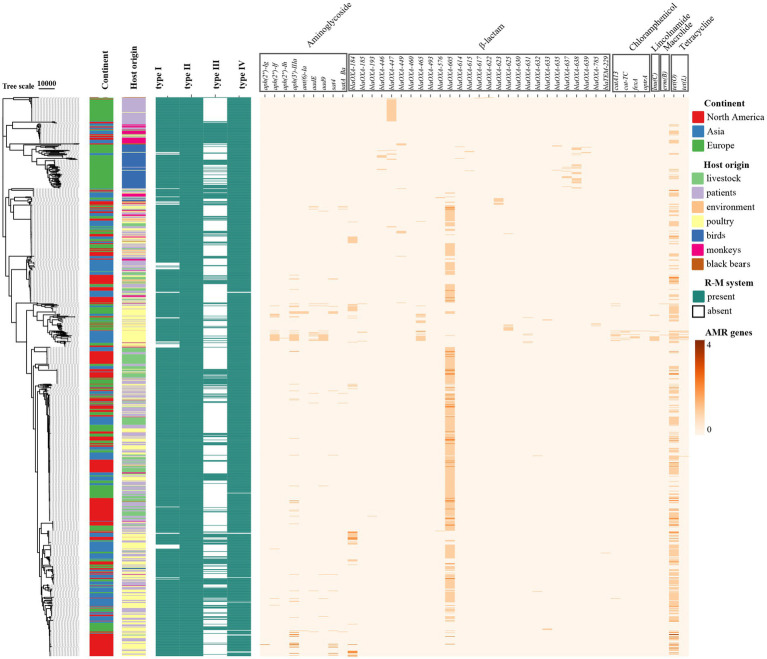
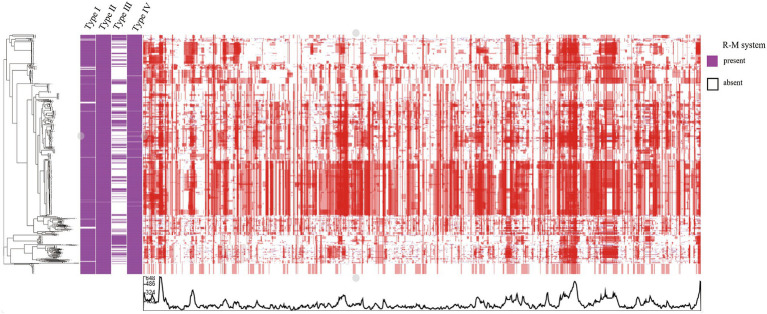
Complete genome sequences of strains were extracted from the BV-BRC database until March 25, 2024. The phylogenetic and the resistance analysis were used to analyze the distribution of resistance genes in . The impacts of the R-M systems on the AMR genes transmission between strains and the possible mechanisms were explored through recombination, pangenome and mobile genetic elements analysis.
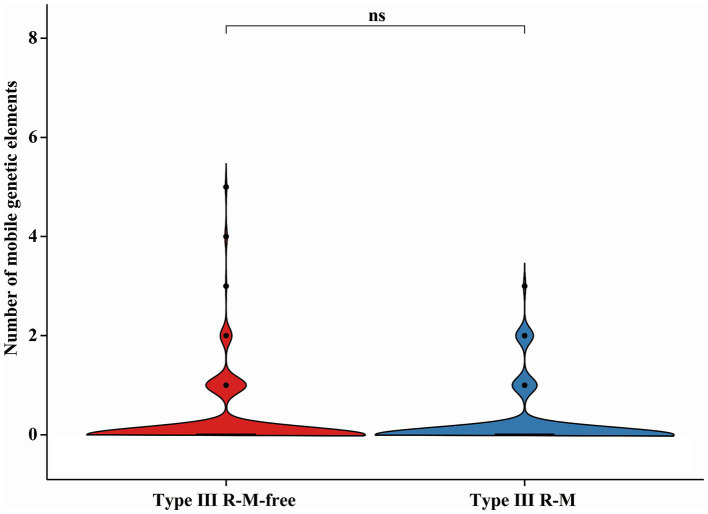
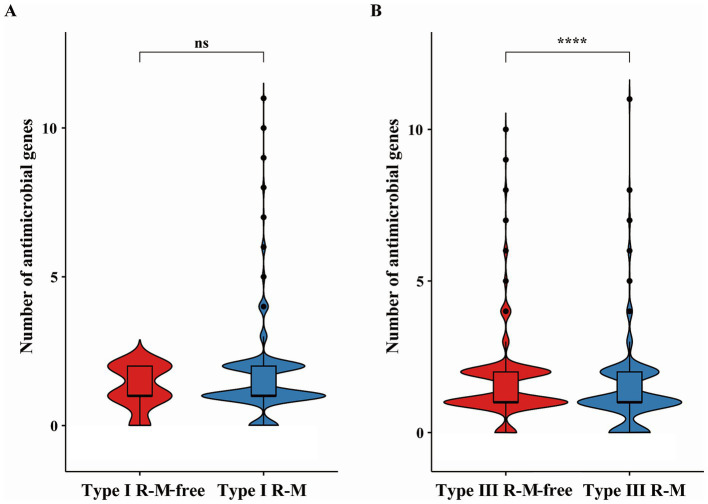
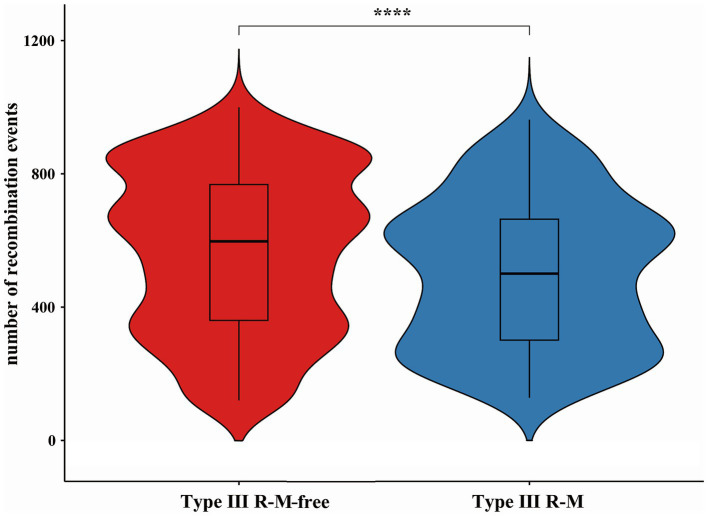
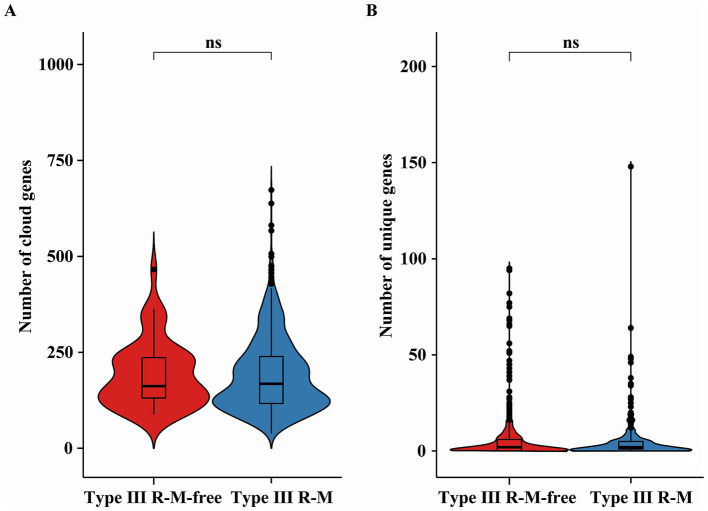
strains carrying the Type III R-M system have a significantly lower number of antimicrobial resistance (AMR) genes compared to strains without this system ( < 0.0001), with covariance value being -0.0526. The recombination analysis also shows that the median number of the number of AMR genes in the strains not possessing the Type III R-M system increases by 19.38% compared to strains carrying that system ( < 0.0001). We also find that the horizontal gene transfer frequency might have limited relationship with the Type III R-M system in through pangenome and mobile genetic elements analysis.
Our research indicates that the Type III R-M system might restrict the transmission of AMR genes potentially by affecting recombination in , which provides a theoretical basis for addressing the drug resistance problem.
抗生素抗性基因在()中的传播是一个严重问题,而限制修饰(R-M)系统对这些基因在()中传播动态的影响仍知之甚少。
截至2024年3月25日,从BV-BRC数据库中提取()菌株的完整基因组序列。利用系统发育和抗性分析来分析()中抗性基因的分布。通过重组、泛基因组和移动遗传元件分析,探讨R-M系统对()菌株间AMR基因传播的影响及可能机制。
与没有该系统的菌株相比,携带III型R-M系统的菌株的抗微生物抗性(AMR)基因数量显著更少(<0.0001),协方差值为-0.0526。重组分析还表明,不具有III型R-M系统的菌株中AMR基因数量的中位数比携带该系统的菌株增加了19.38%(<0.0001)。通过泛基因组和移动遗传元件分析,我们还发现水平基因转移频率可能与()中的III型R-M系统关系有限。
我们的研究表明,III型R-M系统可能通过影响()中的重组来潜在地限制AMR基因的传播,这为解决耐药性问题提供了理论依据。