Geto Abebe Kassa, Daba Chala, Desye Belay, Berihun Gete, Berhanu Leykun
Department of Public Health, College of Health Sciences, Woldia University, Woldia, Ethiopia
Department of Environmental Health, College of Medicine and Health Sciences, Wollo University, Dessie, Ethiopia.
BMJ Open. 2025 Aug 3;15(8):e093124. doi: 10.1136/bmjopen-2024-093124.
This systematic review and meta-analysis aimed to determine the pooled prevalence of and factors associated with work-related musculoskeletal disorders (WMSDs) among low- and middle-income countries.
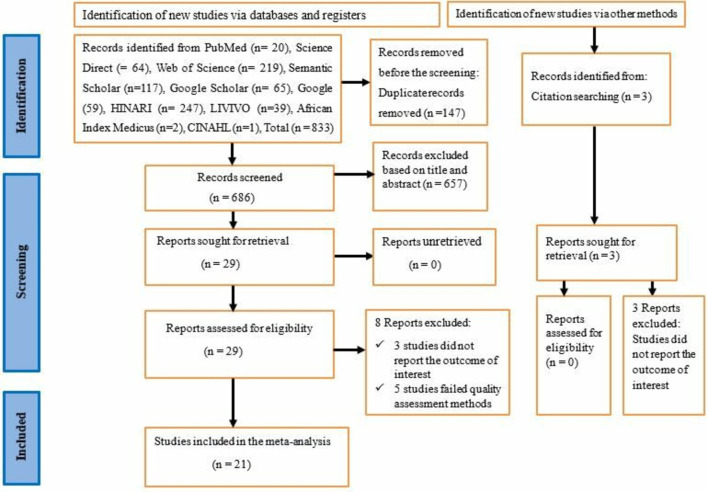
Databases such as PubMed/MEDLINE, CINAHL, LIVIVO, African Journals Online, African Index Medicus (AIM), HINARI, Science Direct, Web of Science, Cochrane Library, Google Scholar, Semantic Scholar and Google were used to retrieve all the relevant articles. The search was carried out from 22 April 2024 to 26 June 2024. Data were analysed via STATA 17 software. With a 95% CI, this meta-analysis with a random-effects model was carried out to determine the pooled prevalence.
The study was conducted in low- and middle-income countries.
Weavers of low- and middle-income countries.
The primary outcome of this study was the prevalence of WMSD.
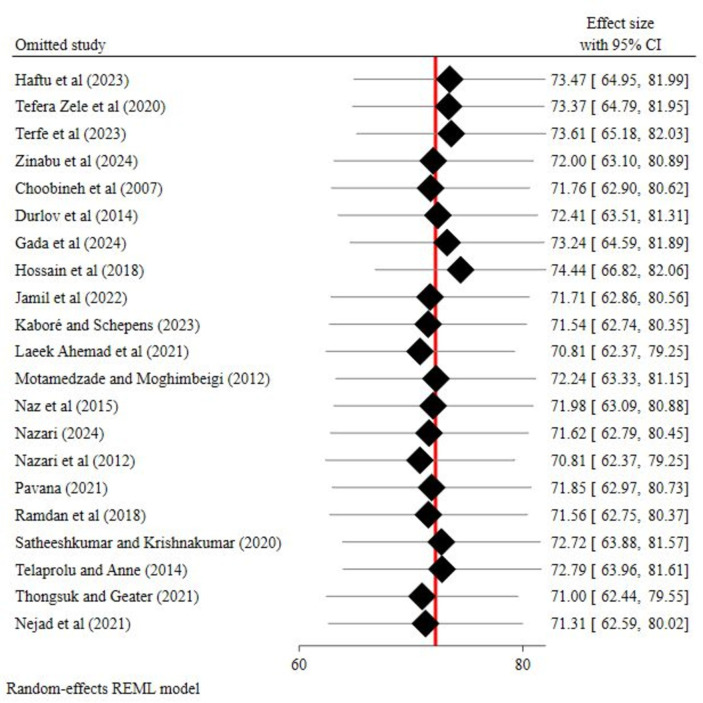
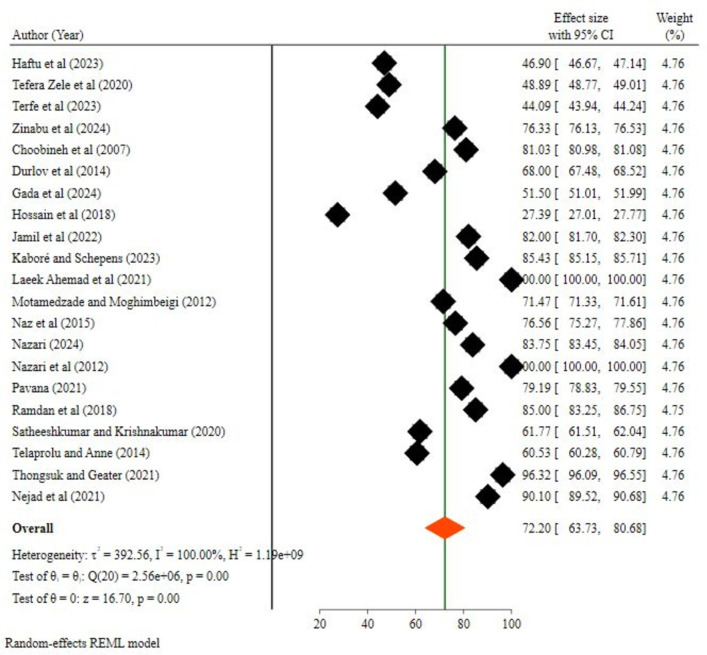
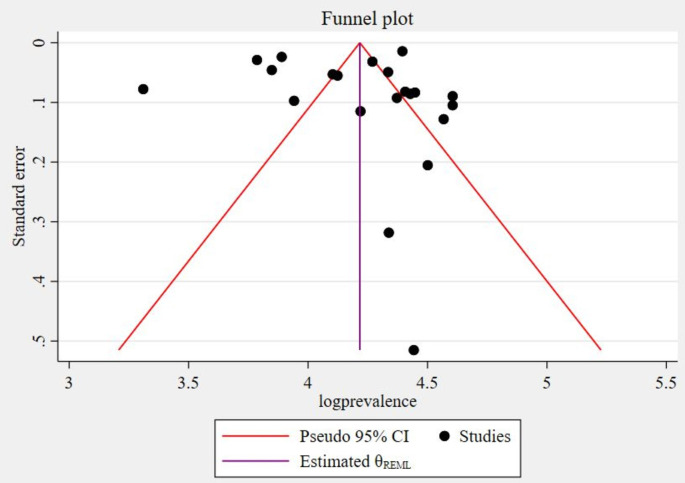
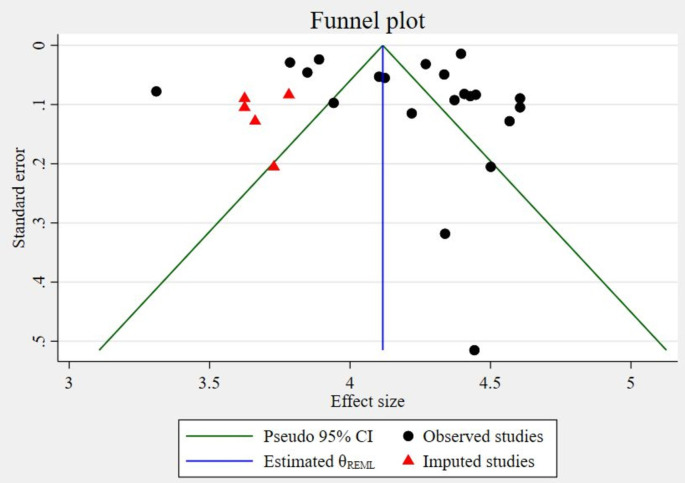
In this meta-analysis, a total of 21 articles with 7322 study participants were included. The pooled prevalence of WMSDs was 72.20%. Working more than 8 hours per day, working in a chair with no back support, working in an uncomfortable posture, not performing regular physical exercise, lacking knowledge of the causes of WMSD and lacking job satisfaction were factors significantly associated with WMSDs.
A high prevalence of WMSDs among weavers in low- and middle-income countries was recorded. This indicates the need to take effective intervention measures. Rigorous ergonomic training, providing lengthy breaks and building centres for physical exercise, improving workplace ergonomic design and increasing job satisfaction are recommended.
CRD42024561064.
本系统评价和荟萃分析旨在确定低收入和中等收入国家与工作相关的肌肉骨骼疾病(WMSDs)的合并患病率及相关因素。
使用PubMed/MEDLINE、CINAHL、LIVIVO、非洲在线期刊、非洲医学索引(AIM)、HINARI、科学Direct、科学网、考克兰图书馆、谷歌学术、语义学者和谷歌等数据库检索所有相关文章。检索时间为2024年4月22日至2024年6月26日。通过STATA 17软件进行数据分析。采用随机效应模型进行该荟萃分析,以95%置信区间确定合并患病率。
该研究在低收入和中等收入国家开展。
低收入和中等收入国家的织工。
本研究的主要观察指标是WMSD的患病率。
在该荟萃分析中,共纳入21篇文章,涉及7322名研究参与者。WMSDs的合并患病率为72.20%。每天工作超过8小时、在没有靠背支撑的椅子上工作、以不舒服的姿势工作、不进行定期体育锻炼、缺乏对WMSD病因知识了解以及缺乏工作满意度是与WMSDs显著相关的因素。
记录到低收入和中等收入国家织工中WMSDs的患病率较高。这表明需要采取有效的干预措施。建议进行严格的人体工程学培训、提供长时间休息并建设体育锻炼中心、改善工作场所的人体工程学设计以及提高工作满意度。
PROSPERO注册号:CRD42024561064。