• 文献检索
  • 文档翻译
  • 深度研究
  • 学术资讯
  • Suppr Zotero 插件Zotero 插件
  • 邀请有礼
  • 套餐&价格
  • 历史记录
应用&插件
Suppr Zotero 插件Zotero 插件浏览器插件Mac 客户端Windows 客户端微信小程序
定价
高级版会员购买积分包购买API积分包
服务
文献检索文档翻译深度研究API 文档MCP 服务
关于我们
关于 Suppr公司介绍联系我们用户协议隐私条款
关注我们

Suppr 超能文献

核心技术专利:CN118964589B侵权必究
粤ICP备2023148730 号-1Suppr @ 2026

文献检索

告别复杂PubMed语法,用中文像聊天一样搜索,搜遍4000万医学文献。AI智能推荐,让科研检索更轻松。

立即免费搜索

文件翻译

保留排版,准确专业,支持PDF/Word/PPT等文件格式,支持 12+语言互译。

免费翻译文档

深度研究

AI帮你快速写综述,25分钟生成高质量综述,智能提取关键信息,辅助科研写作。

立即免费体验

差异基因反应揭示了非洲金合欢树的干旱响应策略。

Differential gene reactions reveal drought response strategies in African acacias.

作者信息

Weinheimer Ellen I, Cory Scott T, Kortessis Nicholas, Anderson T Michael, Pease James B

机构信息

Department of Biology, Wake Forest University, Winston-Salem, NC, 27109, USA.

Department of Biology, East Carolina University, Greenville, NC, 27858, USA.

出版信息

Plant J. 2025 Aug;123(3):e70385. doi: 10.1111/tpj.70385.

DOI:10.1111/tpj.70385
PMID:40758440
原文链接:https://pmc.ncbi.nlm.nih.gov/articles/PMC12320966/
Abstract

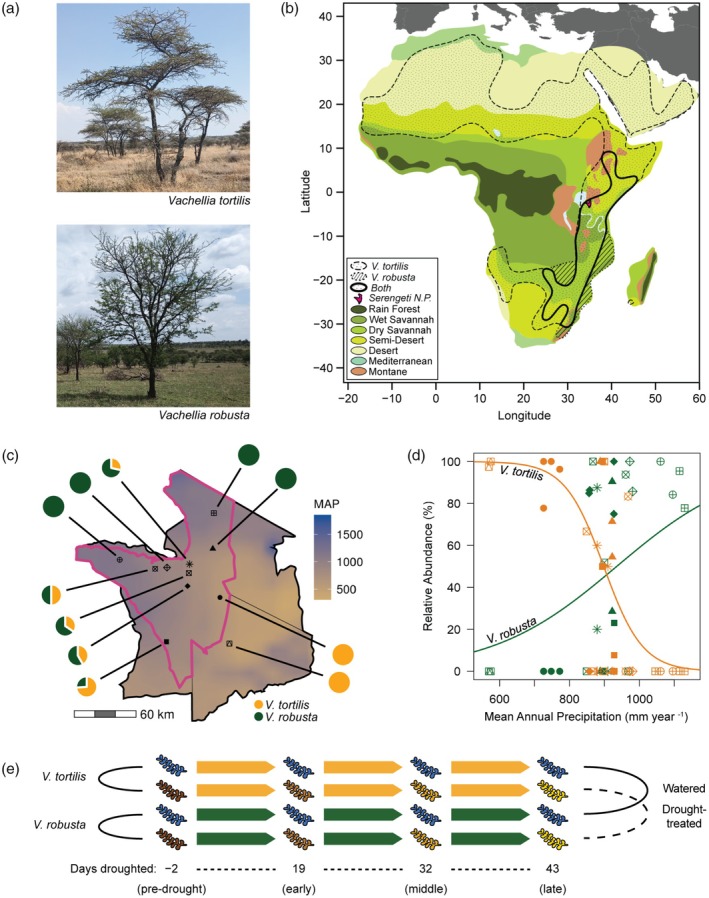
Drought tolerance involves a complex series of genetic reactions that expand over time as water stress intensifies. We investigated gene expression reactions over 43 days of drought stress in two widespread African savanna trees: the umbrella acacia (Vachellia tortilis) and the splendid thorn acacia (Vachellia robusta). Using 80 transcriptomes from droughted and watered individuals over time, we developed and implemented an analytical approach to identify genes with different reactions between a watered control and droughted treatment population of each species while filtering out genes changing similarly in both populations as part of normal growth and development. Our results show that both species use similar genetic systems to modulate photosynthesis, redox homeostasis, and hormone signaling, but they activate these systems using different sets of genes and on different temporal scales relative to the intensity of drought stress. We also find strong evidence that drought tolerant umbrella acacias demonstrate a surprisingly limited and relatively passive transcriptional response to drought stress, while splendid thorn acacias attempt to actively combat drought stress and maintain a steady state of growth and photosynthesis. Our study provides the first transcriptomic analysis of African acacias and a new model for investigating transcriptomic reactions over long periods of stress.

摘要

耐旱性涉及一系列复杂的基因反应,随着水分胁迫加剧,这些反应会随时间扩展。我们研究了两种广泛分布于非洲稀树草原的树木在43天干旱胁迫期间的基因表达反应:伞状金合欢(阿拉伯胶树)和壮丽多刺金合欢。随着时间推移,我们使用来自干旱处理和浇水处理个体的80个转录组,开发并实施了一种分析方法,以识别每个物种的浇水对照群体和干旱处理群体之间具有不同反应的基因,同时滤除作为正常生长和发育一部分而在两个群体中同样发生变化的基因。我们的结果表明,这两个物种都使用相似的遗传系统来调节光合作用、氧化还原稳态和激素信号传导,但它们相对于干旱胁迫强度,使用不同的基因集并在不同的时间尺度上激活这些系统。我们还发现有力证据表明,耐旱的伞状金合欢对干旱胁迫表现出令人惊讶的有限且相对被动的转录反应,而壮丽多刺金合欢则试图积极对抗干旱胁迫并维持生长和光合作用的稳定状态。我们的研究首次对非洲金合欢进行了转录组分析,并提供了一个在长期胁迫下研究转录组反应的新模型。
https://cdn.ncbi.nlm.nih.gov/pmc/blobs/4f9b/12320966/e5ef2196756b/TPJ-123-0-g005.jpg
https://cdn.ncbi.nlm.nih.gov/pmc/blobs/4f9b/12320966/c9e9f960bea9/TPJ-123-0-g004.jpg
https://cdn.ncbi.nlm.nih.gov/pmc/blobs/4f9b/12320966/a9741110932e/TPJ-123-0-g002.jpg
https://cdn.ncbi.nlm.nih.gov/pmc/blobs/4f9b/12320966/8a55dfdfc45c/TPJ-123-0-g003.jpg
https://cdn.ncbi.nlm.nih.gov/pmc/blobs/4f9b/12320966/7309f84b6c5c/TPJ-123-0-g001.jpg
https://cdn.ncbi.nlm.nih.gov/pmc/blobs/4f9b/12320966/e5ef2196756b/TPJ-123-0-g005.jpg
https://cdn.ncbi.nlm.nih.gov/pmc/blobs/4f9b/12320966/c9e9f960bea9/TPJ-123-0-g004.jpg
https://cdn.ncbi.nlm.nih.gov/pmc/blobs/4f9b/12320966/a9741110932e/TPJ-123-0-g002.jpg
https://cdn.ncbi.nlm.nih.gov/pmc/blobs/4f9b/12320966/8a55dfdfc45c/TPJ-123-0-g003.jpg
https://cdn.ncbi.nlm.nih.gov/pmc/blobs/4f9b/12320966/7309f84b6c5c/TPJ-123-0-g001.jpg
https://cdn.ncbi.nlm.nih.gov/pmc/blobs/4f9b/12320966/e5ef2196756b/TPJ-123-0-g005.jpg

相似文献

1
Differential gene reactions reveal drought response strategies in African acacias.差异基因反应揭示了非洲金合欢树的干旱响应策略。
Plant J. 2025 Aug;123(3):e70385. doi: 10.1111/tpj.70385.
2
Integrating differential expression under drought with gene family expansion unique to drought-tolerant species prioritizes candidate genes for drought adaptation in Brassicaceae species.整合干旱条件下的差异表达与耐旱物种特有的基因家族扩张,可确定十字花科物种干旱适应性候选基因的优先级。
BMC Genomics. 2025 Jun 19;26(1):571. doi: 10.1186/s12864-025-11737-0.
3
Genome-wide and transcriptome analysis of PdWRKY transcription factors in date palm (Phoenix dactylifera) revealing insights into heat and drought stress tolerance.海枣(Phoenix dactylifera)中PdWRKY转录因子的全基因组和转录组分析揭示了对耐热和耐旱性的见解。
BMC Genomics. 2025 Jul 1;26(1):589. doi: 10.1186/s12864-025-11715-6.
4
Differential photosynthetic responses to drought stress in peanut varieties: insights from transcriptome profiling and JIP-Test analysis.花生品种对干旱胁迫的光合差异响应:转录组分析和JIP-Test分析的见解
BMC Plant Biol. 2025 Jul 25;25(1):957. doi: 10.1186/s12870-025-06984-y.
5
Physiological and molecular responses of bread wheat and its wild relative species to drought stress.面包小麦及其野生近缘种对干旱胁迫的生理和分子响应。
Mol Biol Rep. 2025 Jun 27;52(1):645. doi: 10.1007/s11033-025-10742-6.
6
Transcriptome analysis of peach seedlings () experiencing drought stress.遭受干旱胁迫的桃树苗()的转录组分析。
Sci Prog. 2025 Jul-Sep;108(3):368504251358640. doi: 10.1177/00368504251358640. Epub 2025 Aug 3.
7
Genome-wide study and expression analysis of soybean ERF transcription factors and overexpression of GmERF205 enhances drought resistance in soybean.大豆ERF转录因子的全基因组研究与表达分析以及GmERF205的过表达增强大豆抗旱性
BMC Genomics. 2025 Aug 6;26(1):726. doi: 10.1186/s12864-025-11829-x.
8
The Identification of Transcriptomic and Phytohormonal Biomarkers for Monitoring Drought and Evaluating the Potential of Acibenzolar-S-Methyl Root Application to Prime Two Apple Rootstock Genotypes for Drought Resistance.用于监测干旱以及评估根施烯丙苯噻唑对两种苹果砧木基因型进行抗旱引发处理潜力的转录组学和植物激素生物标志物的鉴定
Int J Mol Sci. 2025 Jul 21;26(14):6986. doi: 10.3390/ijms26146986.
9
Integrated Physiological and Transcriptomic Analysis Reveals Transcription Factors Are Crucial for Melatonin-Mediated Drought Tolerance in E. ulmoides.综合生理和转录组分析揭示转录因子对杜仲褪黑素介导的耐旱性至关重要。
Physiol Plant. 2025 Jul-Aug;177(4):e70382. doi: 10.1111/ppl.70382.
10
Growth-limiting drought increases sensitivity of Asian rice (Oryza sativa) leaves to heat shock through physiological and spatially distinct transcriptomic responses.限制生长的干旱通过生理和空间上不同的转录组反应增加了亚洲水稻(Oryza sativa)叶片对热休克的敏感性。
Plant J. 2025 Jul;123(2):e70349. doi: 10.1111/tpj.70349.

本文引用的文献

1
Genome-Wide Analysis of Tea FK506-Binding Proteins (FKBPs) Reveals That Enhances Cold-Stress Tolerance in Transgenic .茶树FK506结合蛋白(FKBPs)的全基因组分析表明,其在转基因植物中增强了耐冷性。
Int J Mol Sci. 2025 Apr 10;26(8):3575. doi: 10.3390/ijms26083575.
2
De novo transcriptome assembly and differential gene expression analysis in different developmental stages of Agriotes sputator (click beetle).直译为中文是:直译为中文是:直译为中文是:直译为中文是:直译为中文是:直译为中文是:直译为中文是:直译为中文是:直译为中文是:直译为中文是:直译为中文是:直译为中文是:直译为中文是:直译为中文是:直译为中文是:直译为中文是:直译为中文是:直译为中文是:直译为中文是:直译为中文是:直译为中文是:直译为中文是:直译为中文是:直译为中文是:直译为中文是:直译为中文是:直译为中文是:直译为中文是:直译为中文是:直译为中文是:直译为中文是:直译为中文是:直译为中文是:直译为中文是:直译为中文是:直译为中文是:直译为中文是:直译为中文是:直译为中文是:直译为中文是:直译为中文是:直译为中文是:直译为中文是:直译为中文是:直译为中文是:直译为中文是:直译为中文是:直译为中文是:直译为中文是:直译为中文是:直译为中文是:直译为中文是:直译为中文是:直译为中文是:直译为中文是:直译为中文是:直译为中文是:直译为中文是:直译为中文是:直译为中文是:直译为中文是:直译为中文是:直译为中文是:直译为中文是:直译为中文是:直译为中文是:直译为中文是:直译为中文是:直译为中文是:直译为中文是:直译为中文是:直译为中文是:直译为中文是:直译为中文是:直译为中文是:直译为中文是:直译为中文是:直译为中文是:直译为中文是:直译为中文是:直译为中文是:直译为中文是:直译为中文是:直译为中文是:直译为中文是:直译为中文是:直译为中文是:直译为中文是:直译为中文是:直译为中文是:直译为中文是:直译为中文是:直译为中文是:直译为中文是:直译为中文是:直译为中文是:直译为中文是:直译为中文是:直译为中文是:直译为中文是:直译为中文是:直译为中文是:直译为中文是:直译为中文是:直译为中文是:直译为中文是:直译为中文是:直译为中文是:直译为中文是:直译为中文是:直译为中文是:直译为中文是:直译为中文是:直译为中文是:直译为中文是:直译为中文是:直译为中文是:直译为中文是:直译为中文是:直译为中文是:直译为中文是:直译为中文是:直译为中文是:直译为中文是:直译为中文是:直译为中文是:直译为中文是:直译为中文是:直译为中文是:直译为中文是:直译为中文是:直译为中文是:直译为中文是:直译为中文是:直译为中文是:直译为中文是:直译为中文是:直译为中文是:直译为中文是:直译为中文是:直译为中文是:直译为中文是:直译为中文是:直译为中文是:直译为中文是:直译为中文是:直译为中文是:直译为中文是:直译为中文是:直译为中文是:直译为中文是:直译为中文是:直译为中文是:直译为中文是:直译为中文是:直译为中文是:直译为中文是:直译为中文是:直译为中文是:直译为中文是:直译为中文是:直译为中文是:直译为中文是:直译为中文是:直译为中文是:直译为中文是:直译为中文是:直译为中文是:直译为中文是:直译为中文是:直译为中文是:直译为中文是:直译为中文是:直译为中文是:直译为中文是:直译为中文是:直译为中文是:直译为中文是:直译为中文是:直译为中文是:直译为中文是:直译为中文是:直译为中文是:直译为中文是:直译为中文是:直译为中文是:直译为中文是:直译为中文是:直译为中文是:直译为中文是:直译为中文是:直译为中文是:直译为中文是:直译为中文是:直译为中文是:直译为中文是:直译为中文是:直译为中文是:直译为中文是:直译为中文是:直译为中文是:直译为中文是:直译为中文是:直译为中文是:直译为中文是:直译为中文是:直译为中文是:直译为中文是:直译为中文是:直译为中文是:直译为中文是:直译为中文是:直译为中文是:直译为中文是:直译为中文是:直译为中文是:直译为中文是:直译为中文是:直译为中文是:直译为中文是:直译为中文是:直译为中文是:直译为中文是:直译为中文是:直译为中文是:直译为中文是:直译为中文是:直译为中文是:直译为中文是:直译为中文是:直译为中文是:直译为中文是:直译为中文是:直译为中文是:直译为中文是:直译为中文是:直译为中文是:直译为中文是:直译为中文是:直译为中文是:直译为中文是:直译为中文是:直译为中文是:直译为中文是:直译为中文是:直译为中文是:直译为中文是:直译为中文是:直译为中文是:直译为中文是:直译为中文是:直译为中文是:直译为中文是:直译为中文是:直译为中文是:直译为中文是:直译为中文是:直译为中文是:直译为中文是:直译为中文是:直译为中文是:直译为中文是:直译为中文是:直译为中文是:直译为中文是:直译为中文是:直译为中文是:直译为中文是:直译为中文是:直译为中文是:直译为中文是:直译为中文是:直译为中文是:直译为中文是:直译为中文是:直译为中文是:直译为中文是:直译为中文是:直译为中文是:直译为中文是:直译为中文是:直译为中文是:直译为中文是:直译为中文是:直译为中文是:直译为中文是:直译为中文是:直译为中文是:直译为中文是:直译为中文是:直译为中文是:直译为中文是:直译为中文是:直译为中文是:直译为中文是:直译为中文是:直译为中文是:直译为中文是:直译为中文是:直译为中文是:直译为中文是:直译为中文是:直译为中文是:直译为中文是:直译为中文是:直译为中文是:直译为中文是:直译为中文是:直译为中文是:直译为中文是:直译为中文是:直译为中文是:直译为中文是:直译为中文是:直译为中文是:直译为中文是:直译为中文是:直译为中文是:直译为中文是:直译为中文是:直译为中文是:直译为中文是:直译为中文是:直译为中文是:直译为中文是:直译为中文是:直译为中文是:直译为中文是:直译为中文是:直译为中文是:直译为中文是:直译为中文是:直译为中文是:直译为中文是:直译为中文是:直译为中文是:直译为中文是:直译为中文是:直译为中文是:直译为中文是:直译为中文是:直译为中文是:直译为中文是:直译为中文是:直译为中文是:直译为中文是:直译为中文是:直译为中文是:直译为中文是:直译为中文是:直译为中文是:直译为中文是:直译为中文是:直译为中文是:直译为中文是:直译为中文是:直译为中文是:直译为中文是:直译为中文是:直译为中文是:直译为中文是:直译为中文是:直译为中文是:直译为中文是:直译为中文是:直译为中文是:直译为中文是:直译为中文是:直译为中文是:直译为中文是:直译为中文是:直译为中文是:直译为中文是:直译为中文是:直译为中文是:直译为中文是:直译为中文是:直译为中文是:直译为中文是:直译为中文是:直译为中文是:直译为中文是:直译为中文是:直译为中文是:直译为中文是:直译为中文是:直译为中文是:直译为中文是:直译为中文是:直译为中文是:直译为中文是:直译为中文是:直译为中文是:直译为中文是:直译为中文是:直译为中文是:直译为中文是:直译为中文是:直译为中文是:直译为中文是:直译为中文是:直译为中文是:直译为中文是:直译为中文是:直译为中文是:直译为中文是:直译为中文是:直译为中文是:直译为中文是:直译为中文是:直译为中文是:直译为中文是:直译为中文是:直译为中文是:直译为中文是:直译为中文是:直译为中文是:直译为中文是:直译为中文是:直译为中文是:直译为中文是:直译为中文是:直译为中文是:直译为中文是:直译为中文是:直译为中文是:直译为中文是:直译为中文是:直译为中文是:直译为中文是:直译为中文是:直译为中文是:直译为中文是:直译为中文是:直译为中文是:直译为中文是:直译为中文是:直译为中文是:直译为中文是:直译为中文是:直译为中文是:直译为中文是:直译为中文是:直译为中文是:直译为中文是:直译为中文是:直译为中文是:直译为中文是:直译为中文是:直译为中文是:直译为中文是:直译为中文是:直译为中文是:直译为中文是:直译为中文是:直译为中文是:直译为中文是:直译为中文是:直译为中文是:直译为中文是:直译为中文是:直译为中文是:直译为中文是:直译为中文是:直译为中文是:直译为中文是:直译为中文是:直译为中文是:直译为中文是:直译为中文是:直译为中文是:直译为中文是:直译为中文是:直译为中文是:直译为中文是:直译为中文是:直译为中文是:直译为中文是:直译为中文是:直译为中文是:直译为中文是:直译为中文是:直译为中文是:直译为中文是:直译为中文是:直译为中文是:直译为中文是:直译为中文是:直译为中文是:直译为中文是:直译为中文是:直译为中文是:直译为中文是:直译为中文是:直译为中文是:直译为中文是:直译为中文是:直译为中文是:直译为中文是:直译为中文是:直译为中文是:直译为中文是:直译为中文是:直译为中文是:直译为中文是:直译为中文是:直译为中文是:直译为中文是:直译为中文是:直译为中文是:直译为中文是:直译为中文是:直译为中文是:直译为中文是:直译为中文是:直译为中文是:直译为中文是:直译为中文是:直译为中文是:直译为中文是:直译为中文是:直译为中文是:直译为中文是:直译为中文是:直译为中文是:直译为中文是:直译为中文是:直译为中文是:直译为中文是:直译为中文是:直译为中文是:直译为中文是:直译为中文是:直译为中文是:直译为中文是:直译为中文是:直译为中文是:直译为中文是:直译为中文是:直译为中文是:直译为中文是:直译为中文是:直译为中文是:直译为中文是:直译为中文是:直译为中文是:直译为中文是:直译为中文是:直译为中文是:直译为中文是:直译为中文是:直译为中文是:直译为中文是:直译为中文是:直译为中文是:直译为中文是:直译为中文是:直译为中文是:直译为中文是:直译为中文是:直译为中文是:直译为中文是:直译为中文是:直译为中文是:直译为中文是:直译为中文是:直译为中文是:直译为中文是:直译为中文是:直译为中文是:直译为中文是:直译为中文是:直译为中文是:直译为中文是:直译为中文是:直译为中文是:直译为中文是:直译为中文是:直译为中文是:直译为中文是:直译为中文是:直译为中文是:直译为中文是:直译为中文是:直译为中文是:直译为中文是:直译为中文是:直译为中文是:直译为中文是:直译为中文是:直译为中文是:直译为中文是:直译为中文是:直译为中文是:直译为中文是:直译为中文是:直译为中文是:直译为中文是:直译为中文是:直译为中文是:直译为中文是:直译为中文是:直译为中文是:直译为中文是:直译为中文是:直译为中文是:直译为中文是:直译为中文是:直译为中文是:直译为中文是:直译为中文是:直译为中文是:直译为中文是:直译为中文是:直译为中文是:直译为中文是:直译为中文是:直译为中文是:直译为中文是:直译为中文是:直译为中文是:直译为中文是:直译为中文是:直译为中文是:直译为中文是:直译为中文是:直译为中文是:直译为中文是:直译为中文是:直译为中文是:直译为中文是:直译为中文是:直译为中文是:直译为中文是:直译为中文是:直译为中文是:直译为中文是:直译为中文是:直译为中文是:直译为中文是:直译为中文是:直译为中文是:直译为中文是:直译为中文是:直译为中文是:直译为中文是:直译为中文是:直译为中文是:直译为中文是:直译为中文是:直译为中文是:直译为中文是:直译为中文是:直译为中文是:直译为中文是:直译为中文是:直译为中文是:直译为中文是:直译为中文是:直译为中文是:直译为中文是:直译为中文是:直译为中文是:直译为中文是:直译为中文是:直译为中文是:直译为中文是:直译为中文是:直译为中文是:直译为中文是:直译为中文是:直译为中文是:直译为中文是:直译为中文是:直译为中文是:直译为中文是:直译为中文是:直译为中文是:直译为中文是:直译为中文是:直译为中文是:直译为中文是:直译为中文是:直译为中文是:直译为中文是:直译为中文是:直译为中文是:直译为中文是:直译为中文是:直译为中文是:直译为中文是:直译为中文是:直译为中文是:直译为中文是:直译为中文是:直译为中文是:直译为中文是:直译为中文是:直译为中文是:直译为中文是:直译为中文是:直译为中文是:直译为中文是:直译为中文是:直译为中文是:直译为中文是:直译为中文是:直译为中文是:直译为中文是:直译为中文是:直译为中文是:直译为中文是:直译为中文是:直译为中文是:直译为中文是:直译为中文是:直译为中文是:直译为中文是:直译为中文是:直译为中文是:直译为中文是:直译为中文是:直译为中文是:直译为中文是:直译为中文是:直译为中文是:直译为中文是:直译为中文是:直译为中文是:直译为中文是:直译为中文是:直译为中文是:直译为中文是:直译为中文是:直译为中文是:直译为中文是:直译为中文是:直译为中文是:直译为中文是:直译为中文是:直译为中文是:直译为中文是:直译为中文是:直译为中文是:直译为中文是:直译为中文是:直译为中文是:直译为中文是:直译为中文是:直译为中文是:直译为中文是:直译为中文是:直译为中文是:直译为中文是:直译为中文是:直译为中文是:直译为中文是:直译为中文是:直译为中文是:直译为中文是:直译为中文是:直译为中文是:直译为中文是:直译为中文是:直译为中文是:直译为中文是:直译为中文是:直译为中文是:直译为中文是:直译为中文是:直译为中文是:直译为中文是:直译为中文是:直译为中文是:直译为中文是:直译为中文是:直译为中文是:直译为中文是:直译为中文是:直译为中文是:直译为中文是:直译为中文是:直译为中文是:直译为中文是:直译为中文是:直译为中文是:直译为中文是:直译为中文是:直译为中文是:直译为中文是:直译为中文是:直译为中文是:直译为中文是:直译为中文是:直译为中文是:直译为中文是:直译为中文是:直译为中文是:直译为中文是:直译为
Sci Rep. 2024 Oct 18;14(1):24451. doi: 10.1038/s41598-024-74495-1.
3
Expression-environment associations in transcriptomic heat stress responses for a global plant lineage.全球植物谱系转录组热应激反应中的表达-环境关联。
Mol Ecol. 2024 Aug;33(16):e17473. doi: 10.1111/mec.17473. Epub 2024 Jul 21.
4
Comparative transcriptomics revealed parallel evolution and innovation of photosymbiosis molecular mechanisms in a marine bivalve.比较转录组学揭示了海洋双壳类动物中光合作用分子机制的平行进化和创新。
Proc Biol Sci. 2024 May;291(2023):20232408. doi: 10.1098/rspb.2023.2408. Epub 2024 May 29.
5
Responses of two species to drought suggest different water-use strategies, reflecting their topographic distribution.两个物种对干旱的反应表明了不同的水分利用策略,这反映了它们的地形分布情况。
Front Plant Sci. 2023 Jun 5;14:1154223. doi: 10.3389/fpls.2023.1154223. eCollection 2023.
6
transcriptome sequencing and gene co-expression reveal a genomic basis for drought sensitivity and evidence of a rapid local adaptation on Atlas cedar ().转录组测序和基因共表达揭示了阿特拉斯雪松干旱敏感性的基因组基础以及快速局部适应的证据。
Front Plant Sci. 2023 Apr 19;14:1116863. doi: 10.3389/fpls.2023.1116863. eCollection 2023.
7
Allelic variation of TaWD40-4B.1 contributes to drought tolerance by modulating catalase activity in wheat.等位基因变异 TaWD40-4B.1 通过调节小麦过氧化氢酶活性来提高耐旱性。
Nat Commun. 2023 Mar 2;14(1):1200. doi: 10.1038/s41467-023-36901-6.
8
Genome-wide identification of the fibrillin gene family in chickpea (Cicer arietinum L.) and its response to drought stress.鹰嘴豆(Cicer arietinum L.)中原纤蛋白基因家族的全基因组鉴定及其对干旱胁迫的响应
Int J Biol Macromol. 2023 Apr 15;234:123757. doi: 10.1016/j.ijbiomac.2023.123757. Epub 2023 Feb 18.
9
De novo transcriptome assemblies of C and C non-model grass species reveal key differences in leaf development.C 和 C 非模式草本物种的从头转录组组装揭示了叶片发育的关键差异。
BMC Genomics. 2023 Feb 6;24(1):64. doi: 10.1186/s12864-022-08995-7.
10
First-year Acacia seedlings are anisohydric "water-spenders" but differ in their rates of water use.一年生相思树幼苗是等水植物“水分消耗者”,但它们的耗水速率不同。
Am J Bot. 2022 Aug;109(8):1251-1261. doi: 10.1002/ajb2.16032. Epub 2022 Aug 12.