Sochet Anthony A, Sellers Austin R, Betensky Marisol, Morrison John M, Ashour Dina, Fierstein Jamie L, Amankwah Ernest K, Bruzek Steven, Ignjatovic Vera, Goldenberg Neil A
Departments of Anesthesiology and Critical Care Medicine, Johns Hopkins University School of Medicine, Baltimore, MD.
Office of Medical Education, Johns Hopkins All Children's Hospital, St. Petersburg, FL.
Blood Vessel Thromb Hemost. 2024 Nov 26;2(1):100038. doi: 10.1016/j.bvth.2024.100038. eCollection 2025 Feb.
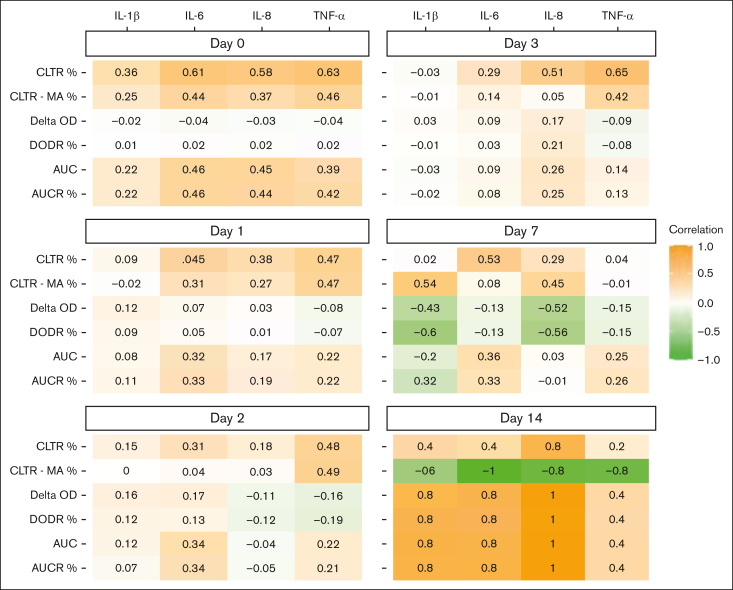
The relationship between fibrinolysis, inflammation, and prothrombotic risk among children hospitalized for coronavirus disease 2019 (COVID-19)-related illness is ill defined. To investigate the association between plasma fibrinolytic capacity and proinflammatory cytokine concentrations among children hospitalized for primary COVID-19 infection and multisystem inflammatory syndrome in children (MIS-C), we hypothesized that cytokine concentrations differ by clinical phenotype and are associated with hypofibrinolysis. We analyzed banked plasma specimens serially collected from children aged <18 years admitted for primary COVID-19 or MIS-C and enrolled in the COVID-19 Anticoagulation in Children-Thromboprophylaxis multicenter trial, an open-label, multicenter, phase 2 clinical trial conducted between July 2020 and May 2021. Plasma coagulative and fibrinolytic function were measured via the clot formation and lysis (CloFAL) assay and modified mini-euglobulin clot lysis assay (ECLA). Interleukin-1β (IL-1β), IL-6, and IL-8, and tumor necrosis factor α were measured by the Meso Scale Discovery assay. Correlations were evaluated using Spearman rank testing. A total of 132 banked plasma specimens from 38 participants (COVID-19: n = 18; MIS-C: n = 20) were analyzed. Overall, increased coagulative function (ie, elevated CloFAL area under the curve) and impaired fibrinolytic function (ie, reduced CloFAL fibrinolytic index [FI] and elevated modified mini-ECLA clot lysis time ratio [CLTR]) were observed but most notably among those with MIS-C. Plasma cytokine concentrations correlated with assay indices of hypofibrinolysis (ie, modified mini-ECLA CLTR and CloFAL FI). In summary, among children hospitalized for COVID-19-related illness, hypercoagulability and hypofibrinolysis are mediated, in part, by inflammation that may contribute to prothrombotic risk. This trial was registered at www.ClinicalTrials.gov as #NCT04354155.
2019冠状病毒病(COVID-19)相关疾病住院儿童的纤溶、炎症与血栓形成前风险之间的关系尚不明确。为了研究原发性COVID-19感染和儿童多系统炎症综合征(MIS-C)住院儿童的血浆纤溶能力与促炎细胞因子浓度之间的关联,我们假设细胞因子浓度因临床表型而异,并与纤溶功能减退相关。我们分析了从<18岁因原发性COVID-19或MIS-C入院并参加儿童COVID-19抗凝-血栓预防多中心试验的儿童中连续收集的储存血浆标本,该试验是一项开放标签、多中心、2期临床试验,于2020年7月至2021年5月进行。通过凝块形成和溶解(CloFAL)试验和改良的小优球蛋白凝块溶解试验(ECLA)测量血浆凝血和纤溶功能。通过Meso Scale Discovery试验测量白细胞介素-1β(IL-1β)、IL-6和IL-8以及肿瘤坏死因子α。使用Spearman秩检验评估相关性。共分析了来自38名参与者(COVID-19:n = 18;MIS-C:n = 20)的132份储存血浆标本。总体而言,观察到凝血功能增强(即CloFAL曲线下面积升高)和纤溶功能受损(即CloFAL纤溶指数[FI]降低和改良小ECLA凝块溶解时间比[CLTR]升高),但在MIS-C患者中最为明显。血浆细胞因子浓度与纤溶功能减退的检测指标(即改良小ECLA CLTR和CloFAL FI)相关。总之,在因COVID-19相关疾病住院的儿童中,高凝状态和纤溶功能减退部分由炎症介导,这可能会增加血栓形成前风险。该试验已在www.ClinicalTrials.gov上注册,编号为#NCT04354155。