Khalid Asma, Mushtaq Muhammad Muaz, Sattar Saba, Soe Yan Naing, Ismail Sulman, Haris Muhammad, Ullah Sami, Hassan Muhammad Wali, Bhatti Muhammad Muaz, Ali Husnain
Internal Medicine, King Edward Medical University, Lahore, PAK.
Medicine and Surgery, King Edward Medical University, Lahore, PAK.
Cureus. 2025 Jul 7;17(7):e87461. doi: 10.7759/cureus.87461. eCollection 2025 Jul.
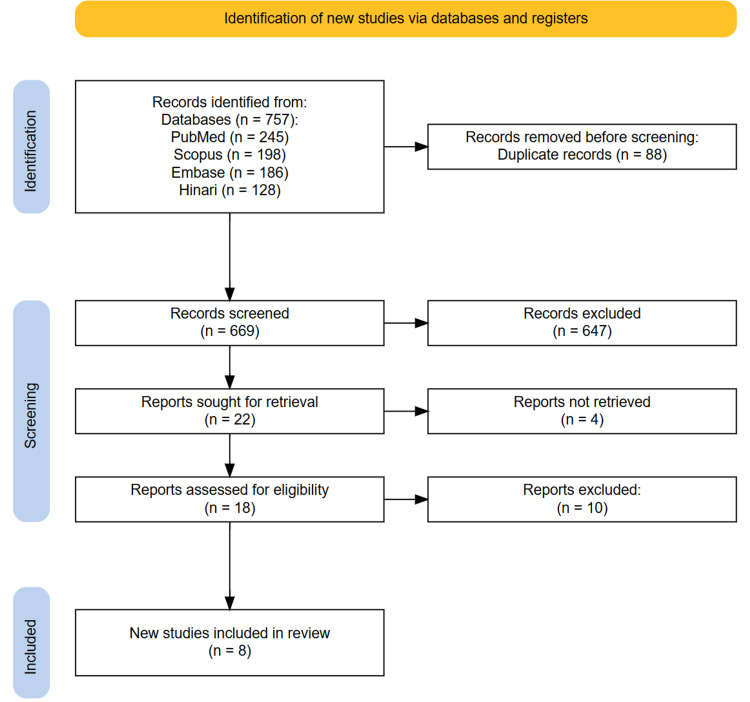
Idiopathic pulmonary fibrosis (IPF) is a devastating interstitial lung disease (ILD) characterized by progressive fibrosis and poor survival outcomes. Accurate diagnosis and prognosis remain challenging due to overlapping features with other ILDs and variability in imaging interpretation. This systematic review evaluates the current evidence on artificial intelligence (AI) and machine learning (ML) applications for the diagnosis and prognosis of IPF using computed tomography (CT) imaging. Following Preferred Reporting Items for Systematic Reviews and Meta-Analyses (PRISMA) guidelines, eight studies published between 2017 and 2024 were included, demonstrating promising results across various methodologies, including deep learning (DL) models, support vector machines (SVMs), and ensemble approaches. AI-derived parameters, particularly measures of fibrotic burden and pulmonary vascular volume, consistently outperformed conventional visual CT scores for prognostication. Strong correlations between AI-quantified CT features and pulmonary function (PF) tests suggest potential surrogate markers for physiological parameters. Novel prognostic biomarkers identified through AI analysis expand understanding beyond traditional parenchymal assessment. Despite these advances, limitations include retrospective designs, sample size constraints, male-predominant cohorts, and limited external validation. Future research should prioritize large, prospective, multi-center studies with diverse populations, standardized protocols, explainable AI (XAI) techniques, and integration into clinical workflows to realize the transformative potential of AI for improving IPF management.
特发性肺纤维化(IPF)是一种具有破坏性的间质性肺疾病(ILD),其特征为进行性纤维化和较差的生存结局。由于与其他ILD存在重叠特征以及影像学解读的变异性,准确诊断和预后评估仍然具有挑战性。本系统评价评估了目前关于使用计算机断层扫描(CT)成像进行IPF诊断和预后评估的人工智能(AI)和机器学习(ML)应用的证据。按照系统评价和Meta分析的首选报告项目(PRISMA)指南,纳入了2017年至2024年间发表的8项研究,这些研究在包括深度学习(DL)模型、支持向量机(SVM)和集成方法在内的各种方法中均显示出有前景的结果。AI衍生参数,尤其是纤维化负担和肺血管容积的测量值,在预后评估方面始终优于传统的CT视觉评分。AI量化的CT特征与肺功能(PF)测试之间的强相关性表明其可能是生理参数的替代标志物。通过AI分析确定的新型预后生物标志物扩展了对传统实质评估之外的理解。尽管取得了这些进展,但局限性包括回顾性设计、样本量限制、以男性为主的队列以及有限的外部验证。未来的研究应优先开展针对不同人群的大型、前瞻性、多中心研究,采用标准化方案,运用可解释人工智能(XAI)技术,并将其整合到临床工作流程中,以实现AI在改善IPF管理方面的变革潜力。