Yang Xiao, Liu Wenyi, Wang Jiaqi, Xia Weifeng, Wu Lanxiang
Laboratory of Pharmacogenetics and Pharmacogenomics, College of Pharmacy, Chongqing Medical University, Chongqing, 400016, People's Republic of China.
Discov Oncol. 2025 Aug 7;16(1):1491. doi: 10.1007/s12672-025-03377-3.
High abundance of eosinophils has been proved to associated with favorable disease progression in non-small cell lung cancer (NSCLC) in the previous observational studies, but the causal relationship remains unclear. It is also unclear whether white blood cell (WBC) counts are essential for the risk of NSCLC.
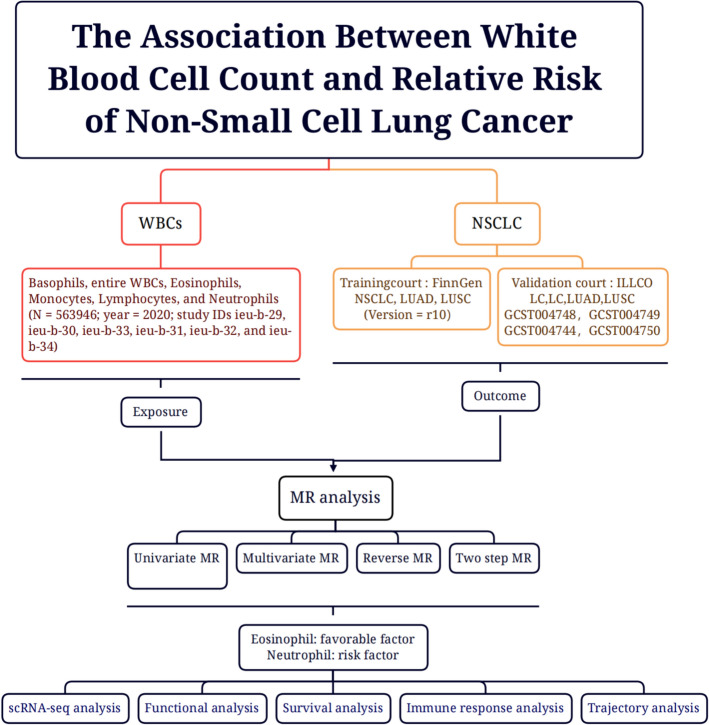
Using multiple methods of Mendelian randomization (MR), we assessed the causality of WBC count, particularly basophil, eosinophil, monocyte, lymphocyte, and neutrophil counts on the risk of NSCLC, which includes squamous carcinoma and adenocarcinoma. Single cell RNA-sequencing and RNA-sequencing analysis illustrate the underline mechanism of the causality and its biological effects.
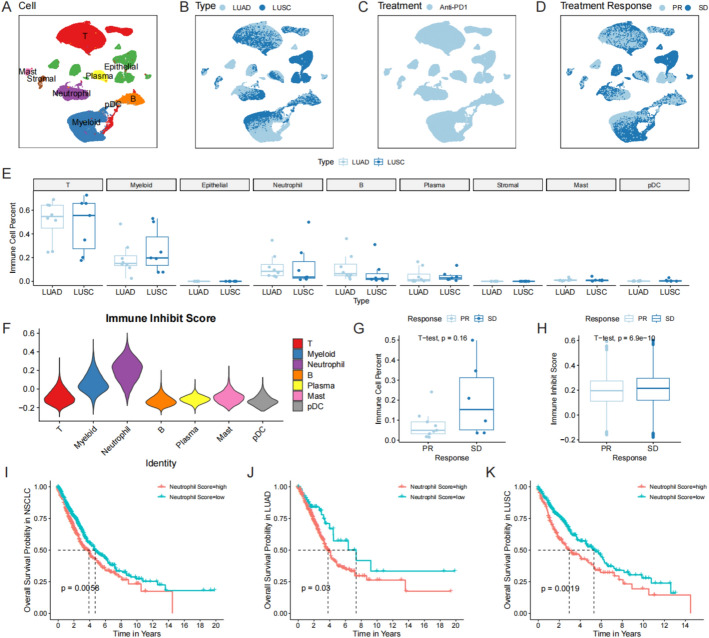
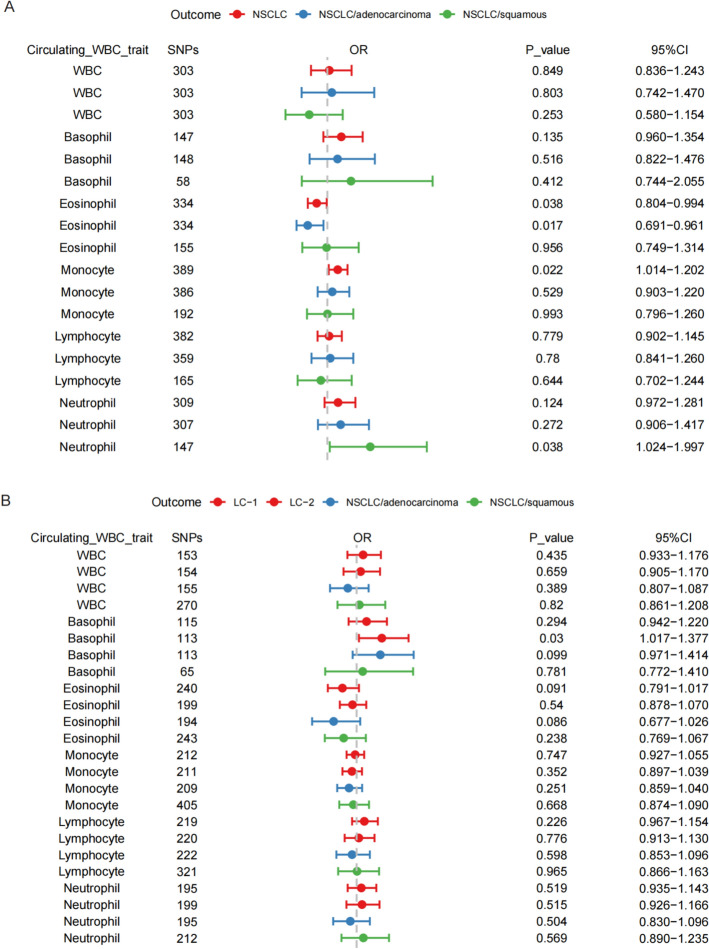
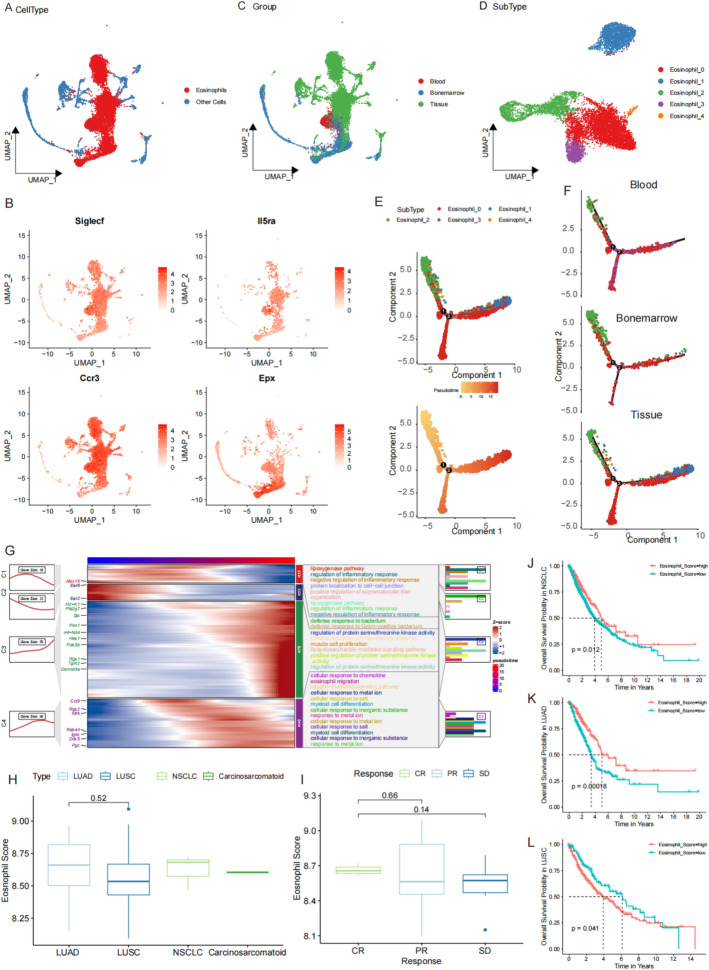
Univariable MR analysis indicated the protective effect of elevated eosinophil counts on NSCLC and adenocarcinoma subtype. The protective effect of eosinophils persisted even after adjusting. The protective functions mainly effected by immune activating, and it contribute to better survival and favorable response to immune therapy. Univariate MR analysis also states the risk role of neutrophil. Sequencing based analysis proved the immune inhibit functions of neutrophil, which lead to worse survival and immune treatment response.
Our study indicated a correlation between circulating eosinophil counts, neutrophil counts, and the development of NSCLC. And sequencing analysis confirm this relationship and illustrated the underline mechanism.
在先前的观察性研究中,已证明非小细胞肺癌(NSCLC)中嗜酸性粒细胞的高丰度与良好的疾病进展相关,但因果关系仍不清楚。白细胞(WBC)计数对于NSCLC风险是否至关重要也不清楚。
我们使用多种孟德尔随机化(MR)方法,评估了白细胞计数,特别是嗜碱性粒细胞、嗜酸性粒细胞、单核细胞、淋巴细胞和中性粒细胞计数对NSCLC风险的因果关系,NSCLC包括鳞状癌和腺癌。单细胞RNA测序和RNA测序分析阐明了因果关系的潜在机制及其生物学效应。
单变量MR分析表明嗜酸性粒细胞计数升高对NSCLC和腺癌亚型具有保护作用。即使在调整后,嗜酸性粒细胞的保护作用仍然存在。保护功能主要通过免疫激活实现,并有助于提高生存率和对免疫治疗的良好反应。单变量MR分析还表明中性粒细胞的风险作用。基于测序的分析证明了中性粒细胞的免疫抑制功能,这导致生存率降低和免疫治疗反应较差。
我们的研究表明循环嗜酸性粒细胞计数、中性粒细胞计数与NSCLC的发生发展之间存在相关性。测序分析证实了这种关系并阐明了潜在机制。